











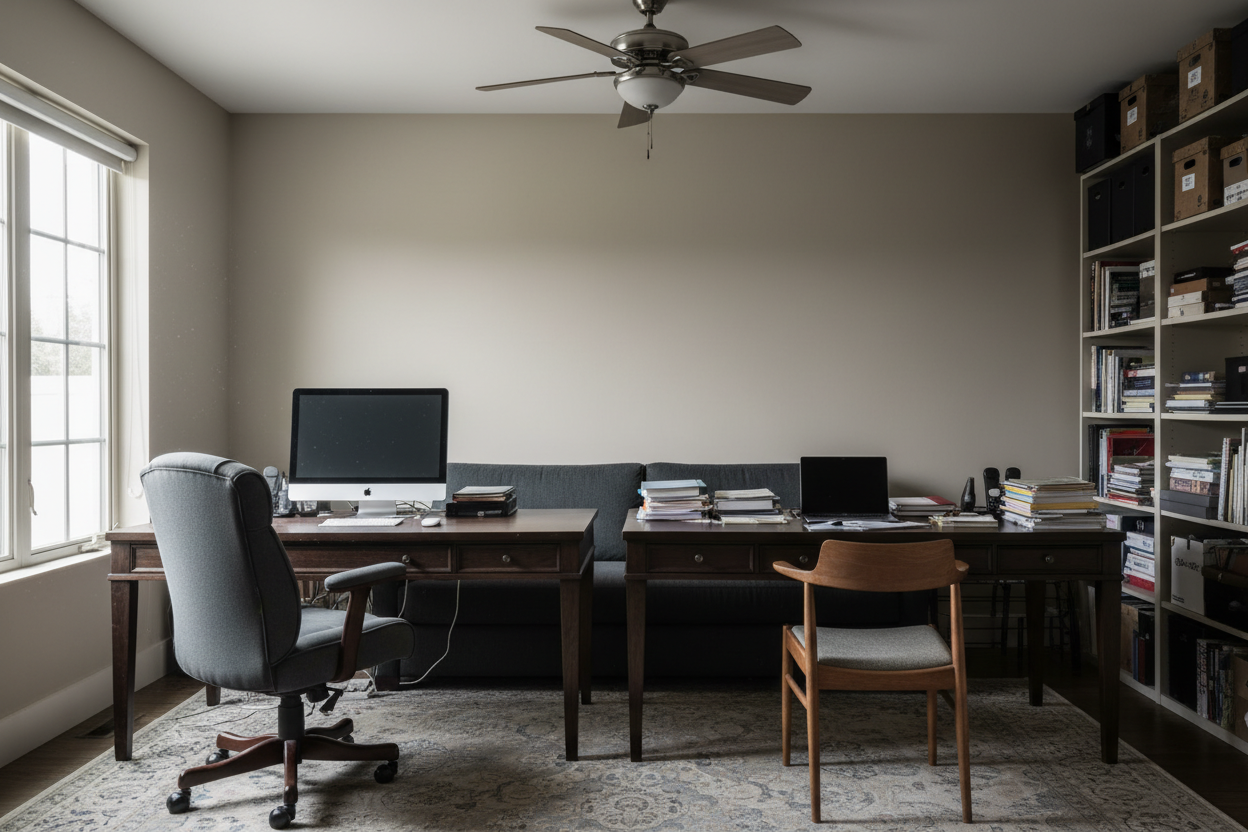
We have all walked into a home workspace that feels less like a sanctuary of productivity and more like a cramped storage unit. The issue is rarely the square footage itself, but rather how we populate it. When selecting space office furniture, the goal isn't just to fit pieces into a room like a game of Tetris; it is to curate a layout that respects circulation paths and visual weight. As a designer, I see homeowners frequently prioritize the desk size over the room's flow, resulting in a claustrophobic environment that kills creativity. Let’s correct that approach.
Key Features to Look For
Before committing to a purchase, use this checklist to ensure the furniture serves both form and function. These are the criteria I use when sourcing for client projects:
- Visual Weight: Opt for legs and open frames over solid, blocky bases to maintain a feeling of openness.
- Integrated Cable Management: In smaller footprints, visible cords create immediate visual clutter. Look for hidden channels.
- Ergonomic Scalability: Ensure the chair width allows for a 30-inch clearance behind the desk for movement.
- Material Durability: For high-traffic surfaces, high-pressure laminate (HPL) or sealed solid wood outlasts standard veneers.
Mastering Scale and Proportion
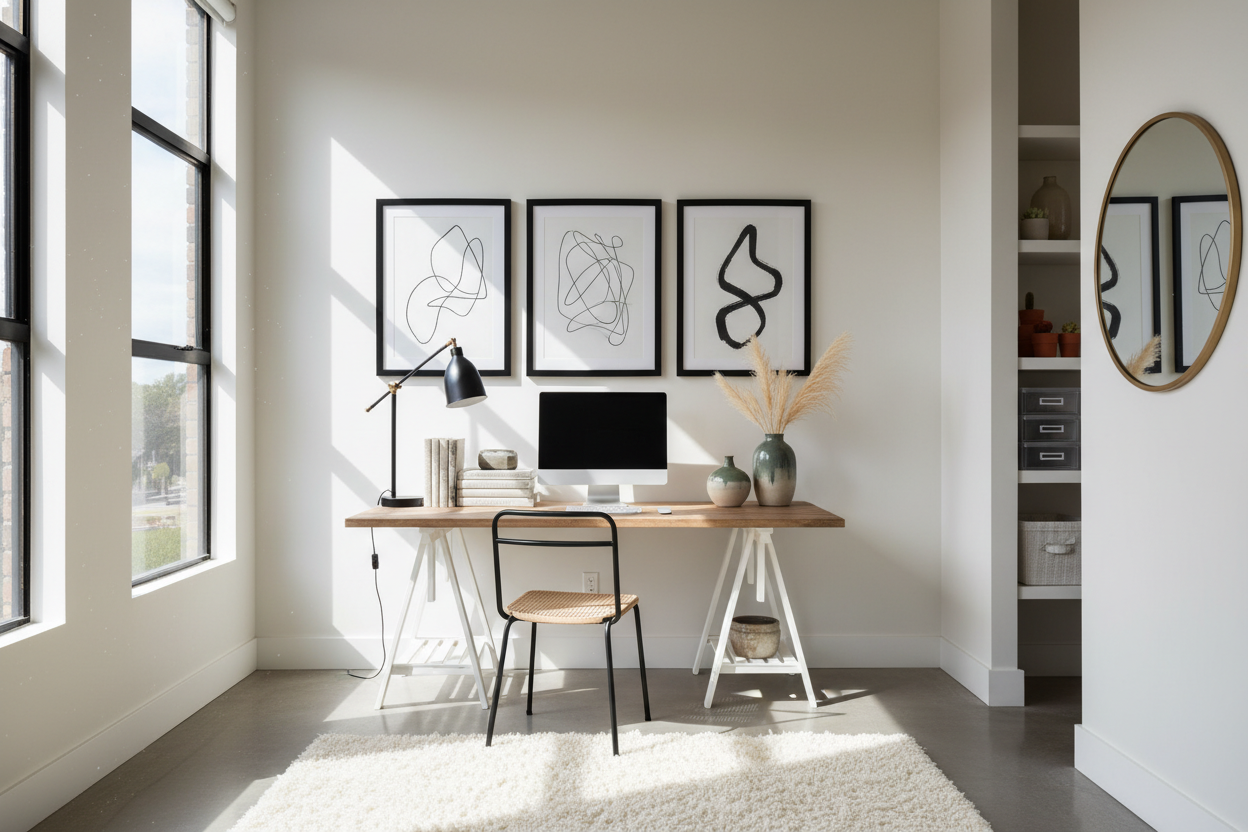
The most sophisticated interiors rely heavily on correct scaling. When dealing with compact areas, your space office solutions must mimic the room's architecture. A heavy, mahogany executive desk in a 10x10 room dominates the space aggressively. Instead, look for "floating" silhouettes—desks with slender metal legs or wall-mounted units that keep the floor visible. Seeing the flooring extend beneath the furniture tricks the eye into perceiving the room as larger than it actually is.
Materiality: Texture vs. Durability
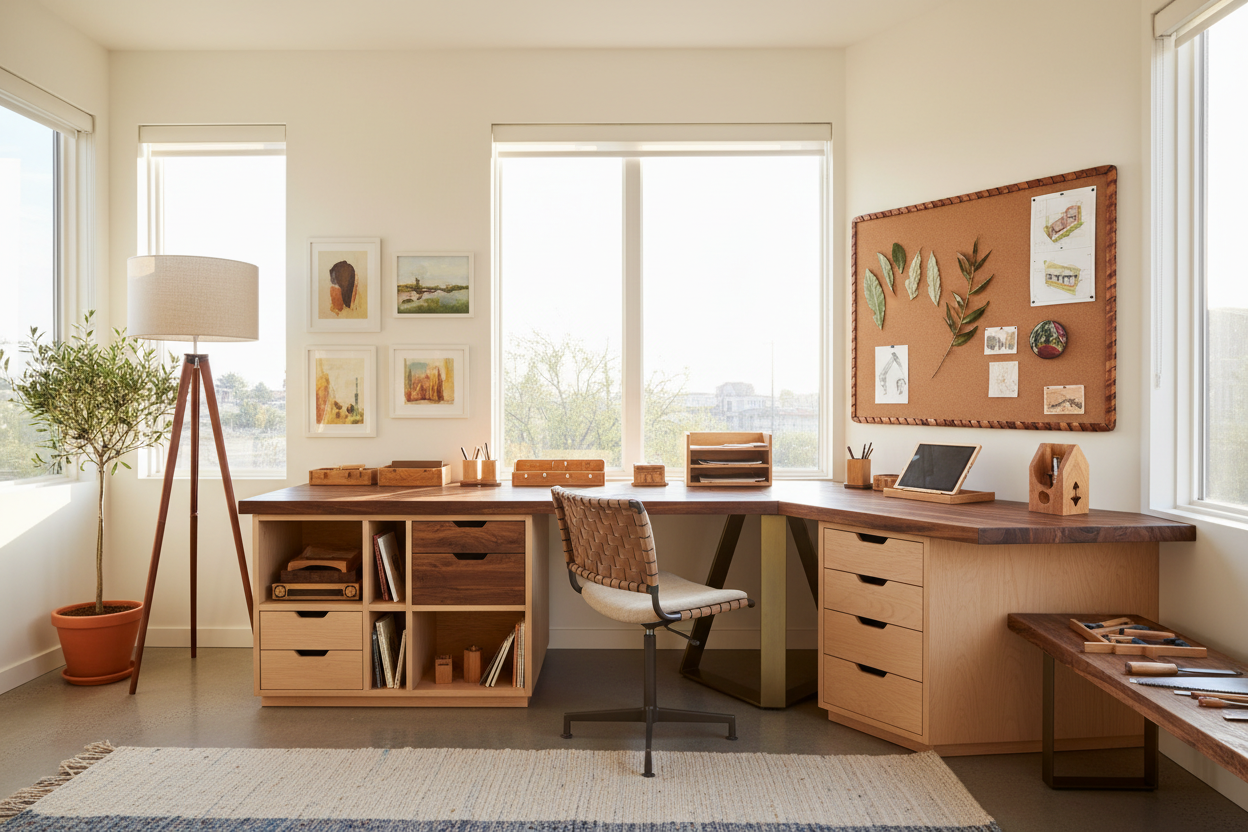
In a professional design scheme, materials dictate the mood. For space-conscious offices, glass and acrylic are often touted as the go-to because they are transparent. However, they can feel cold and clinical. I often advise clients to lean towards light-stained woods like white oak or ash. These materials bring warmth and tactile comfort without the visual heaviness of walnut or cherry.
Furthermore, consider the finish. A matte or satin finish hides fingerprints and dust far better than high-gloss options, which is crucial if your office doubles as a guest room or living area.
The Vertical Advantage
Floor space is finite; wall space is often underutilized. When specifying space office furniture, look for pieces that build up rather than out. A leaning ladder desk or a modular shelving system with an integrated drop-leaf desk can provide substantial utility without encroaching on your walking path. This approach draws the eye upward, emphasizing ceiling height rather than limited floor area.
My Personal Take on Space Office Furniture
I learned a hard lesson early in my career regarding "convertible" or "multi-functional" office furniture. I once specified a wall-mounted, fold-down desk for a client living in a tight urban condo. On paper, it was the perfect space-saver. However, I failed to account for the "wobble factor."
When the client typed vigorously, the slight vibration in the hinge mechanism transferred through the wall, creating a subtle but maddening rattling sound. It wasn't a structural failure, but a sensory one. Since then, I always check the rigidity of the locking mechanisms on drop-leaf desks. If you can feel a 'play' of even a millimeter in the showroom, it will feel like an earthquake when you are typing on a deadline. Always test the stability with your full resting arm weight before buying.
Conclusion
Designing a workspace is about balancing efficiency with elegance. By choosing furniture that respects the scale of your room and prioritizing materials that offer warmth without weight, you can create an environment that invites focus rather than stress. Measure twice, buy once, and prioritize the flow of the room above all else.
Frequently Asked Questions
How much space do I need behind my desk chair?
For a comfortable workflow, you need a minimum of 30 inches (76 cm) of clearance behind your desk to push your chair back and stand up. If it is a main walkway, aim for 48 inches to allow someone to walk past while you are seated.
Is a glass desk better for small offices?
Visually, yes, as it reduces visual clutter. However, glass is high-maintenance regarding fingerprints and can feel cold on the wrists. A light wood or white lacquer finish often provides a better balance of aesthetics and comfort.
Can I mix different wood tones in a home office?
Absolutely. In fact, matching everything perfectly can look like a catalog set. The trick is to keep the undertones consistent. Mix warm woods (like cherry and oak) together, or cool woods (like ash and walnut) together to maintain a cohesive palette.

Leave a comment
This site is protected by hCaptcha and the hCaptcha Privacy Policy and Terms of Service apply.