










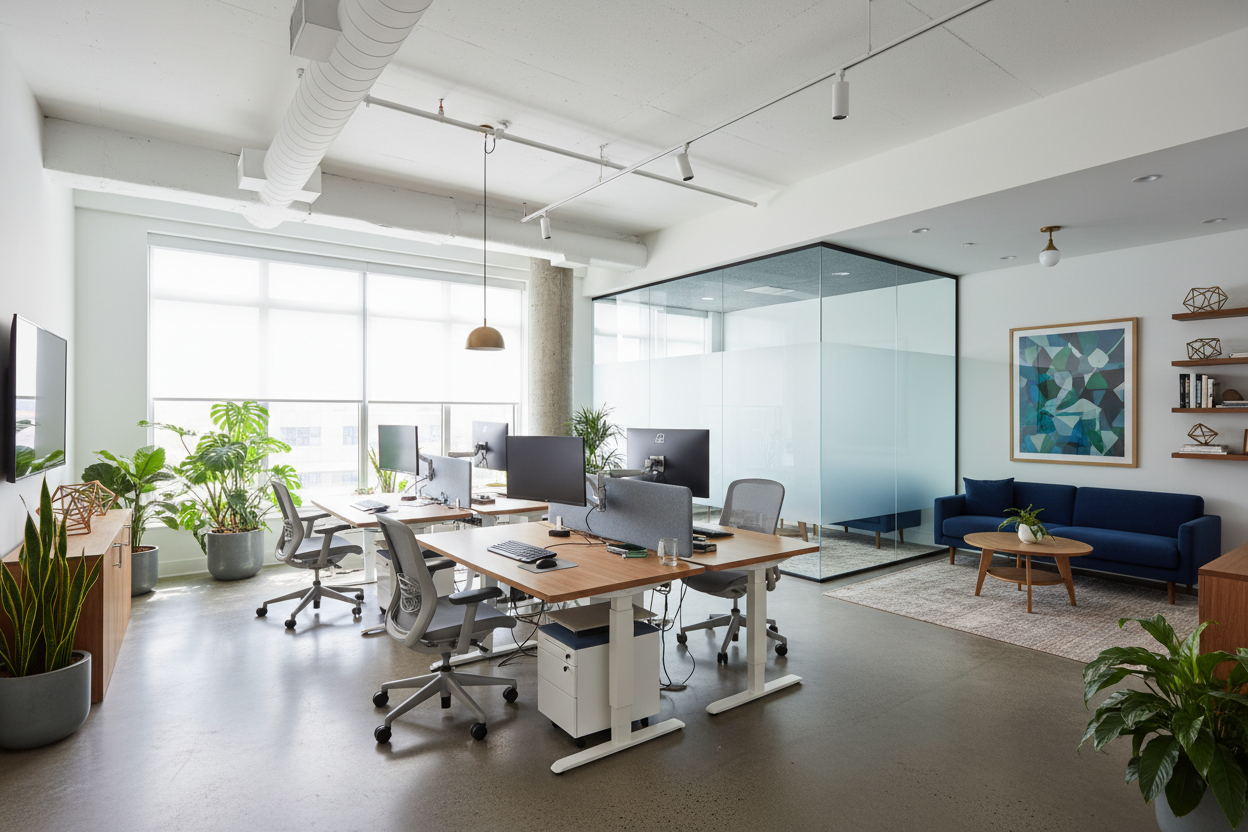
Walking into a potential office lease space often triggers a rush of imagination. You immediately visualize the reception desk, the collaborative zones, and the corner executive suite. However, as an interior designer, I often see clients seduced by a view or a prestigious address, only to realize too late that the architectural bones of the unit fight against their operational needs. When you are looking for office space, the goal isn't just to secure square footage; it is to find a shell that accommodates your workflow, brand identity, and ergonomic requirements without requiring a fortune in renovations.
Key Features to Look For
- Column Grid Spacing: Ensure structural columns don't obstruct critical circulation paths or desk clusters.
- Natural Light Penetration: Check how deep sunlight reaches into the floor plate; this dictates where workstations should go versus storage.
- Ceiling Height & HVAC: Low ceilings with dropped ductwork can make a commercial suite for rent feel oppressive; look for at least 9-foot clearance.
- Acoustic Separation: Test the sound transfer between rooms; thin partition walls in a business office for lease are expensive to upgrade later.
- Power & Data Access: Verify perimeter outlets and floor cores to avoid trailing cables across your new office space.
Analyzing the Shell: Beyond Square Footage
When you start your office space search, it is easy to get fixated on the total area. However, the usability of that area is what matters. A 2,000-square-foot suite for lease with an odd, angular geometry often yields less usable workspace than a 1,500-square-foot rectangular unit. We call this the "efficiency ratio."
If you are trying to find an office that supports a modern, collaborative culture, look for open spans uninterrupted by load-bearing walls. Conversely, if you need a small office space to rent for a law firm or therapy practice, prioritize units with existing hard-wall construction to save on build-out costs. The geometry of the perimeter walls will dictate your layout options; curved walls are visually stunning but notoriously difficult to place standard cabinetry against without custom millwork.
Materiality and Visual Weight
Assessing Existing Finishes
Unless you are looking for office space in a raw shell condition, you will likely inherit some finishes. Scrutinize the flooring in any commercial office spaces you tour. Commercial-grade carpet tiles are standard, but are they worn? Replacing flooring is a major logistical headache once furniture is installed.
Look at the window treatments as well. If you find offices with floor-to-ceiling glass, ensure there are high-quality roller shades. The solar heat gain in a south-facing office location for rent can bleach wood veneers and make ergonomic task chairs uncomfortably hot, forcing you to run the AC aggressively.
Lighting Infrastructure
Lighting is the most overlooked aspect when people search for office space. Many listings feature harsh 2x4 fluorescent troffers that cause glare on screens and fatigue the eyes. When you find office space for lease, ask if the lighting can be upgraded to LED visuals with a warmer color temperature (3000K-3500K). The difference in employee morale and visual comfort is palpable.
Space Planning & Circulation Flow
Whether you need a big office space for rent or a modest suite, the flow of movement—or circulation—is critical. In design terms, we look for clear "arteries" through the space. When you learn how to find office space for rent, you must mentally walk through the daily rituals of your team.
Is the kitchenette placed near the workspaces, causing noise distractions? Or is it tucked away, creating a social hub that doesn't disturb focus work? If you find office to rent options with narrow corridors (under 48 inches), moving furniture in will be a nightmare, and the space will feel cramped. A good layout allows for "zoning"—separating high-energy collaboration areas from deep-focus quiet zones.
My Personal Take on Office Lease Space
I once consulted for a tech startup that was desperate to find an office quickly. They signed a lease on a trendy, industrial "brick and timber" loft without consulting a designer first. Visually, it was stunning—exposed brick, 14-foot ceilings, and massive windows.
The problem? The acoustics were catastrophic. The hard surfaces bounced sound around like a squash court. I remember sitting in their conference room; I could hear the sales team on the phone three rooms away as clearly as if they were sitting next to me. We ended up spending nearly $15,000 on acoustic baffles and felt wall panels just to make the phone calls intelligible. The lesson? When you find office space listings that look "cool," clap your hands loudly in the center of the room. If the echo lingers for more than a second, budget heavily for sound dampening or walk away.
Conclusion
Finding the right environment is about balancing the aesthetic appeal with the functional reality of your business. Don't just search office space for the lowest rent; look for the suite that supports your people. By evaluating the light, acoustics, and layout potential before you sign, you ensure your new headquarters is an asset, not a hindrance.
Frequently Asked Questions
How do I calculate how much space I actually need?
A general rule of thumb for how to find an office space size is to allocate 125–225 square feet per person. This accounts not just for the desk, but for the share of conference rooms, hallways, and kitchen areas. Denser call centers may go lower, while executive suites require more.
Should I look for furnished or unfurnished suites?
If you are looking for office space with a short lease term (under 3 years), a furnished "plug-and-play" suite is often more cost-effective. However, for long-term leases, unfurnished spaces allow you to curate ergonomics and aesthetics that align specifically with your brand identity.
What is the biggest red flag when viewing real estate office space rent options?
Watch out for "sick building syndrome" indicators. Musty smells, water stains on ceiling tiles, or windows that don't seal properly are signs of poor building maintenance. No amount of beautiful furniture can fix a space with poor air quality or temperature control issues.

Leave a comment
This site is protected by hCaptcha and the hCaptcha Privacy Policy and Terms of Service apply.