










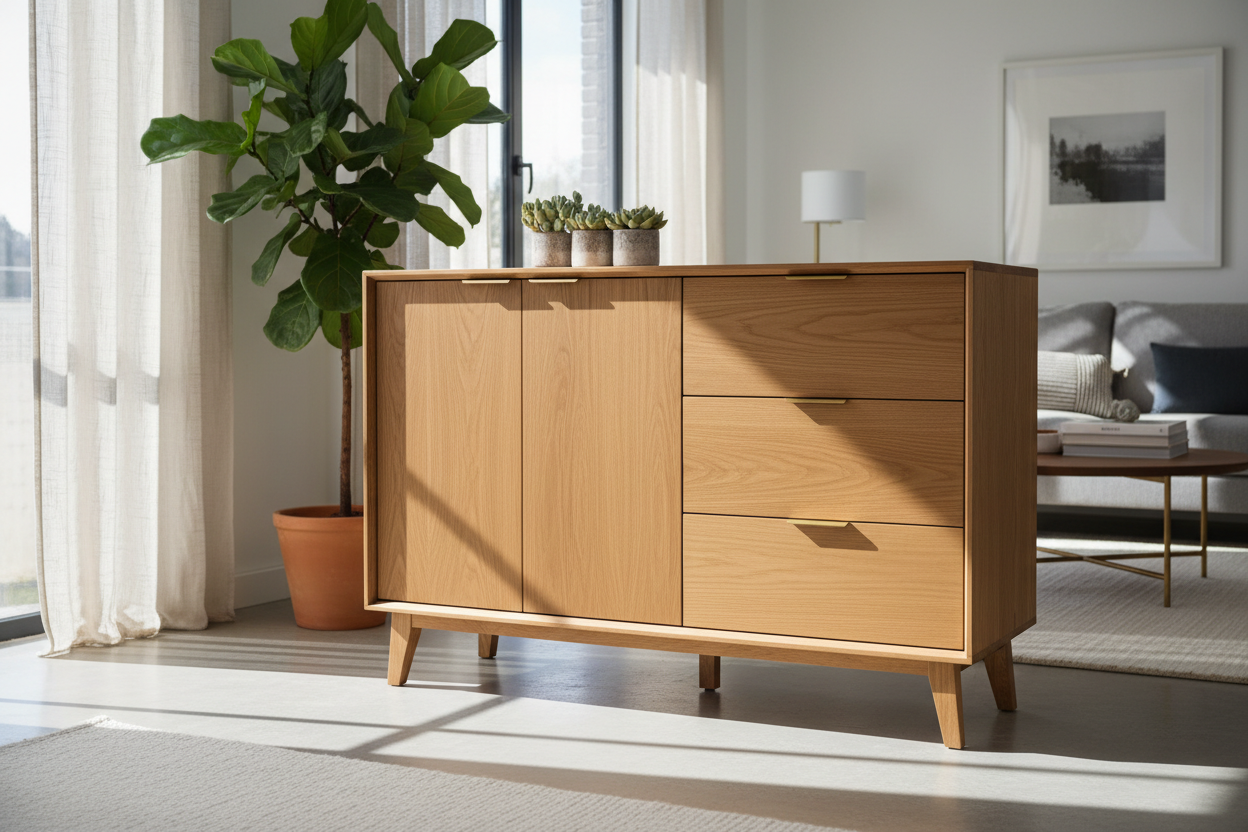
Most people struggle with bedroom storage because they force everything into two categories: things that hang in a closet and things that get stuffed into a standard dresser. The reality of a modern wardrobe is much more complex. You have bulky sweaters that don't fit in shallow drawers, accessories that get lost on shelves, and linens that need dust protection. The solution to this organizational gridlock is the hybrid unit—specifically, a chest with drawers and doors. This piece of furniture, often historically referred to as a gentleman's chest or chifforobe, combines the deep shelving or hanging space of a wardrobe with the systematic organization of a bureau.
Integrating a chest with drawers and door access into your room layout instantly doubles your storage versatility. Instead of folding bulky denim until it jams a drawer shut, you can stack jeans neatly behind the cabinet door. Meanwhile, socks, undergarments, and t-shirts remain organized in the pull-out sections. It effectively bridges the gap between a closet and a dresser, making it ideal for apartments with small closets or master suites needing a focal point.
Understanding the Layout: More Than Just a Dresser
The design logic behind a door chest with drawers is simple: different items require different storage environments. A standard horizontal dresser has a uniform depth and height for every drawer, which is inefficient. You end up with wasted vertical space above folded shirts or drawers that are too deep for socks but too shallow for blankets.
A chest drawers with doors configuration solves this by breaking the monotony. The door section usually hides adjustable shelving, a small hanging rod, or pull-out trays. This is the "bulk zone." It is perfect for items that are visually messy when stacked, like hoodies or bed linens. The exposed drawers below or to the side serve as the "daily zone" for high-rotation items. This segmentation forces you to organize by category rather than just stuffing things wherever they fit.
My Experience with the "Gentleman's Chest"
I spent years trying to make a low, six-drawer dresser work for my entire wardrobe. My closet was tiny, so I had to fold heavy winter sweaters and try to jam them into the bottom drawers. The tracks would constantly derail, and the laminate bottom of the drawers eventually bowed out from the weight. When I moved, I decided to hunt for a vintage tall chest with doors. I found a mid-century piece that had three large drawers at the bottom and two cabinet doors at the top.
The difference was immediate. I moved all those heavy knits onto the shelves behind the doors. They stayed fluffy and accessible, and I could actually see what I had without digging. The bottom drawers were suddenly free to hold lighter items without getting stuck. It wasn't just about having more space; it was about having the right kind of space. That single piece of furniture eliminated the "chair pile" in the corner of my room because I finally had a dedicated spot for those awkward mid-sized items.
Choosing the Right Style for Your Space
When shopping for these units, terminology can vary. You might see them listed as a drawer door chest, a bachelor's chest, or a wardrobe combo. The key is to look at the ratio of drawer space to cabinet space.
For a dining room or hallway, a chest of drawers with door compartments on the sides (often called a sideboard or buffet) is preferable. These are wider and lower, allowing you to store placemats and silverware in the center drawers while keeping large serving platters or liquor bottles behind the side doors. The surface area on top provides a stage for décor or serving food.
In the bedroom, verticality is your friend. A tall chest with drawers and doors maximizes floor space. If you have high ceilings, look for a unit where the door section is at eye level. This prevents you from having to stoop down to find your favorite sweater. Conversely, if you are furnishing a child's room, a lower, wider chest of doors (a colloquial term for units dominated by cabinet space) might be safer and easier for little hands to access.
Material and Build Quality
Because these units carry weight in different ways—stacks of heavy items on shelves and loaded drawers—construction quality is non-negotiable. A chest with doors and drawers needs a solid frame to prevent racking (wobbling side-to-side). When testing a piece, open the doors and the drawers simultaneously. The unit should not tip forward. If it feels front-heavy, you must anchor it to the wall, especially if it is a tall unit.
Check the hinges on the door section. Are they adjustable? Over time, doors can sag, causing them to scrape against the drawers below. High-quality European hinges allow you to tweak the alignment with a screwdriver. For the drawer section, look for dovetail joinery and ball-bearing slides. A chest with drawers and door components often gets heavy daily use, and cheap plastic runners will fail under the weight of the hybrid storage load.
Creative Uses Beyond the Bedroom
Don't limit this versatile furniture to clothing. In a home office, a drawers with door unit is a powerhouse. The drawers hold files, pens, and tech accessories, while the cabinet section can conceal a printer, router, or stacks of reference books. It keeps the visual clutter of a workspace hidden behind a clean façade.
In a bathroom, a tall narrow chest works as a linen closet substitute. Towels go behind the door to stay dust-free, while toiletries and grooming tools live in the drawers. This is particularly useful in older homes that lack built-in bathroom storage.
Organization Hacks for Your New Chest
Once you have your chest of drawers with door, optimize the interior. Use the back of the cabinet doors. You can install small hooks or a magnetic strip there to hold jewelry, ties, or scarves. This utilizes dead space that usually goes to waste.
Inside the cabinet section, if the shelves are adjustable, space them according to what you are folding. A common mistake is leaving too much vertical space between shelves, resulting in teetering stacks of clothes that fall over. Keep stacks short—about 10 to 12 inches high—for stability. For the drawers, use dividers. Since you have offloaded the bulky items to the cabinet part, the drawers will likely hold smaller items that tend to jumble together.
Final Thoughts on Hybrid Storage
The beauty of a chest with drawers and doors lies in its ability to adapt to your changing needs. As seasons change, you can rotate items from the concealed shelves to the accessible drawers. It offers a level of customization that a standard dresser simply cannot match. Whether you call it a chifforobe, a door chest, or a combo dresser, investing in this piece effectively ends the war between hanging space and drawer space, giving you a cleaner, more organized home.
Frequently Asked Questions
What is the difference between a chifforobe and a gentleman's chest?
While often used interchangeably, a chifforobe typically features a long hanging space on one side (like a wardrobe) and drawers on the other. A gentleman's chest usually stacks the cabinet doors directly above the drawers in a vertical column, making it a taller, narrower piece of furniture.
Can I use a door chest with drawers as a media center?
Yes, many people repurpose these units for media. You can place a television on top, use the open shelving behind the doors for gaming consoles or cable boxes (you may need to drill a hole for cords), and store remotes and movies in the drawers below.
How do I stop the doors from scraping the top of the drawers?
This is usually a hinge alignment issue. Locate the adjustment screws on the door hinges; turning them slightly will move the door up, down, or sideways. If the wood has warped due to humidity, you may need to sand the bottom of the door slightly for clearance.

Leave a comment
This site is protected by hCaptcha and the hCaptcha Privacy Policy and Terms of Service apply.