










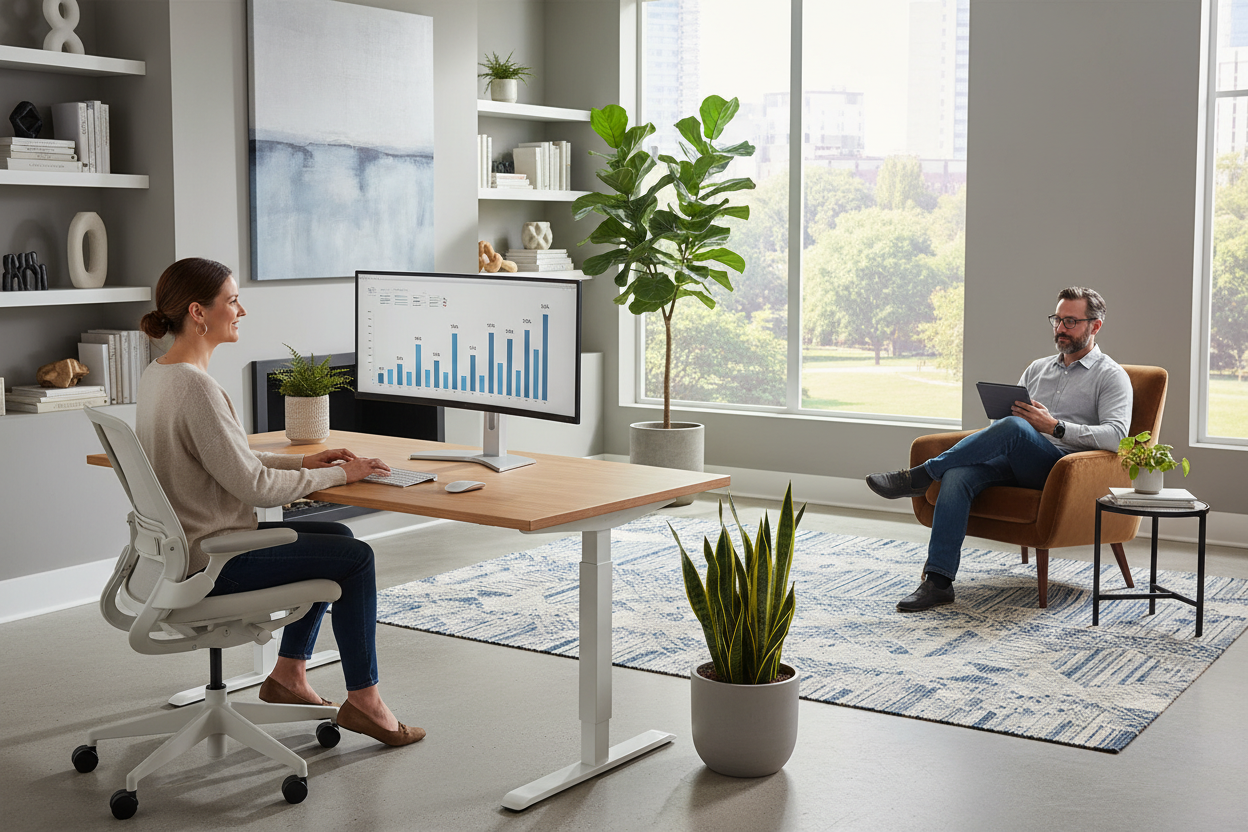
We have moved past the era of the improvised workspace. The days of hunching over a laptop on a kitchen island or balancing a monitor on a stack of books are over. As an interior designer, I have seen a massive shift in client requests—from open-concept living to dedicated, acoustically treated sanctuaries. Understanding how many americans are working from home is no longer just a statistic for economists; it is the driving force behind modern residential architecture and furniture selection.
Key Features for the Modern Home Office
- Ergonomic Integrity: Prioritize chairs with adjustable lumbar support and seat depth over purely sculptural pieces.
- Material Durability: Look for commercial-grade fabrics (50,000+ double rubs) if the piece is used 40+ hours a week.
- Lighting Temperature: Aim for 3000K-4000K LED lighting to reduce eye strain and appear natural on video calls.
- Acoustic Dampening: Incorporate plush rugs, heavy drapery, or upholstered wall panels to manage echo.
- Visual Balance: Ensure the desk scale does not overwhelm the room's footprint.
The Design Impact of Remote Work Statistics
When we look at the number of people working from home, we aren't just looking at data; we are looking at a fundamental change in how a home functions. With a significant percentage of workers working remotely, the home office has transitioned from a luxury addition to a utility as essential as the kitchen. This permanence dictates that we invest in quality.
Investing in Heirloom Quality
Because so many are still working from home, furniture wear-and-tear has accelerated. A dining chair is not engineered for eight hours of daily use. I advise clients to move away from particle board and veneers that chip easily. Instead, opt for solid hardwoods like walnut or white oak. These materials can be refinished and age beautifully, handling the rigors of the percentage of workforce working from home that now inhabits these spaces full-time.
Zoning and Layout for the Hybrid Era
What percentage of employees work from home dictates the layout of a residence. If two partners are remote, acoustic separation is paramount. We are seeing a decline in open floor plans in favor of broken-plan living, where bookshelves or glass partitions create distinct zones.
Visual Weight and Flow
With more people working from home, clutter becomes a psychological stressor. When selecting a desk, consider its visual weight. In smaller rooms, a desk with slender metal legs or a glass top maintains a sense of openness. Conversely, a heavy executive desk anchors a large room but requires substantial square footage to breathe. Home office facts suggest that a cluttered visual field reduces focus, so integrated cable management is non-negotiable.
The Corporate Context in Residential Design
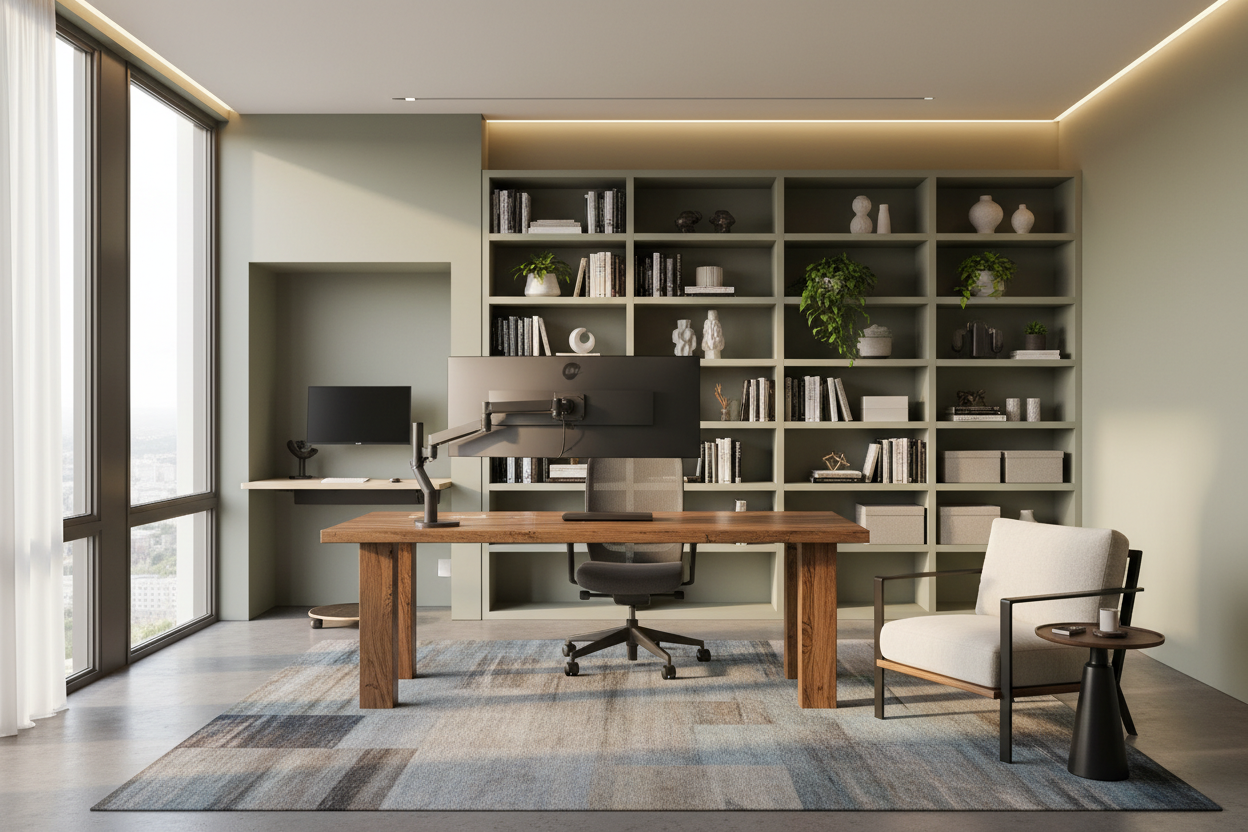
Clients often ask how many companies are still working from home to justify a renovation budget. The answer implies that hybrid models are staying. This influences the "Zoom background" aesthetic. We are curating bookshelves and art walls specifically to frame the user during video calls. The goal is a backdrop that looks professional yet personal—avoiding the sterile look of a corporate cubicle.
Regardless of what percentage of workers are working from home in your specific industry, your environment dictates your output. If how many companies are working remotely tells us anything, it is that the home must now perform at a commercial level of functionality while retaining residential comfort.
My Personal Take on how many americans are working from home
I learned the hard way that residential rugs and office chair casters are mortal enemies. In my own home office, I initially refused to use a plastic chair mat because it ruined the aesthetic of my vintage Persian rug. I assumed that because I wasn't in the office 100% of the time, it wouldn't matter.
Six months later, the statistics about working from home became a reality in my own house: the constant rolling in a three-foot radius had ground the pile of the rug down to the backing. It was a painful lesson in function over form. Now, I always recommend swapping standard plastic casters for "rollerblade" style rubber wheels—they are silent and far gentler on hardwood and textiles. It is a small detail, but when you are part of the demographic of how many people are working from home now, those small tactile details define your daily comfort.
Conclusion
Whether you are reacting to a recent work from home announcement or have been remote for years, the objective is the same: curate a space that respects your body and your design sensibility. The data is clear—this is a long-term shift. Your furniture should reflect that commitment.
Frequently Asked Questions
How much space do I really need for a functional home office?
Ideally, you need a minimum of 50 to 75 square feet to accommodate a desk, chair, and circulation space. However, with wall-mounted desks or secretary-style units, you can create a functional station in a footprint as shallow as 24 inches.
What is the best desk depth for computer work?
For standard computer work, a depth of 24 to 30 inches is recommended. This allows you to place your monitor at arm's length, preventing eye strain, while leaving enough surface area for a keyboard and documents.
How can I hide my office equipment in a living room?
Focus on "cloaking" technology. Use decorative boxes to hide routers, route cables through the legs of furniture, and choose a desk that looks like a console table when not in use. Cabinetry with retractable doors is also an excellent solution for concealing monitors.

Leave a comment
This site is protected by hCaptcha and the hCaptcha Privacy Policy and Terms of Service apply.