










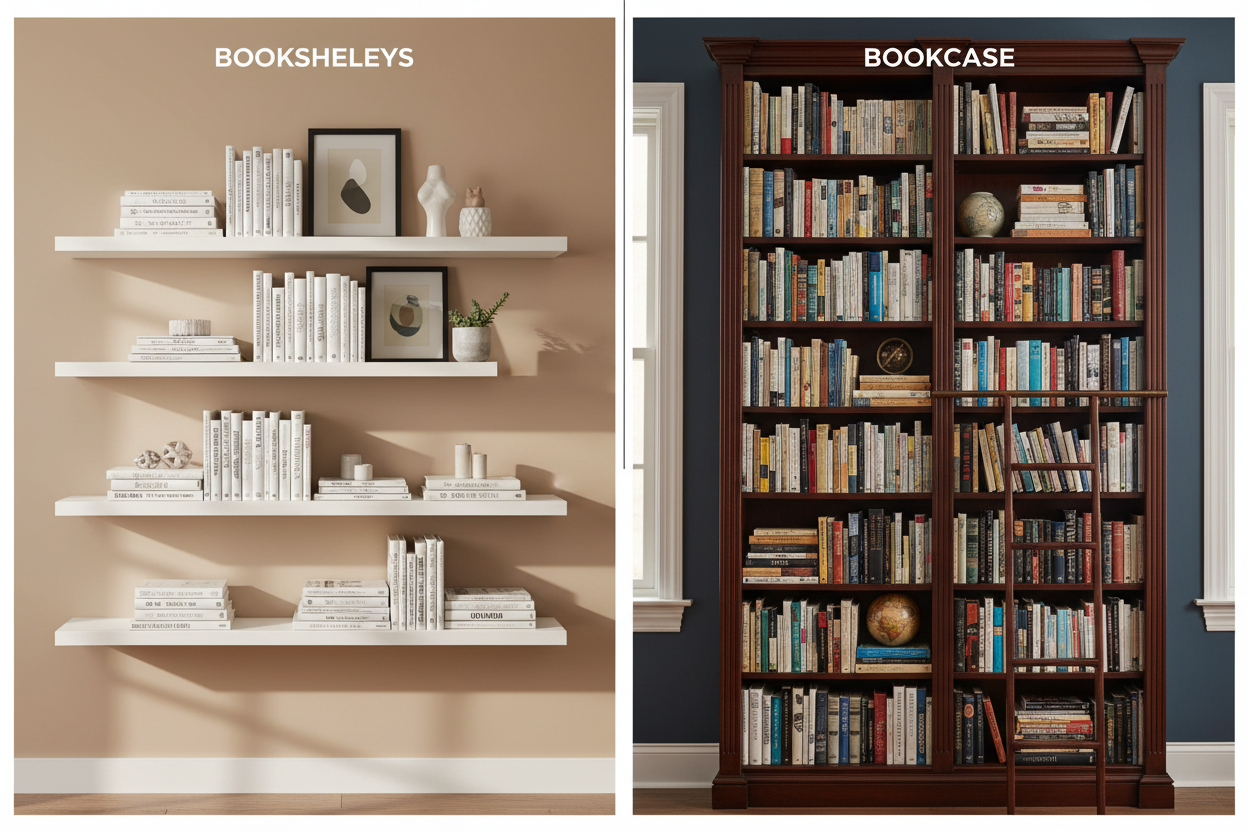
If you've ever stood in a furniture store wondering whether you need a bookcase or bookshelf, you're not alone. The terms get tossed around interchangeably, but there's actually a meaningful distinction that can help you make a smarter purchase. A bookshelf typically refers to individual shelves or a single horizontal surface for books, while a bookcase is the complete furniture piece with multiple shelves built into a frame. Understanding this difference can save you from buying the wrong storage solution for your home.
The confusion between bookcases and bookshelves stems from how we use language casually versus what furniture manufacturers actually mean. When you're looking for bookcases, you're shopping for a standalone piece of furniture—something with sides, a back, and multiple book shelves stacked vertically. These furniture bookcases come ready to use, requiring minimal assembly in most cases. On the other hand, bookcase shelving or shelves for bookcases might refer to replacement parts, additional tiers, or modular components you can customize.
Choosing Between Different Shelving Systems
The market offers everything from simple shelf bookcases to elaborate bookcase and shelving units that transform entire walls. A basic bookshelf unit might consist of three to five tiers, perfect for a bedroom or small office. Meanwhile, larger bookcases shelving units can hold hundreds of books and serve as room dividers or statement pieces in living rooms and home libraries.
I learned this distinction the hard way when I ordered what I thought was a complete bookcase online, only to receive individual shelves for bookcase installation that required wall mounting and separate brackets. The product listing said "bookshelf with shelves," which I assumed meant a complete unit. That experience taught me to read specifications carefully and understand exactly what "shelf bookshelf" or "shelving bookcase" means in each context.
Modern bookcase shelving units come in materials ranging from solid wood to engineered composites, metal, and glass. The price of bookshelves varies dramatically based on these materials, with budget-friendly particleboard options starting around $50 and custom hardwood bookcases & shelves reaching several thousand dollars. The bookcase shelf unit you choose should match both your budget and the weight of your collection—paperbacks need less support than heavy art books or reference materials.
Storage Beyond Books
Today's bookcases storage units serve multiple purposes beyond their original intent. People use bookshelves and storage units to display collectibles, family photos, plants, and decorative objects. The versatility of a well-designed bookcase unit makes it valuable furniture even if you don't own many physical books. Some models combine open shelving with closed cabinets, giving you options for both display and concealed storage.
When you bookcase buy decisions are ahead, consider how the piece will function in your space. A shelf and bookcase combination in an entryway can hold keys and mail while displaying artwork. In a home office, furniture shelving units keep supplies organized and accessible. The same bookcase with shelf design that works in a formal dining room might look out of place in a casual family room, so context matters.
Size and Scale Considerations
Book shelving units range from compact two-foot-wide models to expansive wall systems spanning twelve feet or more. Measure your space carefully before shopping, accounting for baseboards, outlets, and door swings. A common mistake is choosing shelves furniture that technically fits the wall width but overwhelms the room visually. The bookcase shelf should be proportional to your ceiling height—a towering eight-foot unit looks awkward in a room with seven-foot ceilings.
The depth of bookcase shelves matters too. Standard book shelf units measure 10 to 12 inches deep, accommodating most hardcovers and paperbacks comfortably. Deeper shelves for bookshelves allow for double-stacking or larger items but take up more floor space. Adjustable shelving bookcase designs offer flexibility as your needs change, letting you reconfigure shelf heights for different sized items.
Shopping Smart for New Bookshelves
If you're looking for bookcases, start by assessing what you'll actually store. Count your books, measure your tallest volumes, and consider future growth. Many people underestimate how quickly collections expand. Book storage units should have at least 20% extra capacity beyond your current needs.
Online shopping offers convenience and competitive pricing, with many retailers providing bookshelf delivery right to your door. However, seeing furniture bookcase options in person helps you judge quality and sturdiness. Press down on display shelves to test for wobble or flex. Open and close any doors or drawers multiple times. Formal bookcases for professional spaces need higher quality construction than casual pieces for a spare bedroom.
The debate of book shelf or shelve comes down to usage—you shelve books on a shelf. But when shopping, you'll see both terms used loosely. Don't let terminology confusion derail your search. Focus on the physical specifications: dimensions, weight capacity, material, and assembly requirements.
Assembly and Installation
Most bookshelves and shelving units require some assembly, ranging from simple shelf insertion to complex multi-hour projects. Read reviews specifically mentioning assembly difficulty before purchasing. Some book shelf units arrive fully assembled, which costs more but saves frustration. If you're not handy with tools, factor in professional assembly costs when comparing prices.
Tall shelves and bookcases need anchoring to walls for safety, especially in homes with children or pets. Furniture tip-over accidents cause serious injuries every year. The included hardware for securing a bookshelf shelving system to studs is there for a reason—use it. This applies whether you're installing a single shelf for bookshelf purposes or a complete bookshelves and bookcase wall system.
Making Your Selection
The right bookcases and shelving units balance function, aesthetics, and budget. A well-chosen shelf bookcase becomes a long-term investment that organizes your space and showcases what you love. Whether you need basic book shelf furniture for a college apartment or elaborate bookcases shelves for a home library, understanding the terminology and options helps you shop with confidence.
Consider the bookcase and shelf as architectural elements that define your room's character. Dark wood furniture shelving units create traditional, library-like atmospheres. Light-colored or white shelves bookshelves make small spaces feel larger and brighter. Metal and glass combinations suit modern, industrial interiors. The shelves bookcase you choose tells visitors something about your style and priorities.
Ultimately, the distinction between a shelf for bookcase and a complete bookcase with shelf matters less than finding something that works for your space, holds your belongings securely, and fits your aesthetic vision. New bookshelves should feel like an enhancement to your home, not just utilitarian storage. Take your time, measure twice, and choose pieces that you'll appreciate for years to come.
Frequently Asked Questions
What's the average price of bookshelves?
Basic particleboard or laminate book shelving units typically cost between $50-150, while solid wood furniture bookcases range from $200-800. Custom-built or designer bookcases and shelves can exceed $2,000. The price depends on materials, size, brand, and construction quality.
Do I need to anchor my bookcase to the wall?
Any bookcase unit taller than 30 inches should be anchored to wall studs for safety, especially in homes with children or pets. Most manufacturers include anchoring hardware with bookshelves and shelving units. This simple step prevents dangerous tip-over accidents.
How do I choose between open shelves or a bookcase with doors?
Open shelves for bookcases provide easy access and display opportunities but require regular dusting. Enclosed bookcases storage units protect contents from dust and create a cleaner look, ideal for formal spaces. Many people choose combination units with both open and closed sections for maximum versatility.


Leave a comment
This site is protected by hCaptcha and the hCaptcha Privacy Policy and Terms of Service apply.