










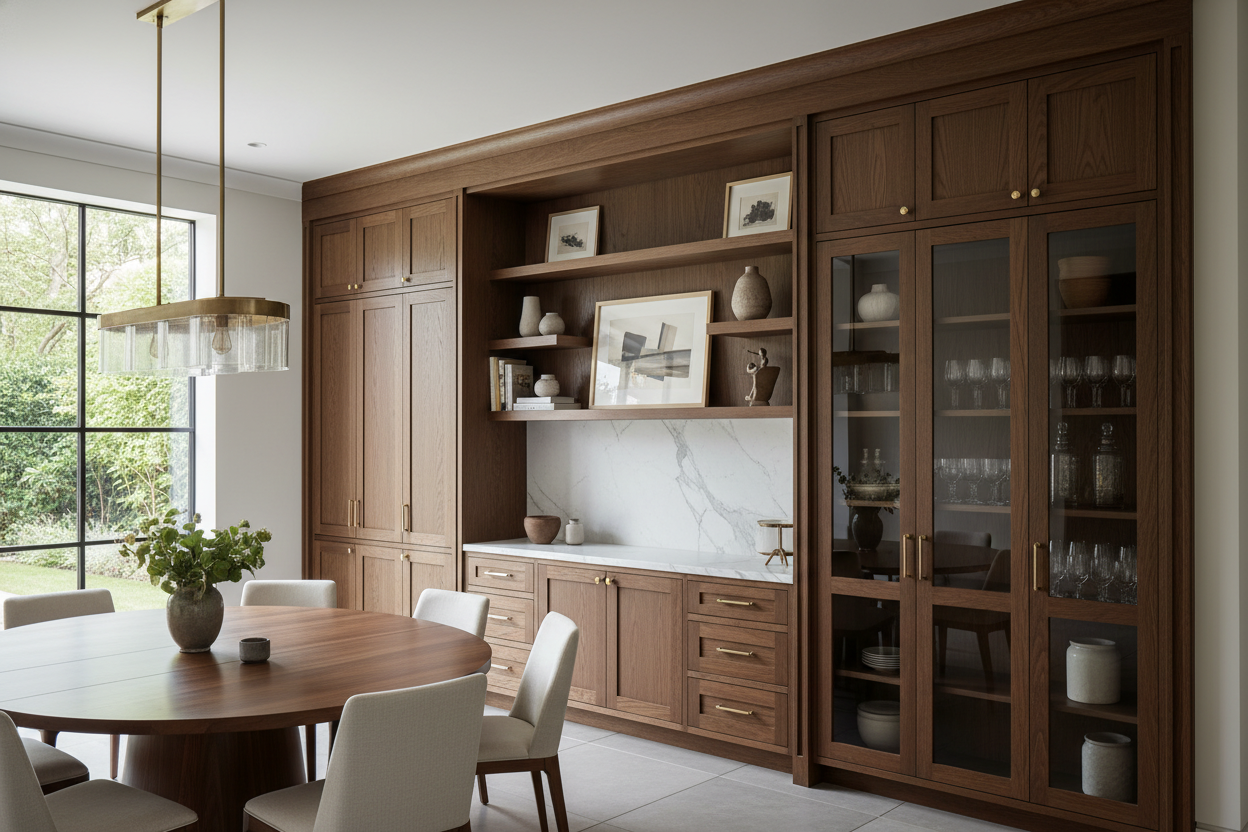
I’ve spent way too many Friday nights scrolling through 50+ tabs of sideboards, trying to figure out why some look like a chic Parisian apartment and others look like a breakroom at a dentist's office. The struggle is finding **dining room cabinetry** that actually stores your stuff without making the room feel like Kitchen Part Two.
We’ve all been there: you buy a beautiful table, but then realize you have nowhere to put the 18-inch turkey platter or the 'good' wine glasses that don't fit in the kitchen uppers. You need storage, but you don't want to kill the vibe of your entertaining space. Here is how I handle the 'massive storage vs. elegant room' dilemma.
- Choose finishes that contrast with your kitchen (e.g., wood tones vs. painted cabinets).
- Aim for a depth of at least 15-18 inches to fit actual dinnerware.
- Mix glass fronts with solid doors to hide the messy stacks of linens.
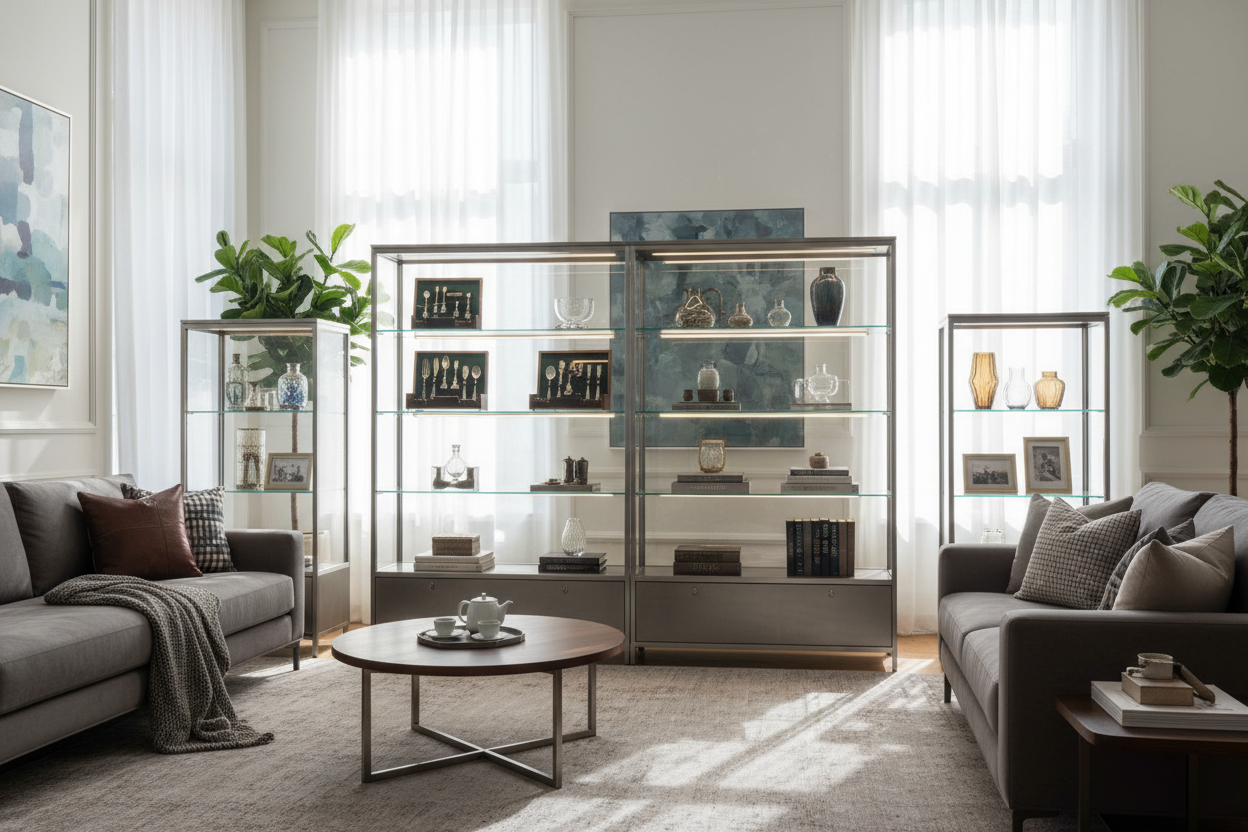
- Use lighting inside the units to make them feel like a display, not a closet.
The 'Second Kitchen' Fear is Real (But Avoidable)
The biggest mistake I see is people using the exact same cabinetry in the dining room as they have in the kitchen. It’s an easy trap to fall into during a renovation. You think, 'I'll just order four more of these base units,' but suddenly your dining area feels like an extension of the dishwasher zone.
To avoid this, you have to treat the dining room unit as a piece of furniture. It needs a different personality. Think about changing the hardware—maybe unlacquered brass instead of the brushed nickel in the kitchen—or opting for a different toe kick detail. Furniture usually has feet or a recessed plinth; kitchen cabinets usually have a standard 4-inch rubber or wood toe kick. Small details change the whole narrative.
Glass Fronts and Warm Wood: The Anti-Kitchen Formula
If your kitchen is all white and bright, go moody for the dining room. I’m a huge fan of walnut or white oak for dining room wall units designs. The natural grain breaks up the visual monotony of painted walls and makes the room feel grounded. It’s the difference between a 'storage solution' and a 'design choice.'
Glass is your best friend here. A custom built in china cabinet with reeded or seeded glass hides the clutter while still reflecting light. It keeps a dining room wall of cabinets from feeling like a heavy, solid block of wood that’s closing in on your guests. If you’re worried about seeing your mismatched Tupperware, keep the glass to the top third and use solid doors for the bottom.
Should You Commit to a Full Wall?
A wall to wall cabinets dining room is a massive commitment, both for your wallet and your floor plan. If you have a long, narrow room, a full wall of shallow cabinets (around 12-14 inches deep) can actually make the room feel more intentional. It creates a focal point that isn't just a blank drywall desert.
However, if you're on a budget or renting, don't feel like you have to call a contractor. You can find a great dining room china cabinet for sale that offers that 'built-in' look for a fraction of the price. The key is scale. If the wall is 10 feet wide, don’t put a 4-foot cabinet in the middle and call it a day. Go big—line up two or three identical units to fill the space.
Storing Platter Towers (And Other Awkward Things)
Let’s talk about the stuff that actually lives in these units. I call it the 'dining room wardrobe' approach. You need a spot for the things that are too tall for kitchen drawers: the three-tier cupcake stand, the oversized salad bowls, and the stacks of placemats. Standard kitchen uppers are often too shallow for large chargers, which is why I always recommend at least 15 inches of internal depth.
For the lower half of your dining room wardrobe, drawers are better than shelves. Trust me. Digging for a tablecloth at the back of a dark cabinet is a nightmare. A piece like this modern brown sideboard buffet is perfect because it gives you that accessible lower storage for heavy stoneware while keeping the top surface free for serving drinks or setting out appetizers.
Freestanding Options That Look Custom
You don't need to live through a dusty renovation to get the storage you crave. I’ve seen some incredible setups using high-quality units for dining room that look like they were built with the house. The trick is to match the crown molding or the baseboard of the furniture to the room’s existing trim.
If you find a freestanding dining room wall units furniture piece you love, bolt it to the wall. Not just for safety (though that’s huge), but because it stops the 'wobble' that makes furniture feel cheap. When a unit is rock-solid, it feels like part of the architecture. I personally prefer units with adjustable shelving because my vase collection is always changing, and fixed shelves are the enemy of a growing home.
My Honest Mistake
A few years ago, I bought a gorgeous vintage hutch for my dining room. It was 12 inches deep—I didn't even think to measure it. I got it home and realized my standard 11-inch dinner plates barely fit, and my 13-inch chargers were a total no-go. I ended up having to store my plates at an angle, which meant I could only fit half as many. Now, I never buy a dining room unit without bringing a plate and a tape measure with me. Don't trust the photos; trust the numbers.
FAQ
How deep should dining room cabinets be?
Ideally, 15 to 18 inches. This fits large platters and chargers that usually won't fit in a standard 12-inch kitchen upper cabinet. If you go deeper than 24 inches, you start losing things in the back.
What's the best lighting for a china cabinet?
LED strips hidden behind the front lip of the shelves are the gold standard. They provide an even glow without the 'hot spots' you get from puck lights. If you're renting, battery-powered motion-sensor lights work in a pinch.
Can I use wardrobes in the dining room?
Yes, but be careful with the 'bedroom' look. Avoid anything with a hanging rod or mirrors. Look for tall, shelved units that have a more classic furniture silhouette.


Leave a comment
This site is protected by hCaptcha and the hCaptcha Privacy Policy and Terms of Service apply.