










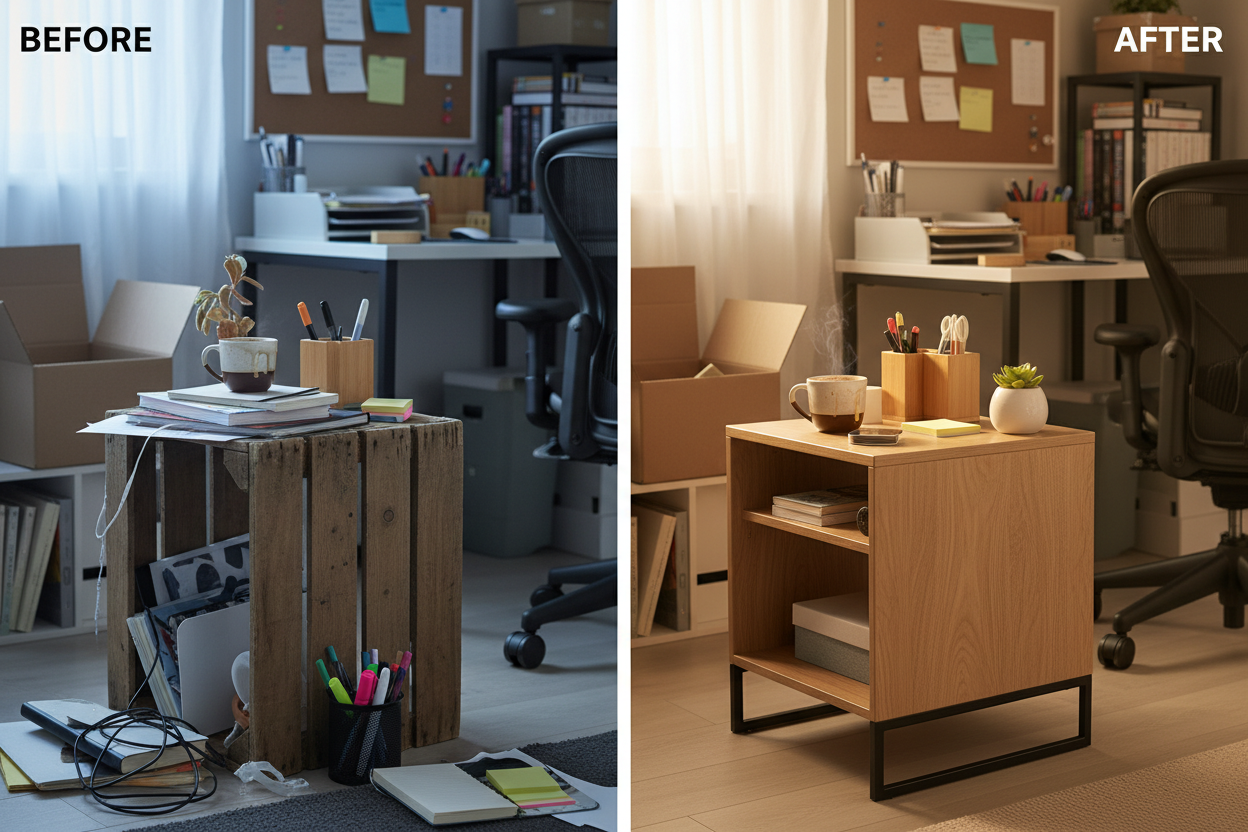
If you're working in a small office or home workspace, you've probably experienced that frustrating moment when your coffee cup has nowhere to go except precariously balanced on a stack of papers. A small office side table isn't just another piece of furniture—it's the difference between a cluttered, stressful workspace and one that actually functions.
I learned this the hard way after knocking over my third cup of coffee in a month. My desk was overflowing with monitors, keyboards, and project files, leaving zero room for the essentials. That's when I realized that a side table for home office use wasn't a luxury—it was a necessity.
The beauty of adding a compact surface next to your desk is immediate. You suddenly have a dedicated spot for your beverage, phone, notebook, or that plant you've been meaning to add to brighten up the space. But not all side tables are created equal, especially when you're dealing with limited square footage.
Storage Makes All the Difference
An office side table with storage transforms a simple surface into a multifunctional workhorse. Instead of just holding your coffee, it can hide away office supplies, charging cables, or those random items that always seem to accumulate on desks.
When I finally upgraded to an office side table with drawer, the change was remarkable. Suddenly, my pens, sticky notes, and USB drives had a home. The drawer kept everything within arm's reach but out of sight, which made my entire workspace feel more organized and professional during video calls.
For those dealing with even more items to store, an office end table with storage—whether it's multiple drawers or a combination of drawers and open shelving—can replace a small filing cabinet. This is particularly useful in home offices where you're trying to maximize every inch of available space.
Finding the Right Size and Style
A small side table for office use typically ranges from 15 to 24 inches wide. This footprint fits comfortably beside most desks without overwhelming the room. The height matters too—ideally, your side table should be roughly level with your desk surface or slightly lower, making it easy to reach items without awkward stretching.
The design matters more than you might think. A modern office side table with clean lines and a minimalist aesthetic can elevate your entire workspace. I've seen offices transformed simply by swapping out a dated, bulky side table for something sleeker and more contemporary.
Metal and glass combinations work beautifully in modern spaces, while wood finishes bring warmth to home offices. The key is choosing something that complements your existing office furniture end table without creating visual clutter.
Shelves vs. Drawers: What Works Best?
The debate between an office side table with shelves versus one with drawers comes down to how you work. Open shelving offers easy access and can display attractive storage boxes or a few decorative items. You can see everything at a glance, which some people find helpful.
Drawers, on the other hand, hide the chaos. A small table with drawers for office use keeps your workspace looking clean even when you've hastily tossed items inside. If you're someone who works better in a visually calm environment, drawers win every time.
Some designs offer the best of both worlds—a drawer up top for frequently accessed items and open shelving below for books or baskets. This combination gives you flexibility in organizing different types of items.
Placement Strategies That Actually Work
Where you position your home office side table matters as much as which one you choose. The most common placement is directly beside your desk chair, creating an L-shaped work area. This puts everything within easy reach without requiring you to stand up.
Another option is positioning it behind your desk chair, which works well if you have a swivel chair. This setup keeps the side table out of your direct line of sight, reducing visual clutter while still keeping items accessible.
In corner offices or L-shaped desk configurations, a side table design for office use can bridge the gap between desk sections, creating additional work surface when needed. I've used this setup when spreading out large documents or working on projects that require more room.
Materials and Durability
The material you choose affects both aesthetics and longevity. Solid wood side tables offer durability and a classic look that ages well. They can handle the weight of printers, stacks of books, or heavier equipment without wobbling.
Engineered wood with veneer finishes provides a more budget-friendly option while still looking professional. These work perfectly fine for lighter loads like lamps, drinks, and office supplies.
Metal frames with wood tops have become increasingly popular in modern offices. They're sturdy, easy to clean, and the industrial aesthetic appeals to many people. Plus, metal frames tend to have a smaller visual footprint, making the room feel less crowded.
Making the Most of Vertical Space
A small side table office setup benefits enormously from thinking vertically. Even a compact table with two or three shelves multiplies your storage capacity without eating up more floor space.
I stack frequently used items on the top shelf and less-accessed materials below. This natural hierarchy keeps my workspace efficient. The bottom shelf often holds my bag or a small filing box, things I need daily but don't want cluttering my desk.
Some clever designs incorporate hooks on the sides for hanging headphones or bags, effectively using every available inch. These thoughtful details make a significant difference in small spaces.
Price Points and Value
You can find functional side tables starting around $30-50, though these tend to be basic and may not last more than a few years. Mid-range options in the $100-200 range offer better construction, more storage features, and materials that hold up to daily use.
Higher-end pieces above $200 often feature solid wood construction, superior hardware, and designs that double as statement pieces. Whether the investment makes sense depends on how long you plan to use your current office setup and how much you value aesthetics.
From my perspective, spending a bit more on a quality piece pays off. A well-made side table lasts for years and moves with you through different offices or homes, whereas cheap particle board furniture often needs replacing within a couple of years.
Frequently Asked Questions
What's the ideal height for an office side table?
The ideal height ranges from 24 to 28 inches, roughly matching standard desk height. This allows you to easily reach items without stretching or bending awkwardly. If you're using it primarily for a lamp or decorative items, you can go slightly taller, but for functional workspace extension, stick close to your desk height.
Can a side table replace a filing cabinet in a small office?
For many people, yes. A side table with multiple drawers or a combination of drawers and shelves can handle the storage needs of a paperless or mostly-paperless office. However, if you regularly work with large quantities of physical documents, you'll still need dedicated filing solutions. Consider your actual paper volume before making the switch.
How do I keep my office side table from looking cluttered?
Use the "one in, one out" rule—when you add something new to the table, remove something else. Designate specific purposes for each shelf or drawer, and use small organizers or trays to contain loose items. Regularly purge items you haven't used in the past month, and avoid using the top surface as a catch-all for random objects.

Leave a comment
This site is protected by hCaptcha and the hCaptcha Privacy Policy and Terms of Service apply.