










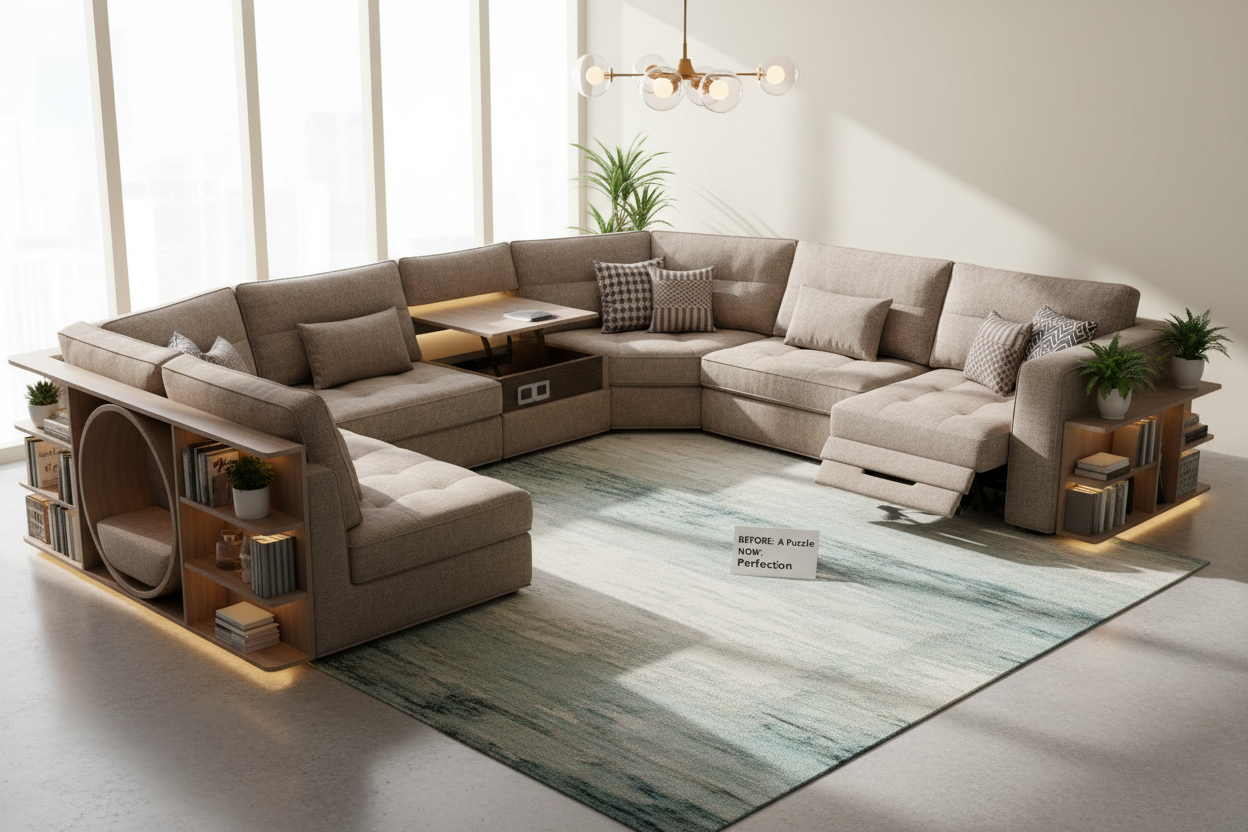
If you've ever stared at that weird gap behind your sofa or that narrow hallway wondering what could possibly fit there, you're not alone. The solution I stumbled upon transformed not just my space, but how I think about furniture altogether: the humble console table in its many long, narrow forms.
These slender beauties come in countless variations, each designed to squeeze into those challenging spots while adding both style and function. Whether you're looking for a long skinny table with storage to hide clutter, or a narrow sofa table with shelves to display your favorite books, there's a configuration that'll work for your space.
Why Long Narrow Tables Work Where Others Fail
The magic of these tables lies in their proportions. Most are between 10 to 18 inches deep, which means they can slide into spaces where traditional furniture simply won't fit. I discovered this firsthand when moving into an apartment with a living room that had an awkward 12-inch gap between the sofa and the wall. A standard side table looked ridiculous, but a long narrow console table with shelves filled that space perfectly while giving me room for lamps, plants, and storage baskets underneath.
The length typically ranges from 48 to 72 inches, though some oversized sofa tables can stretch even longer. This extended surface area gives you surprising versatility—enough room for a table lamp on one end, a small tray for remotes in the middle, and a decorative vase on the other side.
Storage Options That Actually Matter
Not all narrow tables are created equal when it comes to storage. A long narrow table with drawers offers concealed storage perfect for keys, mail, chargers, and all those small items that tend to accumulate. I keep my dog's leash and waste bags in one drawer, spare batteries in another, and still have room for miscellaneous odds and ends.
For those who prefer open storage, a narrow sofa table with shelves provides easy access to frequently used items. Books, decorative boxes, and baskets all find a home here. The visual appeal of open shelving can't be understated—it gives you the chance to curate a small display that reflects your personality.
Some designs combine both approaches. A long narrow sofa table with storage might feature a drawer or two up top with open shelving below, or cabinets on the ends with shelves in the middle. This hybrid approach has become my preferred option because it balances the need to hide mess with the desire to showcase beautiful objects.
The Drawer Dilemma: How Many Do You Really Need?
When shopping for a long thin table with drawers, you'll find options ranging from a single shallow drawer to four or more deeper ones. My advice? Think about what you'll actually store. A slim sofa table with drawers works brilliantly for small items, but if you're planning to stash bulkier things, make sure those drawers are at least 3-4 inches deep.
I made the mistake once of buying a gorgeous console table only to discover the drawers were barely 2 inches deep—useless for anything except perhaps paper napkins. Now I always check drawer dimensions before purchasing.
Placement Ideas Beyond the Sofa
While these tables are often called sofa tables, their usefulness extends far beyond the living room. A long shallow console table works beautifully in an entryway, providing a landing spot for keys and mail without eating up precious floor space. I've seen them used brilliantly in narrow hallways, creating a gallery-like display area without impeding traffic flow.
In dining rooms, they can serve as a buffet alternative for smaller spaces. A console table narrow long design fits against a wall where a traditional buffet would protrude too far into the room. During dinner parties, it becomes a serving station; the rest of the time, it holds serving dishes and table linens.
Bedrooms benefit too. If you don't have space for a full dresser, a wide narrow console table can substitute nicely, offering surface area for a mirror and jewelry box while drawers hold accessories or folded clothes.
Materials and Styles to Consider
The material you choose affects both durability and aesthetic. Wood remains the most popular choice, ranging from rustic reclaimed styles to sleek modern finishes. Metal frames with wood or glass tops create an industrial look that's particularly popular right now. Glass tops make small spaces feel more open but require constant cleaning if you have kids or pets.
I've owned both solid wood and veneer options. While solid wood feels more substantial and ages beautifully, quality veneer over engineered wood can be just as durable and often costs significantly less. The key is avoiding the cheapest particle board options that won't withstand daily use.
Oversized Options for Larger Spaces
An oversized sofa table makes a bold statement in rooms with high ceilings or expansive walls. These pieces typically exceed 72 inches in length and might be slightly deeper than standard narrow tables. They work particularly well in open-concept homes where you need furniture to help define separate zones.
The extra length provides room for larger lamps, multiple decorative elements, or even a small workspace at one end. Just ensure your sofa is long enough to balance the table's proportions—you don't want the table extending significantly beyond the sofa's edges.
Measuring Your Space Correctly
Before you fall in love with any table, measure your space carefully. For behind-the-sofa placement, measure the length of your sofa and aim for a table that's either the same length or slightly shorter. The table should sit 2-4 inches lower than the sofa back for proper proportions.
Depth is equally important. Measure from the wall to the sofa back, then subtract at least 6 inches for walking space. What remains is your maximum table depth. In hallways, leave at least 36 inches of clearance for comfortable passage.
Making the Most of Your Purchase
Once you've selected your table, styling it thoughtfully maximizes both function and beauty. I follow a loose rule of thirds: one-third practical items (lamp, clock, charging station), one-third decorative (vases, picture frames, plants), and one-third empty space. That breathing room prevents the surface from looking cluttered.
For tables with shelves, use baskets or decorative boxes to corral small items. This keeps things tidy while maintaining visual appeal. Vary the height of objects to create interest—a tall lamp balanced by a stack of books with a small sculpture creates more dynamic visual flow than items all the same height.
Frequently Asked Questions
What's the ideal height for a console table behind a sofa?
The table should be at or slightly below the height of your sofa back, typically between 28-32 inches tall. This ensures the table doesn't visually compete with the sofa and allows you to easily reach items from either side. If the table will hold a lamp, make sure the combined height doesn't block sightlines across the room.
Can I use a narrow console table as a desk?
Absolutely, and many people do. Look for tables at least 48 inches long and 14-16 inches deep for comfortable workspace. Models with drawers provide essential storage for office supplies. Just verify the height works with your chair—standard desk height is 29-30 inches, while console tables can vary.
How do I keep a long narrow table from looking too sparse?
Group items in odd numbers (three or five objects look more natural than even numbers), use items of varying heights, and don't be afraid to layer—place a small object in front of a larger one. A table runner or tray can anchor a grouping and make the arrangement feel intentional rather than random.

Leave a comment
This site is protected by hCaptcha and the hCaptcha Privacy Policy and Terms of Service apply.