










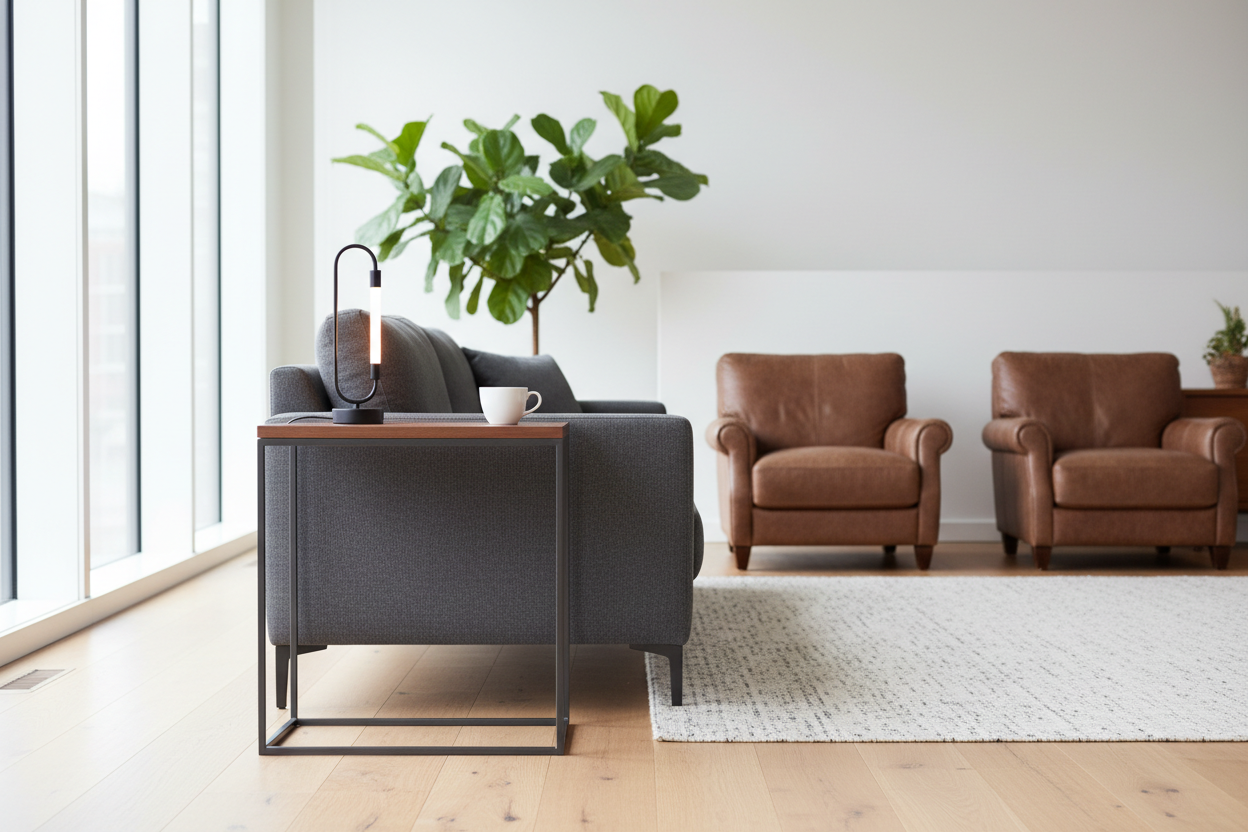
Living in a compact apartment taught me something valuable: not all furniture needs to take up half your room to be functional. After years of squeezing past oversized nightstands and bumping into chunky end tables, I discovered that narrow side tables with storage could completely transform how I use my space. These slim pieces pack surprising functionality into a footprint that barely intrudes on your walking space, making them perfect for tight bedrooms, cramped living rooms, or any area where every inch counts.
The beauty of a narrow side table with storage lies in its dual purpose. You get a surface for your lamp, phone, or morning coffee, plus hidden compartments or shelves that keep clutter out of sight. Unlike traditional side tables that might measure 20-24 inches deep, these streamlined alternatives typically range from 8 to 12 inches, sliding effortlessly into spaces you never thought could accommodate furniture.
Finding the Right Fit for Your Space
The first challenge most people face is understanding what "narrow" actually means in furniture terms. A shallow side table generally refers to depth rather than width—think of it as the measurement from front to back. This matters because you might find a table that's technically narrow but still too wide for the spot between your couch and wall.
When I was hunting for the perfect piece for my bedroom, I measured the gap between my bed and the window—just 10 inches. A standard nightstand would have blocked the window completely. Instead, I found a skinny side table with storage that measured 9 inches deep, leaving me with breathing room and access to natural light. The drawer gave me a place to stash reading glasses, phone chargers, and all those little items that used to pile up on my dresser.
Storage Solutions That Actually Work
Not all storage is created equal, especially when you're working with limited dimensions. The most practical narrow side table storage options include pull-out drawers, open shelving, or a combination of both. Drawers keep items concealed and dust-free, which I appreciate for storing medications or personal items. Open shelves, on the other hand, provide quick access to books, decorative baskets, or frequently used items.
Some designs incorporate magazine racks on the sides or small cubby holes perfect for remotes. I've seen clever thin side table with storage designs that feature a lift-top compartment—the entire tabletop hinges up to reveal a hidden storage area underneath. This works brilliantly if you need to hide away laptops, tablets, or paperwork at the end of the day.
Material Choices Matter More Than You Think
The material you choose affects both the table's durability and how well it fits your aesthetic. Wood offers warmth and traditional appeal, while metal frames create an industrial or modern narrow side table vibe. Glass tops can make a small space feel more open since you can see through them, though they require more frequent cleaning.
I personally went with a wood and metal combination for my living room—the narrow profile didn't sacrifice sturdiness, and the mixed materials complemented both my vintage rug and contemporary sofa. The metal frame added visual lightness that a solid wood piece wouldn't have provided in such a tight corner.
Styling Without Overwhelming the Surface
Here's where many people stumble: they find the perfect slim table, then pile it high with so much stuff that it defeats the purpose of choosing a streamlined piece. The limited surface area of a narrow side table actually forces you to be more intentional about what you display.
I stick to a simple formula: one functional item (like a lamp or coaster), one decorative element (a small plant or framed photo), and that's it. Everything else goes in the storage compartments below. This keeps the top visually clean while still making the table feel purposeful rather than bare.
Where These Tables Shine Brightest
Beyond bedrooms and living rooms, narrow side tables with storage solve problems in unexpected places. Hallways benefit enormously from a shallow table where you can drop keys and mail while the lower shelf holds shoes or bags. In home offices, a thin table can slide behind a desk chair, providing extra surface area for a printer or supplies without creating a obstacle course.
Bathrooms are another underrated location. A narrow table can fit beside a freestanding tub, holding towels, candles, and bath products in a spa-like arrangement. The storage below keeps extra toiletries or cleaning supplies tucked away but accessible.
Modern Design Trends Worth Considering
The modern narrow side table market has exploded with options that go far beyond basic rectangles. C-shaped designs slide under sofas, allowing you to pull your laptop or snack closer while sitting. Nesting tables give you flexibility—use them separately in different rooms or stack them when you need floor space for guests.
Floating wall-mounted versions eliminate floor contact entirely, making rooms feel more spacious and simplifying vacuuming. Some feature fold-down surfaces that expand when needed and tuck away when not in use. The innovation in this category reflects how many of us are living in smaller spaces and demanding more from our furniture.
Avoiding Common Purchasing Mistakes
The biggest error I see people make is buying based on photos alone without checking actual dimensions. A table might look perfectly proportioned online, then arrive and overwhelm your space—or worse, be so flimsy it wobbles when you set down a glass of water.
Always check weight capacity, especially if you plan to place heavy items like stacks of books or a substantial lamp on top. Read reviews specifically mentioning stability and assembly difficulty. I learned this the hard way with a gorgeous table that required an engineering degree to put together and still felt rickety afterward.
Another pitfall is ignoring the height. Your narrow side table should align roughly with the arm of your sofa or the top of your mattress for optimal functionality. Too high or too low, and it becomes awkward to use, no matter how perfect the width and depth.
Making the Investment Count
Quality narrow side tables with storage range from budget-friendly options around $50 to designer pieces exceeding $500. The price often reflects construction quality, materials, and brand reputation. Mid-range options between $100-$250 typically offer the best balance of durability and design for most homes.
Consider this furniture as a long-term investment rather than a temporary fix. A well-made skinny side table with storage can move with you through multiple homes, adapting to different rooms and purposes. I've used the same narrow table as a nightstand, an entryway piece, and currently as a plant stand in my sunroom over the course of five years.
The versatility of these pieces means you're not locked into one specific use. As your needs change—maybe you move to a larger space or rearrange your current one—these tables can shift roles seamlessly. That adaptability makes them smarter purchases than larger, more specialized furniture that only works in one specific spot.
Frequently Asked Questions
What's the ideal depth for a narrow side table in a small bedroom?
For most small bedrooms, aim for a depth between 8-12 inches. This provides enough surface area for essentials like a lamp, phone, and water glass while leaving clearance for walking around the bed. Measure your available space first, leaving at least 2-3 feet of walkway if possible.
Can narrow side tables support heavy lamps or multiple items?
This depends entirely on the table's construction and materials. Check the manufacturer's weight capacity specifications before purchasing. Quality tables with solid wood or reinforced metal frames can typically support 20-50 pounds, which accommodates most table lamps and everyday items. Avoid cheaply made particleboard options if you need to place anything heavy on top.
How do I keep a thin side table from looking too sparse or empty?
Focus on vertical elements rather than spreading items across the surface. A taller lamp, a small stack of books, or a vertical picture frame draws the eye upward and makes the table feel purposeful. Use the storage compartments to add visual weight to the lower portion, and consider a decorative basket or box on a shelf to add texture without cluttering the top.

Leave a comment
This site is protected by hCaptcha and the hCaptcha Privacy Policy and Terms of Service apply.