










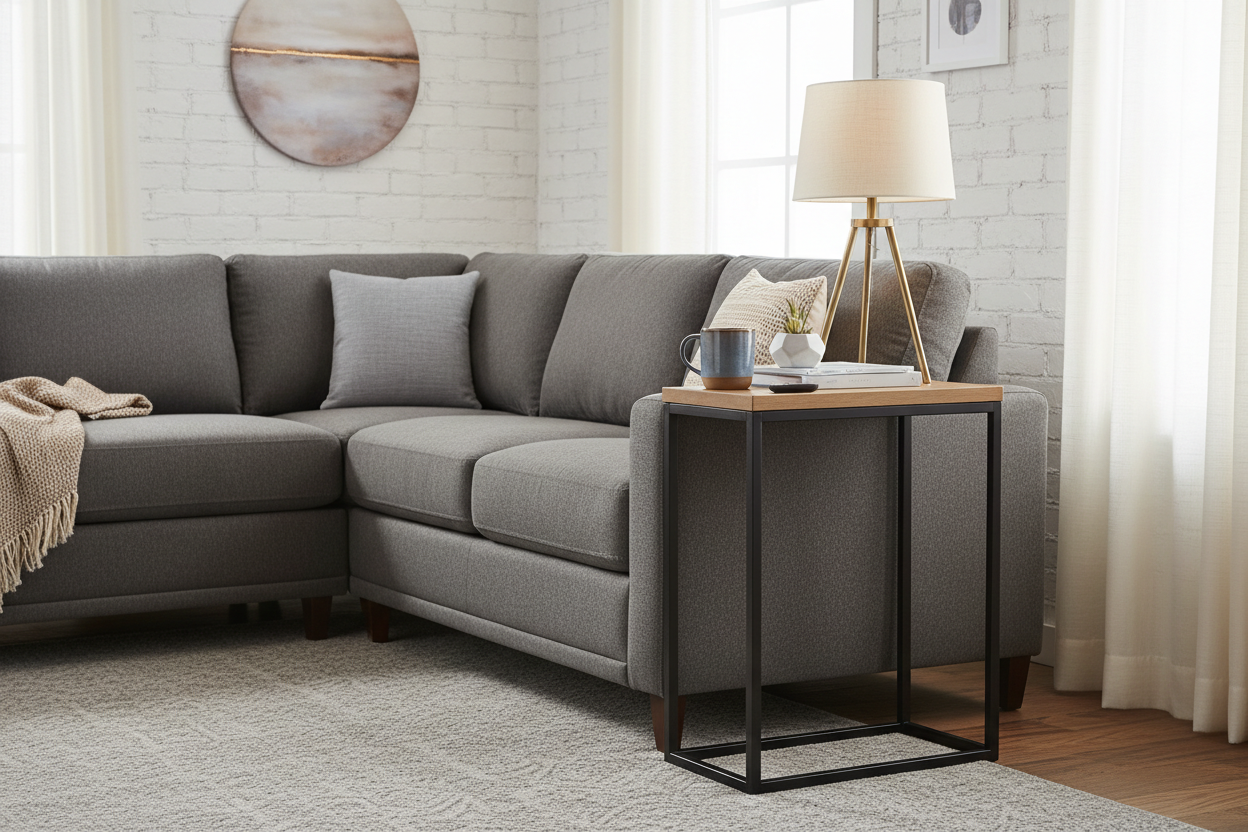
Living in a small apartment taught me something valuable: furniture doesn't need to be bulky to be functional. After knocking over my regular side table for the third time while squeezing past my couch, I realized I needed something that could fit into those awkward, narrow spaces without making my room feel like an obstacle course.
An ultra slim side table is exactly what it sounds like—a piece of furniture designed to occupy minimal floor space while still providing a surface for your coffee, lamp, or phone. These tables typically measure between 6 to 12 inches in depth, compared to standard side tables that can be 18 to 24 inches deep. The difference might seem small on paper, but in a cramped living room or bedroom, those extra inches can completely change how you move through your space.
The beauty of these narrow designs is that they can slip into places where traditional furniture simply won't fit. I've seen them work brilliantly beside a bed that's pushed against a wall, in hallways that need a spot for keys and mail, or tucked behind a sofa to hold drinks without blocking walkways. They're problem-solvers for modern living situations where every square foot counts.
What Makes a Side Table 'Super Skinny'?
A super skinny side table goes beyond just being slim—it's engineered for the absolute tightest spaces. We're talking about profiles as narrow as 6 to 8 inches. These pieces often feature vertical designs, using height instead of width to provide usable surface area. Some have multiple tiers stacked upward, giving you more functionality without demanding more floor space.
The construction of these tables matters tremendously. Because they're narrow, stability becomes a concern. Quality designs incorporate weighted bases, wall-mounting options, or clever engineering that prevents tipping. I learned this the hard way when my first budget skinny table toppled over from the weight of a single hardcover book.
Storage Solutions in Minimal Footprints
An ultra slim side table with storage is where things get interesting. Designers have become incredibly creative about incorporating drawers, shelves, and compartments into these narrow frames. You'll find models with pull-out drawers that are shallow but surprisingly roomy, open shelving that keeps items accessible, and even hidden compartments that maximize every cubic inch.
Storage configurations vary widely. Some tables feature a single drawer at the top with an open shelf below—perfect for keeping remotes and chargers organized while displaying a few decorative items. Others stack multiple small drawers vertically, creating a tower of storage that's ideal for bedside essentials like medications, reading glasses, or jewelry.
The key is matching the storage type to your needs. For a living room, open shelves might work better because you can grab what you need quickly. In a bedroom, drawers offer privacy and keep clutter out of sight. I use one with a combination of both beside my bed—the drawer hides things I don't want guests to see, while the shelf holds books I'm currently reading.
Choosing the Right Very Slim Side Table
Material choice affects both aesthetics and durability. Metal frames with glass or wood tops create an airy, modern look that doesn't visually clutter small spaces. Solid wood options bring warmth but can feel heavier in a room. Acrylic or lucite tables practically disappear, making them ideal for the smallest spaces where you need function without visual weight.
Height is another critical consideration. A table that's too low or too high becomes awkward to use. For bedside use, you want the surface roughly level with your mattress top. Next to a sofa, aim for the same height as the armrest or slightly lower. Some people overlook this and end up with a table that's technically the right width but completely wrong in proportion to their other furniture.
Color and finish can make a narrow table blend in or stand out. In a small space, matching the table to your wall color helps it recede visually, making the room feel larger. Conversely, a contrasting finish can turn it into an accent piece. I went with a white table against white walls in my bedroom because I wanted maximum functionality with minimum visual impact.
Best Uses for Slim Side Tables in Small Spaces
These tables excel in specific scenarios. Beside a bed in a small bedroom, they provide essential surface area without blocking access to closets or making the room feel cramped. In narrow hallways, they create a landing spot for keys, mail, and packages without impeding traffic flow. Behind a sofa, especially one floating in the middle of a room, they offer drink and phone storage without requiring the sofa to be pushed against a wall.
Apartment dwellers often use them as makeshift desks in corners or alcoves. While you won't fit a full computer setup on most slim tables, they work perfectly for a laptop and a cup of coffee. I've also seen them used brilliantly in bathrooms as towel storage, in entryways as plant stands, and even in kitchens as extra prep space in the narrowest of galley layouts.
One unexpected use I discovered: placing one between two chairs to create a conversation area without the bulk of a coffee table. The narrow profile means you can still stretch your legs out comfortably while having a surface for drinks.
Style Options and Design Trends
The market for slim side tables for small spaces has exploded in recent years, bringing diverse style options. Industrial designs feature metal frames with reclaimed wood, perfect for loft apartments or modern spaces. Mid-century modern versions offer tapered legs and clean lines that complement vintage-inspired rooms. Minimalist designs strip away all ornamentation, leaving only essential structure and function.
Current trends lean toward multi-functional pieces. Tables with built-in charging stations, LED lighting, or adjustable heights are becoming common. Some newer models include wheels for easy repositioning, while others feature fold-down surfaces that expand when needed and collapse to save space.
Farmhouse and rustic styles have also entered the slim table market, proving that space-saving doesn't mean sacrificing your preferred aesthetic. These typically use distressed wood finishes and traditional joinery techniques, just scaled down to fit modern living situations.
Practical Considerations Before Buying
Measure your space carefully, and I mean carefully. Account for baseboards, which can add an inch or more to your wall's effective depth. Consider door swings, foot traffic patterns, and how you actually move through the room. A table that fits on paper might still create a bottleneck in real life.
Think about what you'll actually place on the table. If you need it to hold a lamp, check the base diameter and weight capacity. If you're storing books, make sure the shelves can handle the weight. Many slim tables look great but aren't built for heavy loads.
Assembly is worth considering too. Some arrive fully assembled, while others require construction. Given their narrow profiles, stability during assembly can be tricky. Read reviews specifically mentioning assembly difficulty if you're not confident with furniture construction.
Frequently Asked Questions
How narrow can a side table be while still remaining stable?
Most stable ultra slim side tables range from 6 to 10 inches deep. Tables narrower than 6 inches typically require wall mounting or weighted bases to prevent tipping. The height-to-depth ratio matters—taller tables need slightly more depth or additional stabilization features to remain safe and functional.
Can I use a slim side table as a nightstand?
Absolutely, and many people do. A very slim side table works perfectly as a nightstand in small bedrooms. Look for models with at least one drawer or shelf for bedside essentials, and ensure the height aligns with your mattress top for comfortable reach. Models with built-in charging ports are particularly useful for this purpose.
What's the best material for a skinny side table in a small space?
It depends on your priorities. Glass and acrylic create visual lightness, making small spaces feel larger. Metal frames offer durability in a slim profile. Solid wood provides warmth and sturdiness but can feel visually heavier. For the smallest spaces, transparent or light-colored materials generally work best as they don't add visual clutter.


Leave a comment
This site is protected by hCaptcha and the hCaptcha Privacy Policy and Terms of Service apply.