










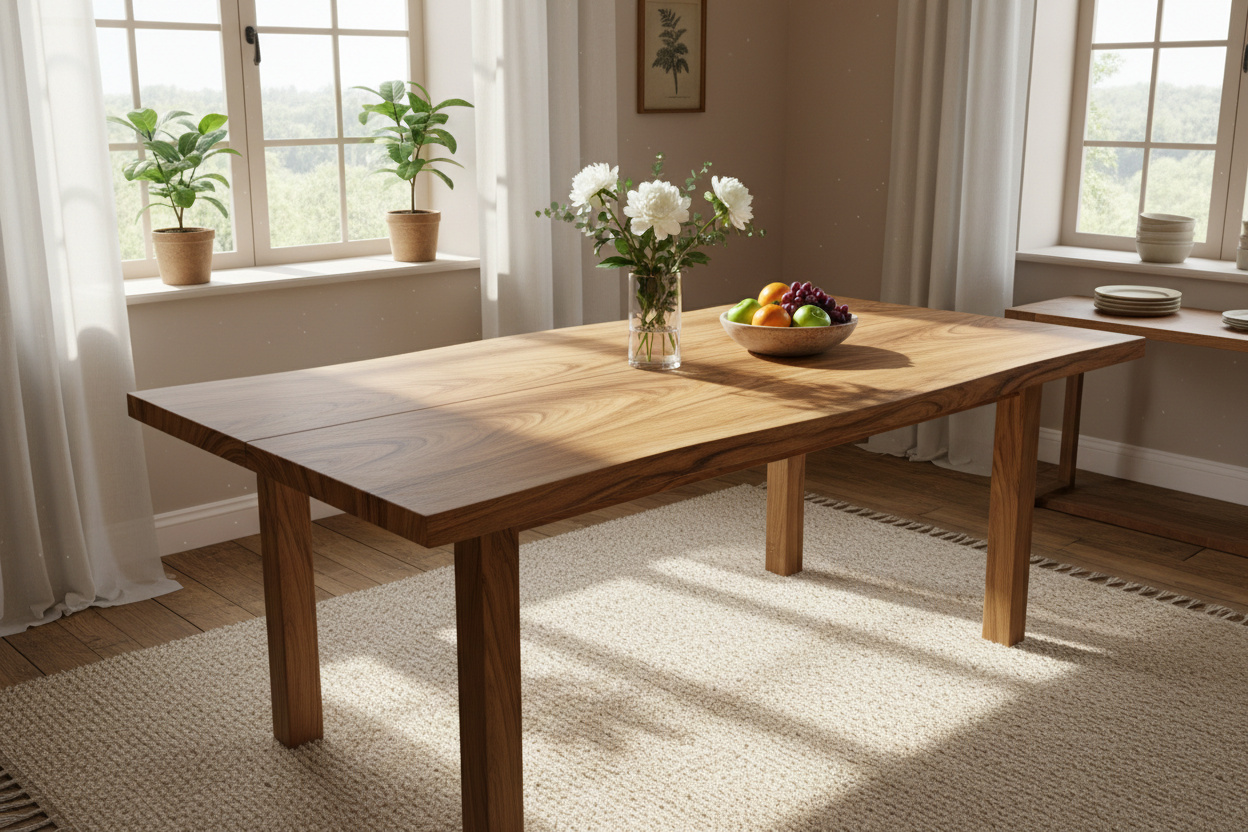
Furniture trends tend to cycle with dizzying speed. We have seen the era of industrial metal, the rise of clear acrylic ghost chairs, and the heavy, ornate aesthetics of traditional formalism. Yet, through every shifting tide of interior design, the simple wood dining table remains the steadfast anchor of the home. It does not scream for attention, nor does it try to impress with complicated mechanics or synthetic materials. Its value lies in its honesty. A table made of wood, stripped of excessive ornamentation, offers a grounding element that brings warmth and functionality to a room instantly.
Choosing this route is rarely about settling for less. It is a deliberate design choice that prioritizes texture and longevity over temporary flash. When you bring a simple wood dining table into your home, you are creating a blank canvas. This piece adapts to your life rather than forcing your room to adapt to it. whether you are hosting a holiday dinner or paying bills on a Tuesday night, the surface holds up, often looking better with age than it did the day it arrived.
The Enduring Appeal of Minimalist Design
There is a distinct difference between plainness and minimalism. A plain table is boring; a minimalist table is refined. A successful simple wood dining table design relies on proportion and the quality of the joinery. Without heavy carving or turned legs to hide behind, the craftsmanship is fully exposed. The legs might be tapered to reduce visual weight, or they might be blocky and square to suggest solidity. The apron—the piece of wood connecting the legs beneath the top—needs to be high enough to hide the hardware but slim enough to allow for legroom.
This design philosophy works because it allows the material to speak. In a complicated design, the eye gets distracted by the shape. in a simple design, the eye is drawn to the grain patterns, the knots, and the variation in color. A table with clean lines works in a modern farmhouse setting just as well as it does in a mid-century modern apartment. It bridges the gap between different eras of decor, meaning you won't have to replace your table just because you decided to paint the walls a new color or swap out your light fixtures.
Why Material Choice Dictates Longevity
If you are investing in simplicity, the quality of the materials becomes the most critical factor. A simple solid wood dining table is vastly superior to particle board covered in wood veneer. Veneer has its place in cabinetry, but a dining table takes too much abuse—hot plates, spilled water, homework projects, and sliding dishes—for a thin layer of wood to survive long-term. Once veneer chips or bubbles, the table is essentially ruined.
Solid wood, conversely, is forgiving. Hardwoods like white oak, maple, walnut, and cherry are the gold standards. Oak is incredibly hard and resists denting, making it ideal for families with young children. Walnut offers a richer, darker tone that feels more formal but is slightly softer. Even softer woods like pine, often used in farmhouse styles, have a charm. While pine dents easily, those dents tend to blend into the rustic aesthetic over time, becoming part of the table's history rather than a defect.
I recall purchasing a second-hand oak table about ten years ago. It was a basic, four-legged structure that had clearly lived a hard life. The previous owners had let water rings settle into the finish, and there were deep scratches from what looked like years of cutlery mishaps. Because it was solid wood, I didn't have to toss it. I spent a weekend sanding it down, stripping away the old orange-tinted varnish. Underneath, the raw oak was pale, heavy, and beautiful. After applying a matte sealant, that table looked brand new, yet it retained a character that a factory-fresh piece never has. That is the utility of solid wood; it is renewable in a way that synthetic materials simply are not.
Versatility: From Formal Dining to the Breakfast Nook
Not every home has a cavernous dining room waiting to be filled. In apartments or homes with open floor plans, the dining area often bleeds into the living space or the kitchen. This is where a simple wood kitchen table shines. Because it lacks bulk and intricate detailing, it doesn't visually clutter a smaller space. A round wooden table in a kitchen corner creates an intimate breakfast nook, while a narrow rectangular table can double as a kitchen island when you need extra prep space.
The kitchen environment is often humid and prone to temperature fluctuations from the oven and stove. Wood regulates humidity well, absorbing and releasing moisture. As long as the wood is properly sealed, a kitchen table can withstand the rigors of daily cooking and eating better than glass, which shows every fingerprint, or metal, which can feel cold and sterile in the morning.
Styling Around the Wood
The beauty of a neutral, wooden foundation is the freedom it gives you with chairs and accessories. If your table is a warm honey tone, you can contrast it with black spindle-back chairs for a modern look. If you prefer a monochromatic, Scandinavian vibe, you might pair a pale ash table with wishbone chairs in a similar wood tone.
Lighting plays a massive role here. Wood absorbs light, so a simple table warms up the glow of a pendant light hanging above it. Unlike glass or polished stone, which reflect glare, wood diffuses light, creating a softer ambiance during evening meals. You can change the entire mood of the room simply by swapping a centerpiece. A ceramic vase with dried flowers makes the table feel rustic, while a low brass bowl makes it feel contemporary.
Care and Maintenance for the Long Haul
Owning natural furniture does require a shift in mindset regarding maintenance. While wood is durable, it is organic. It reacts to its environment. To keep a simple wood dining table looking its best, avoid placing it directly over a heating vent, as the dry heat can cause the wood to shrink and potentially crack over time. Direct sunlight is another factor; UV rays will darken cherry wood and lighten walnut over the years. Rotating your centerpiece or placemats ensures the color change happens evenly across the surface.
Cleaning should be straightforward. Harsh chemicals and silicone-based polish sprays often build up a sticky residue that attracts dust. A damp cloth followed by a dry cloth is usually sufficient for daily wiping. If the finish begins to look dull after a few years, a simple application of furniture wax or a fresh coat of oil (depending on the finish) can restore the luster. This maintenance isn't a chore; it's part of the relationship with the piece. You are maintaining an asset that could easily outlast your tenure in the house.
The decision to buy a straightforward, wooden table is a rejection of the throwaway culture of fast furniture. It is an investment in a piece that offers stability, warmth, and an unpretentious beauty that anchors your daily life. Whether it is covered in flour during a baking session or set with fine china for a celebration, the wood remains a reliable, comforting presence.
Frequently Asked Questions
How do I know if a table is solid wood or veneer?
Check the grain pattern on the edges and the underside of the table. If the grain on the top does not continue over the edge (or looks like a glued-on strip), it is likely veneer. Additionally, solid wood tables are significantly heavier than their veneer or particle-board counterparts.
Can I mix different wood tones in the dining room?
Yes, mixing wood tones adds depth and prevents the room from looking like a catalog set. The trick is to keep the undertones consistent; mix warm woods (like cherry and oak) with other warm woods, and cool woods (like ash or gray-stained pine) with other cool tones.
Is a soft wood like pine okay for a dining table?
Pine is perfectly acceptable if you embrace a lived-in, rustic look. It will scratch and dent much faster than oak or maple, but many homeowners feel this adds character. If you want a pristine, glass-smooth surface that stays that way, stick to harder woods.

Leave a comment
This site is protected by hCaptcha and the hCaptcha Privacy Policy and Terms of Service apply.