










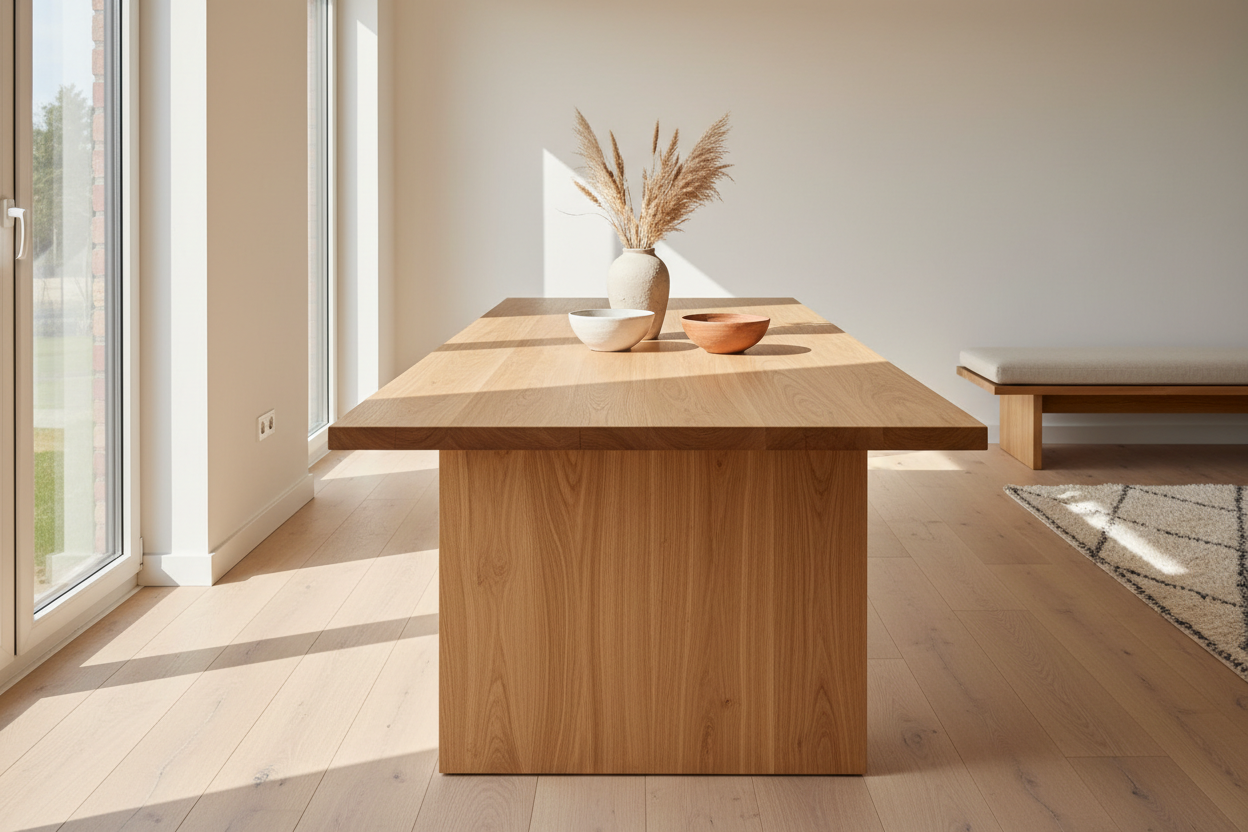
Modern design often gets a bad rap for feeling cold or clinical. We see endless photos of white walls, polished concrete, and chrome accents, and while striking, these spaces can sometimes lack a sense of home. This is where the right furniture acts as a bridge. A well-chosen table serves as the anchor that grounds a room, blending clean architectural lines with organic warmth. It is not just a surface for dining or working; it is the focal point that defines the atmosphere of your living space.
Choosing the right piece requires looking beyond mere dimensions. You have to consider how the grain interacts with your lighting, how the finish feels under your fingertips, and how the silhouette complements the rest of your decor. Whether you are leaning towards a stark minimalist vibe or a cozy Japandi aesthetic, the interplay between natural timber and modern geometry is what elevates a room from a showroom look to a lived-in sanctuary.
Defining the Aesthetic: Modern vs. Contemporary
While the terms are often swapped in casual conversation, there is a nuance between modern design—referring specifically to the mid-20th-century movement—and contemporary design, which is whatever is happening right now. A wood contemporary table often pushes boundaries with asymmetrical shapes, mixed materials, or experimental joinery. These pieces might feature a live edge slab sitting on an acrylic base or a sculptural pedestal made of bleached ash.
In contrast, modern design focuses on function and simplicity. Think of the tapered legs of the 1950s or the low profiles of Scandinavian interiors. Here, the wood is the star, but it is tamed. The chaos of the grain is framed by precise, geometric edges. Understanding this distinction helps you search for the right piece. If you want something timeless that fits a specific historical look, you are looking for modern. If you want something that feels current, artistic, and perhaps a bit daring, you are looking for contemporary.
The Role of Material in Modern Design
The specific species of timber you choose dictates the mood of the room. Walnut remains the darling of the modern world. Its rich, dark chocolate hues and straight grain patterns exude a sense of luxury and seriousness without feeling stuffy. It works exceptionally well in bright, airy rooms where the dark wood provides high contrast.
Oak, particularly white oak, offers a lighter, more Scandinavian appeal. It is durable, hard, and has a grain that hides dust and fingerprints better than darker woods. For those looking for a wooden modern table that feels casual yet sophisticated, matte-finished oak is often the best route. It brings in that pale, sandy tone that pairs beautifully with grey upholstery and green plants.
I recall a specific project where a client was adamant about having a glass dining table to keep their small apartment feeling "open." We installed it, and within a week, they called me back saying the room felt like a doctor's office. We swapped it out for a round, solid white oak table with a beveled edge. The footprint was the same, but the room immediately felt warmer. The tactile experience of resting your elbows on wood rather than cold glass completely changed how they used the space. They went from eating on the couch to actually using the dining area.
Construction and Craftsmanship
In the realm of modern furniture, construction methods are often exposed or celebrated rather than hidden. A high-quality wood modern table relies on joinery that stands the test of time. Look for mortise and tenon joints rather than staples or excessive screws. The stability of the piece is paramount, especially given that modern designs often feature slender legs or cantilevered tops.
Veneer often carries a stigma, but in high-end modern furniture, it is a legitimate and often superior choice for large flat surfaces. Solid wood moves, expands, and contracts with humidity changes. A masterfully applied veneer over a stable core ensures that a large dining table remains perfectly flat and does not warp or crack over decades. The key is checking the edging; a solid wood edge band protects the veneer from chipping and allows for future refinishing if necessary.
The Finish: Oil vs. Lacquer
The connection you have with your furniture is largely determined by the finish. Modern trends have shifted heavily toward penetrating oils and hard-wax finishes. Unlike a thick layer of polyurethane that sits on top like plastic, oil soaks into the fibers. This means when you touch the table, you are touching the actual wood.
This matte, natural look is essential for a wood contemporary table where the goal is to highlight the organic material. However, this requires more owner participation. You may need to re-oil the table once a year. If you have young children or fear red wine spills, a matte lacquer might be a safer compromise, offering protection while trying to mimic the look of raw wood.
Styling Your Space Around the Table
Once the table is in place, the challenge becomes styling. The mistake many make is matching wood tones too perfectly. If you have oak floors, an oak table, and an oak sideboard, the room becomes flat and one-dimensional. Contrast is your friend here. A walnut table looks stunning against a lighter oak floor. If you must match the wood tones, ensure you break them up with a rug.
Chairs define the personality of the table. For a strict modern look, wishbone chairs or molded plywood chairs are classic pairings. To soften the hard lines of a rectangular wooden modern table, consider upholstered chairs with curves. The fabric introduces softness and acoustic dampening, which is often needed in modern homes with hard surfaces.
Lighting should not be an afterthought. A linear pendant light mirrors the shape of a rectangular table and reinforces the modern geometry. For round tables, a single sculptural pendant draws the eye down to the center of the table, creating an intimate cone of light for dining.
Sustainability and Longevity
We are moving away from the "fast furniture" mentality. A solid or high-grade veneer table is an investment. When shopping, ask about the source of the timber. FSC-certified wood ensures that the forest is managed responsibly. Modern design is inherently linked to the concept of efficiency and respect for materials. A table that is built well will outlast trends. The scratches and dings it accumulates over the years become part of its patina, telling the story of the dinners, homework sessions, and late-night conversations held around it.
Frequently Asked Questions
Can I mix different wood tones in the same room?
Absolutely, mixing wood tones adds depth and character to a room. The trick is to keep the undertones consistent (mixing warm with warm, or cool with cool) and to use a rug or other textiles to create a visual buffer between the floor and the furniture.
Is solid wood always better than veneer for a modern table?
Not necessarily. While solid wood has the benefit of being refinishable multiple times, high-quality veneer is often more stable for large, flat modern designs. Veneer prevents the warping and cracking that can happen with large slabs of solid wood in climate-controlled homes.
How do I protect a natural oil-finished table from water rings?
Prevention is key, so using coasters and placemats is recommended. If a spill happens, wipe it up immediately. For established water rings on oil-finished tables, you can often buff the spot lightly with fine steel wool and re-apply a small amount of the original maintenance oil to restore the finish.

Leave a comment
This site is protected by hCaptcha and the hCaptcha Privacy Policy and Terms of Service apply.