










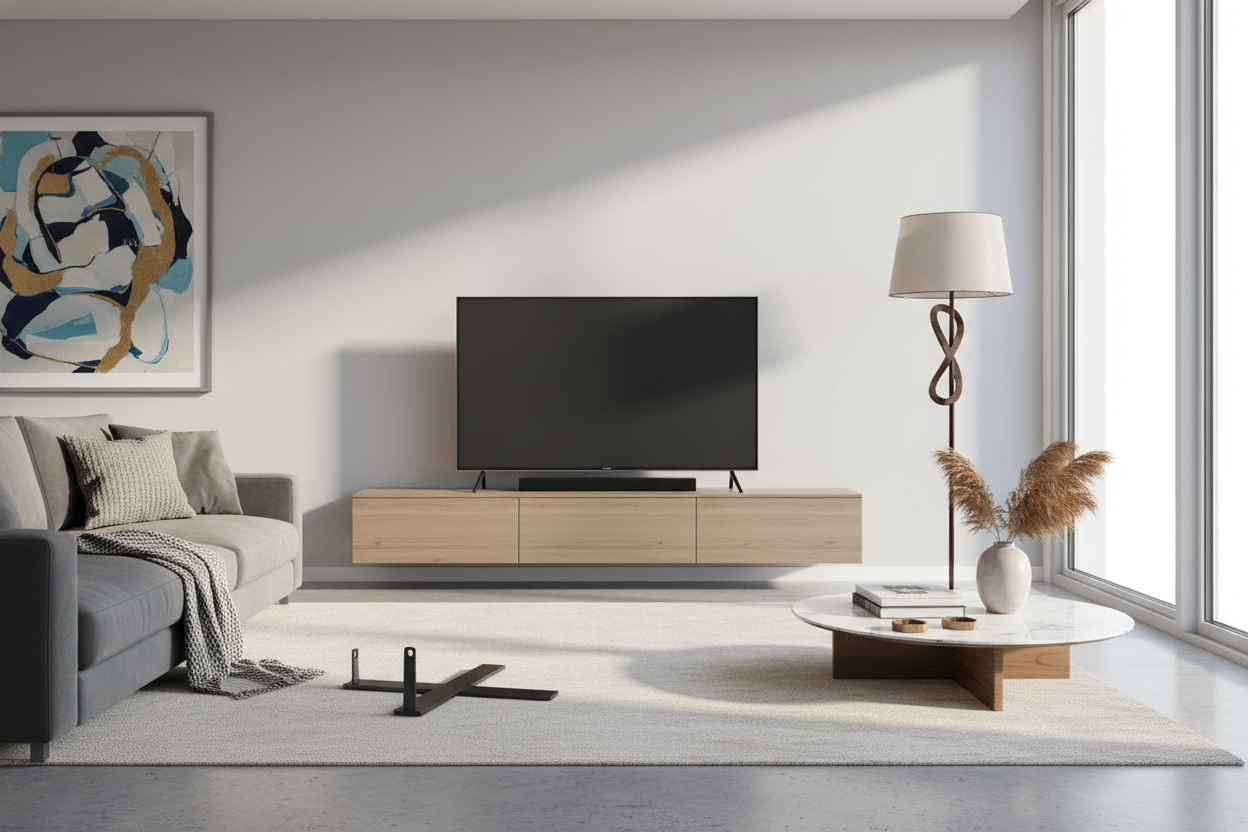
I spent three weeks scouring Facebook Marketplace for the perfect 1960s teak sideboard. I finally found it, hauled it up three flights of stairs, and then realized my modern 50-inch screen wouldn't actually sit on it. The factory legs—those flimsy plastic 'chicken feet'—were set so far apart they hung off the edges by two inches. It was either return the TV, sell the sideboard, or find a better way.
That is how I discovered the universal tv stand 50 inch. It is one of those rare, cheap fixes that actually solves a design crisis without making your living room look like a dorm room. If you are tired of your tech dictating your furniture choices, it is time to ditch the factory hardware.
Quick Takeaways
- Factory TV legs are too wide for most vintage or narrow furniture.
- A center-mounted pedestal base uses the VESA holes already on the back of your TV.
- You gain 5-8 inches of height, making room for a soundbar or decor.
- Swivel functions help kill window glare without moving the whole cabinet.
The Problem With Those Horrible Plastic 'Chicken Legs'
Modern TV manufacturers assume we all want to buy a six-foot-long slab of MDF from a big-box store to hold our screens. To save money, they stopped using central pedestals and switched to wide-set plastic feet. These things are the absolute worst. They demand a massive footprint, forcing you to buy furniture that is way bigger than you actually need.
Beyond the size issue, they feel cheap. I have seen 50-inch screens wobble every time someone walks heavy across the room. If you have kids or a cat with a case of the zoomies, those plastic legs are a disaster waiting to happen. They offer zero height adjustment, so if you buy a soundbar, it usually ends up blocking the bottom of the screen. It is a lazy design that prioritizes the manufacturer's shipping costs over your home's aesthetic.
How a 50 Inch TV Tabletop Stand Saved My Antique Credenza
When I realized my TV wouldn't fit my new sideboard, I panicked. I briefly looked into shopping for brand new TV stands, but everything modern felt soul-less compared to my vintage teak. I did not want to settle for a 'media console' that looked like it belonged in a doctor's waiting room.
I bought a heavy-duty 50 inch tv tabletop stand for about forty bucks. It took twenty minutes to assemble. By using the four screw holes on the back of the TV—the same ones you use for wall mounting—I was able to give the screen a heavy, stable center base. Suddenly, my TV had a footprint of only 12 inches instead of 44. It sat perfectly on my credenza with plenty of room for a lamp and a couple of books on the side. It felt like I’d hacked the system.
Why a Universal TV Stand for 50 Inch TV Screens Actually Makes Sense
The benefits go way beyond just fitting on small furniture. Most of these stands allow you to adjust the height of the screen. I mounted mine high enough that my soundbar sits tucked neatly underneath the screen, rather than awkwardly in front of it. It looks integrated and clean.
Then there is the swivel. If you have a room with a lot of windows, you know the pain of afternoon glare. Instead of squinting or closing all the curtains, I can just nudge the screen 15 degrees to the left. If you really want to go over the top and hide the tech entirely, you could look into an electric vertical lift TV cabinet, but for most of us, a simple swiveling pedestal is the realistic upgrade we need.
Wait, Will It Actually Hold the Weight?
I get it—trusting a thousand-dollar TV to a single metal pole feels sketchy. But these stands are built like tanks. Most use a thick tempered glass base that is surprisingly heavy, which lowers the center of gravity. As long as you check your VESA pattern (the distance between the holes on the back of your TV) and the weight limit, you are golden. Most 50-inch TVs weigh less than 30 pounds these days; these stands are usually rated for 80 or more.
Styling Your Setup So It Does not Look Like a Sports Bar
The only downside to a universal stand is that the center pole can look a bit 'office-y' if left totally bare. My trick? I stack a couple of oversized art books right on the glass base to hide the bottom of the pole. It grounds the look and makes it feel like part of the furniture.
If your TV is in a tight spot, you might be styling a corner TV stand to save space. In that case, the swivel is your best friend. You can angle the screen perfectly for the sofa while keeping the furniture flush against the wall. Add a trailing plant like a Pothos on the side of the console to soften the hard edges of the screen, and suddenly you have a living room that looks curated, not just 'decorated around a TV.'
FAQ
Will a universal stand fit any brand of TV?
Almost always, yes. They use the standard VESA mounting system. Just check the back of your TV for four screw holes in a square or rectangle pattern. If those exist, the stand will work.
Is it hard to assemble?
If you can put together an IKEA nightstand, you can do this. It is usually just six to eight bolts. Just make sure you have a second person to help you lift the TV onto the stand once the brackets are attached.
Does it damage the TV?
Not at all. It uses the exact same mounting points the manufacturer intended for wall mounting. If anything, it is safer than the factory legs because the base is much heavier and less likely to slide.

Leave a comment
This site is protected by hCaptcha and the hCaptcha Privacy Policy and Terms of Service apply.