










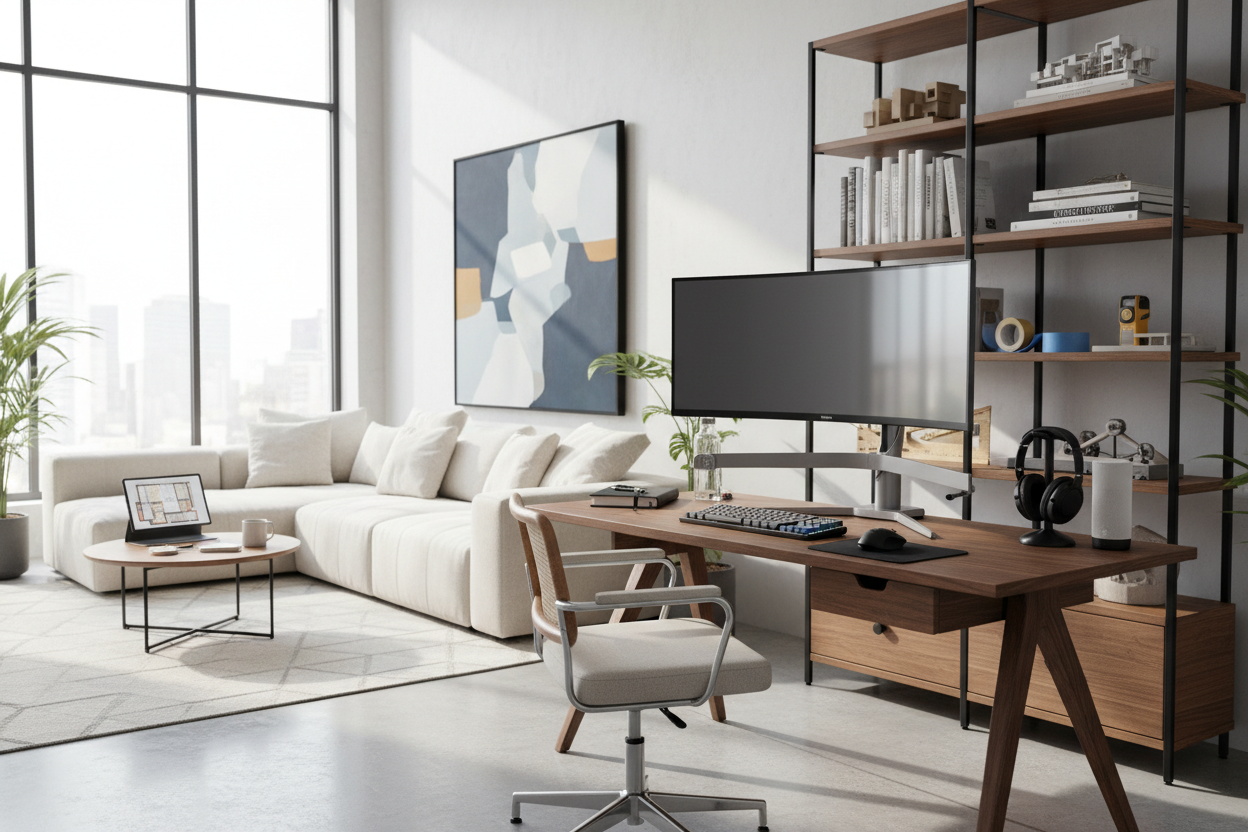
Many of my clients call me when their dining table has permanently morphed into a chaotic tech hub. You know the look: a tangle of black cords, a massive plastic monitor, and a lumbar-support pillow thrown over a velvet dining chair. Finding the right tools for working from home isn't just about buying a laptop stand; it is about integrating function into your sanctuary without making it feel like a corporate cubicle. In this guide, I will walk you through how to select pieces that support your posture and productivity while respecting your home's architecture and style.
Quick Decision Guide
- Prioritize ergonomic seating over aesthetic seating—but look for transitional silhouettes that bridge the gap.
- Use monitor arms to reclaim desk surface area and reduce the visual weight of heavy screens.
- Layer your lighting; rely on directional task lamps rather than harsh overheads to reduce eye strain.
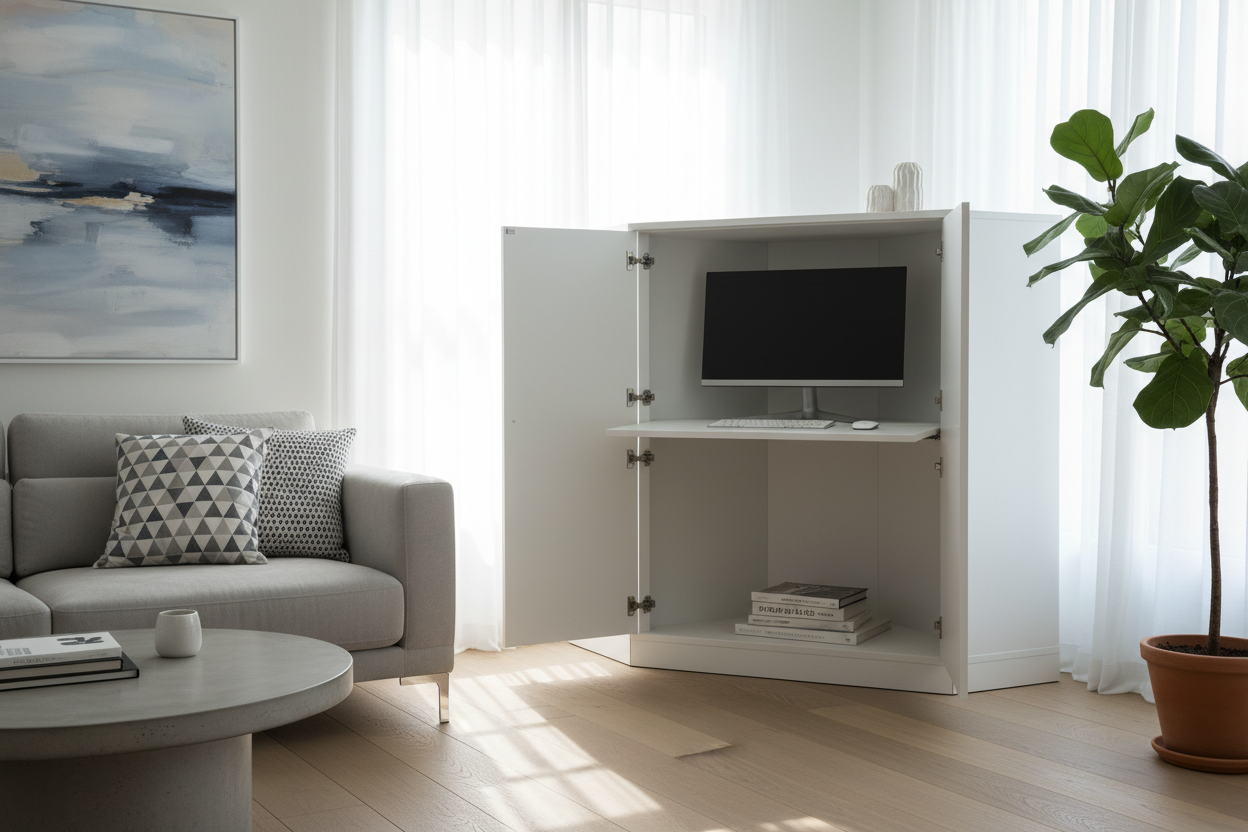
- Incorporate closed storage to physically tuck away work at the end of the day, creating a psychological boundary.
Space Planning & Layout
Creating a functional layout often means carving out a workspace within a living room or primary bedroom. When sourcing work from home tools for multi-purpose spaces, proportion is everything. A massive executive desk will instantly overwhelm a standard bedroom. Instead, look for writing desks with a depth of 20 to 24 inches. This gives you enough room for a laptop and a secondary monitor without encroaching on your walkways.
Managing Visual Clutter
The quickest way to ruin a room's aesthetic is a rat's nest of cables. Cable management trays and routing sleeves are the best work from home tools you will never actually see. I always advise clients to mount a power strip directly to the underside of the desk. You only have one cord dropping down to the wall outlet, keeping the negative space beneath the desk clean and airy.
Comfort & Ergonomics
You can have the most beautifully curated mid-century modern office, but if your setup wrecks your back, you will end up working from the sofa. Work from home productivity tools must prioritize the physical reality of sitting for eight hours.
The Office Chair Compromise
Finding a chair is the ultimate battle between form and function. While a sculpted wooden chair looks striking, using it all day is a recipe for disaster. Look for upholstered chairs with adjustable seat depth and hidden tilt mechanisms. If you must use a highly technical ergonomic chair, choose a frame in a soft white or light gray rather than stark black to lessen its visual impact in a residential setting.
Style & Coordination
Your work at home tools should pull from the same material palette as the rest of your house. If your home features warm woods and brass accents, an aluminum and black plastic laptop stand will stick out. Opt for wooden risers, leather desk pads, and brass task lamps. These materials age gracefully and add texture to a space that otherwise feels cold and tech-heavy.
Designer's Honest Take
Early in my career, I designed an office for myself around a stunning, vintage burl wood desk with a thick, beveled edge. It was a showstopper. But when I tried to clamp my dual monitor arms to it, the clamp wouldn't fit over the decorative lip. I ended up having to use bulky, freestanding monitor bases that ate up half my workspace. It taught me a hard lesson: always verify the technical clearances of your tools before falling in love with a silhouette. I also learned that velvet, while gorgeous, is a terrible fabric for an office chair if you have a cat—it acts like a magnet for pet hair and shows pressure marks from daily sitting.
Frequently Asked Questions
What are the most essential tools for working from home?
A highly adjustable chair, a monitor riser or arm to bring your screen to eye level, and a dedicated task light. These three items dictate your posture and eye strain more than anything else.
How do I hide my office setup in a small apartment?
Use a secretary desk or a small armoire. The ability to close a door or fold up a flap at the end of the day hides the clutter and helps establish a boundary between your professional and personal life.
Are standing desks an eyesore?
They used to be, but not anymore. Many brands now offer solid wood tops with sleek, hidden dual-motor frames. To keep it looking residential, opt for a finish that matches your baseboards or flooring and avoid bulky T-frame legs if possible.

Leave a comment
This site is protected by hCaptcha and the hCaptcha Privacy Policy and Terms of Service apply.