










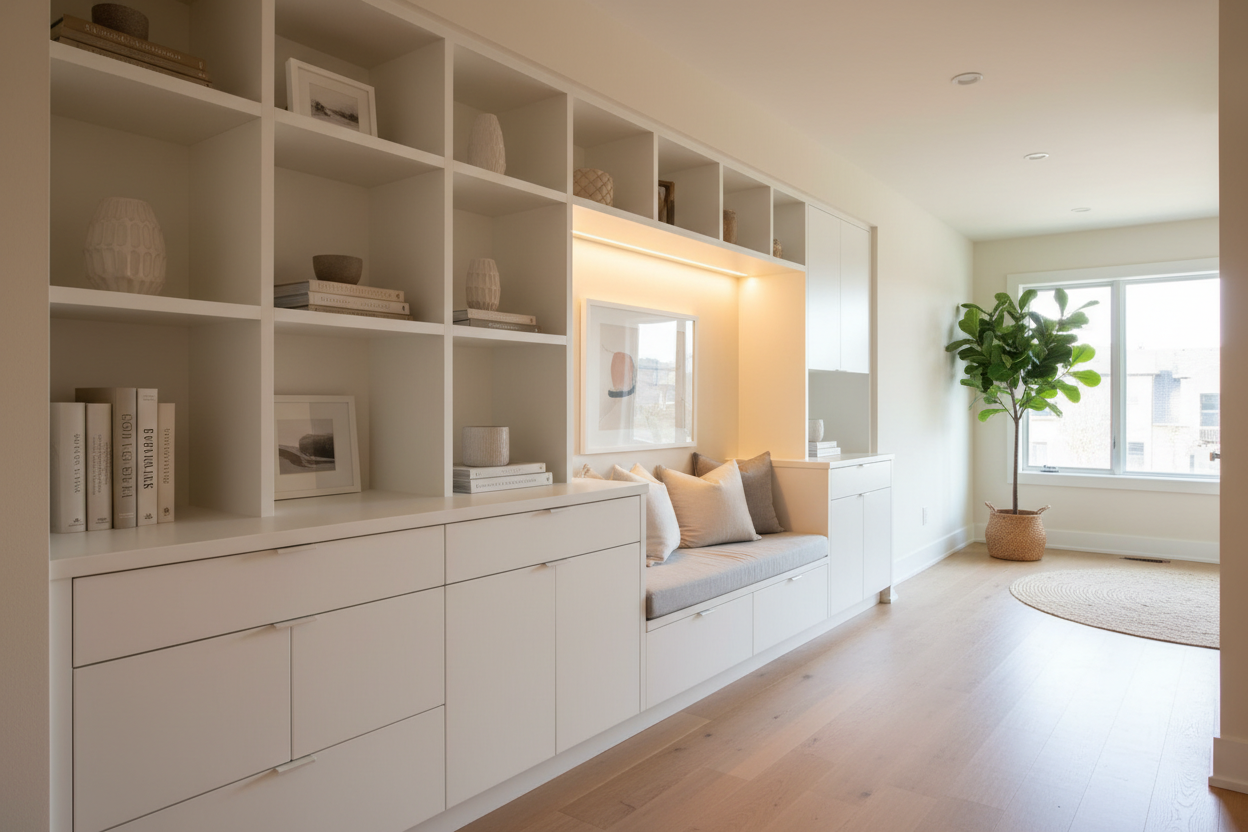
Hallways are notoriously difficult spaces to manage. They are often narrow, dimly lit, and serve as the primary thoroughfare for the entire house, which means they naturally accumulate clutter. Shoes get kicked off near the door, coats are draped over banisters, and miscellaneous items find their way onto the floor. The most effective solution to this traffic jam isn't just a coat rack or a standalone console table; it is integrating built-in hallway storage directly into the architecture of the home. By utilizing the vertical space and recessing storage into walls or alcoves, you transform a transient corridor into a functional, organized, and aesthetically pleasing part of your living space.
Many homeowners hesitate because they fear narrowing the passage too much, but a well-designed hallway cabinet built in to the wall can actually make the space feel larger by removing visual clutter. Whether you are dealing with a grand entrance or a slender upstairs corridor, custom joinery allows you to reclaim dead space that off-the-shelf furniture simply cannot utilize effectively.
Assessing Your Space for Hallway Built-Ins
Before ripping out drywall or ordering lumber, you need to understand the spatial dynamics of your corridor. A standard hallway is often between 36 and 48 inches wide. If you plan to add hallway built in cabinets, you generally need to maintain at least 36 inches of clearance for comfortable walking. This doesn't mean you can't have storage if your hall is narrow; it just means you have to get creative with depth.
I learned this lesson the hard way during a renovation of my own 1920s bungalow. The central corridor was plagued by a lack of closets, and piles of linens were constantly homeless. We decided to frame out a built-in hall cupboard. Initially, I wanted standard 24-inch deep cabinets, but that would have turned the hallway into a tunnel. We compromised on a shallow, 14-inch depth. Surprisingly, this was perfect for folded towels, sheets, and even toiletries. That project taught me that you don't need immense depth to achieve massive functionality; you just need the right configuration.
Design Strategies for Modern Homes
Modern built in hallway storage tends to favor clean lines, flush surfaces, and minimal hardware. The goal is often to make the storage disappear into the wall. Push-to-open mechanisms eliminate the need for handles, which prevents clothes from snagging as you walk by—a crucial detail in tighter spaces. If you want the storage to stand out as a design feature, however, contrasting colors or shaker-style doors can add architectural interest.
When brainstorming hallway built in cabinet ideas, consider floor-to-ceiling units. Taking the cabinetry all the way to the crown molding draws the eye upward, making the ceiling appear higher while maximizing cubic footage. You can reserve the upper cabinets for seasonal items like winter blankets or holiday decor, keeping the lower sections for daily use.
Combining Open and Closed Storage
A wall entirely composed of doors can sometimes feel heavy or imposing. Breaking up the design with built in hallway shelves can alleviate this weight. An open niche in the center of a cabinet run provides a place to display art, books, or a vase of flowers, adding personality to the passage. This hybrid approach offers the best of both worlds: you get the hallway cupboard built in for hiding ugly clutter like vacuum cleaners or shoes, and open shelving for aesthetics.
If you are an avid reader, turning a wide landing or corridor into a library is a brilliant use of space. Hallway built in shelves designed specifically for paperbacks only need to be about 7 to 9 inches deep. This is minimally invasive to the walkway but adds immense character and storage capacity.
Functional Configurations for High-Traffic Areas
The internal layout of your built in hall cabinets is just as important as the exterior look. If the unit is near an entryway, you need a "drop zone." This might include a recessed bench for putting on shoes, hooks for coats, and drawers for keys and mail. In upstairs corridors, the focus usually shifts to linens or overflow wardrobe storage.
For narrow spaces where swinging doors might block the path, sliding doors are a practical alternative for a built-in hall cupboard. They require zero clearance to open, making them ideal for tight squeezes. However, keep in mind that sliding doors only allow you to access half the cupboard at a time. If you prefer full access, consider bi-fold doors, which protrude less than standard hinged doors.
The "Mudroom" Hallway
For families, the hallway often functions as a de facto mudroom. Built-in hall storage here needs to be robust. Melamine interiors are easier to wipe down than painted wood, which is a consideration for shoe storage. Incorporating a built in hallway cupboard specifically for utility items—like brooms, mops, or the ironing board—can free up significant space in the kitchen or laundry room. Ensure you install an electrical outlet inside this cupboard so cordless vacuums can charge while stored away.
Materials and Installation Advice
While custom carpentry offers the most seamless look, it is also the most expensive route. A popular middle ground is the "semi-custom" approach, often using IKEA carcasses (like the PAX or Billy series) as a base. You build a frame around these units and add trim to bridge the gap between the cabinet and the wall/ceiling. This creates the illusion of high-end hallway built ins at a fraction of the cost.
If you choose to go fully custom for your built-in hallway storage, MDF (Medium Density Fiberboard) is often the material of choice for painted units. It is stable, doesn't warp with humidity changes, and takes paint beautifully. For a natural wood look, plywood with a high-quality veneer is superior to solid wood, which can move and crack over time in a long, vertical application.
Lighting is the final piece of the puzzle. Dark hallways swallow light, and large cabinets can exacerbate this. Installing LED strip lighting inside built in hallway shelves or under the toe kick of the cabinets can serve as a nightlight and add a layer of sophistication. If your cabinets have a display niche, a dedicated downlight highlights the object and bounces light back into the room.
Maximizing Value and Utility
Investing in hallway built in cabinets is rarely a decision homeowners regret. Unlike freestanding furniture, these installations become part of the property's equity. They solve the perennial problem of storage without sacrificing square footage in the main living areas. Whether you opt for a sleek, modern built in hallway storage wall or a traditional library style, the key is customization. Measure twice, consider the traffic flow, and design the interior to match exactly what you need to store. By reclaiming this transitional space, you make the rest of your home breathe a little easier.
Frequently Asked Questions
What is the minimum depth for a built-in hallway cabinet?
For general storage like linens or pantry items, you can get away with as little as 12 to 14 inches. If you want to hang coats on a standard rail, you need at least 24 inches of depth; however, you can use front-facing pull-out rails in shallower cabinets (16-18 inches) to accommodate hangers without the bulk.
Do built-in cabinets need to go all the way to the ceiling?
While not strictly necessary, extending cabinets to the ceiling is highly recommended for a polished, high-end look. It prevents dust from gathering on top of the unit and maximizes storage for infrequently used items. If your ceilings are exceptionally high, you can use a decorative bulkhead or fascia to bridge the gap.
Can I install built-ins over a radiator or heating vent?
Yes, but you must account for airflow. You can design the built-in with a decorative grille or mesh panel at the bottom to allow heat to escape. It is crucial to ensure the cabinetry materials are heat-resistant and that you are not blocking access to valves that may need servicing.


Leave a comment
This site is protected by hCaptcha and the hCaptcha Privacy Policy and Terms of Service apply.