










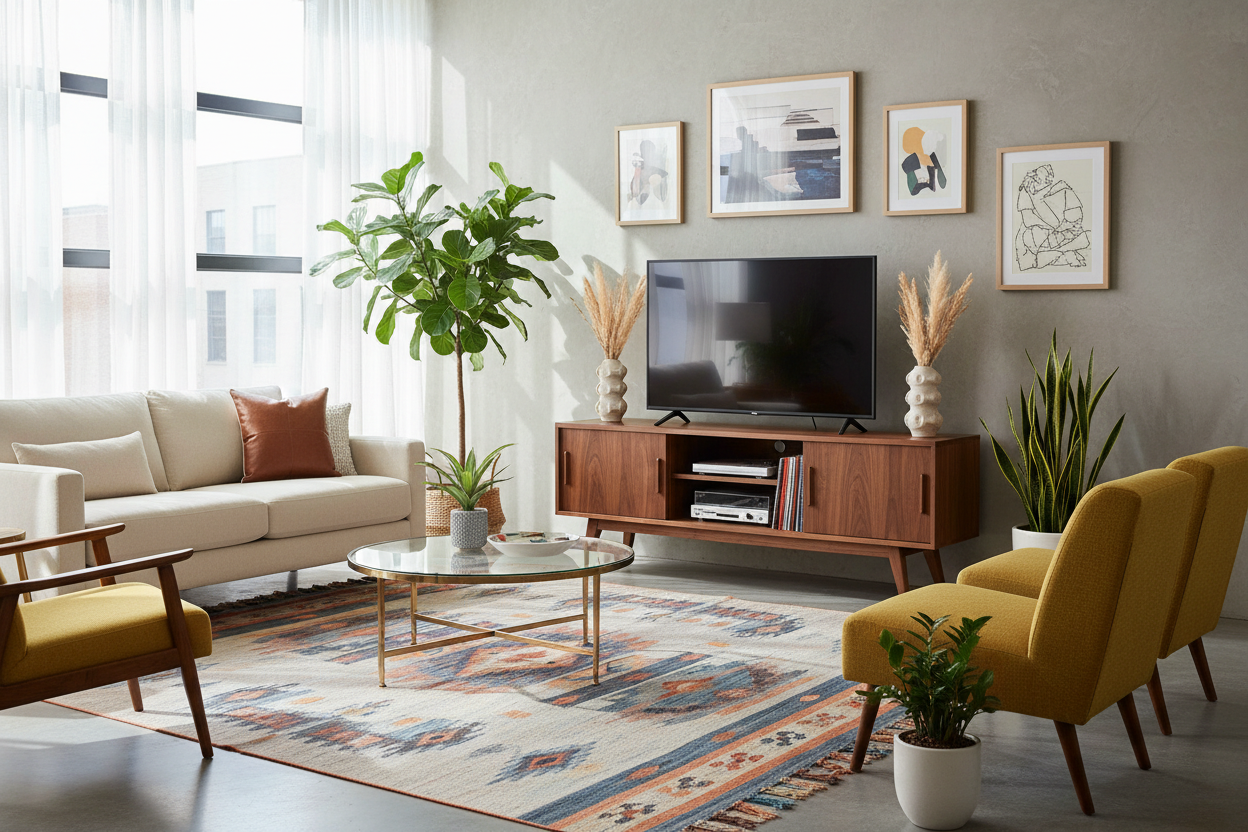
Living rooms often fall victim to the 'black hole' effect—a massive flat screen dominating the space, anchored by an equally heavy, boxy media console. It feels less like a home and more like a tech showroom. If you are struggling to balance modern electronics with warm, livable design, a walnut mid century modern tv stand is often the missing puzzle piece. It offers clean lines, hides unsightly cables, and brings organic texture back into the room. Let's break down how to choose the right one without overpaying.
Quick Decision Guide
- Check the veneer thickness: High-quality walnut veneer resists warping better than solid wood in climate-controlled North American homes.
- Measure your TV base: Ensure the stand is at least 4 to 6 inches wider than your television on both sides for proper visual proportion.
- Demand cord management: Authentic vintage pieces rarely have media cutouts; modern reproductions should have strategic routing holes.
- Assess the legs: Tapered wooden legs create negative space, making small living rooms feel larger.
Material Matters: Veneer vs. Solid Wood
When shopping for a mid century modern tv stand walnut finish, the first decision is material. Many purists hunt for solid wood, but in modern media furniture, high-grade walnut veneer over an MDF or plywood core is actually superior. Solid wood shifts, expands, and contracts with seasonal humidity changes. When you have heat-generating electronics sitting inside, this movement can cause doors to stick or joints to crack. A quality veneer offers the exact same rich, chocolatey grain pattern while remaining structurally stable.
Proportions and Visual Weight
Getting the Scale Right
A common mistake I see is buying a console that perfectly matches the width of the TV. This creates a top-heavy, precarious silhouette. Your mid century modern walnut tv console should act as an anchor. If you have a 65-inch TV, aim for a console that is at least 70 to 80 inches wide. The iconic tapered legs of mid-century design lift the bulk of the cabinet off the floor. This negative space is a trick designers use to keep a room feeling airy, even when housing bulky gaming systems and receivers.
How to Mix Wood Tones
You do not need a matching living room set. In fact, buying the matching coffee table and side tables will make your room look like a catalog showroom. Walnut is a surprisingly neutral wood. It pairs beautifully with lighter woods like white oak or ash, which provide a crisp contrast. To tie a walnut tv stand mid century design into a room with lighter floors, bridge the gap with a textured rug—think a chunky wool or vintage Persian style.
Lessons from My Own Projects
I specify a lot of mid-century pieces in my residential projects, but I learned a hard lesson a few years ago in a Seattle condo. I sourced a stunning, authentic vintage walnut credenza to use as a media center. It looked incredible on installation day. However, because it was a true vintage piece, it lacked ventilation and rear cutouts. My client's AV receiver overheated within a week, and we ended up having to drill jagged holes into a beautiful piece of history. Now, I strictly recommend purpose-built media consoles with slatted fronts or built-in ventilation.
Also, a quick warning: those gorgeous tapered legs? They are a magnet for robot vacuums. I have had to touch up the base of my own living room console multiple times because my vacuum treats the angled legs like a bumper car track. Consider adding subtle felt bumpers to the lower legs if you run an automated vacuum daily.
Frequently Asked Questions
How do I care for a walnut mid century tv stand?
Dust regularly with a dry microfiber cloth. If the piece is finished with polyurethane, a damp cloth is all you need for spills. If it has an oil finish, you will need to reapply a specialized wood oil once a year to keep the wood from looking thirsty.
Will a mid-century style clash with my transitional decor?
Not at all. The clean lines of mid-century design act as a great palate cleanser in heavily textured or transitional spaces. Just ensure the walnut tone complements your existing wood finishes rather than competing with them.
How tall should my TV stand be?
For the best ergonomics, the center of your TV screen should be at eye level when seated. For most typical living room sofas, this means your console should be between 20 and 24 inches tall. Mid-century profiles naturally sit lower to the ground, which perfectly accommodates today's massive screen sizes.

Leave a comment
This site is protected by hCaptcha and the hCaptcha Privacy Policy and Terms of Service apply.