










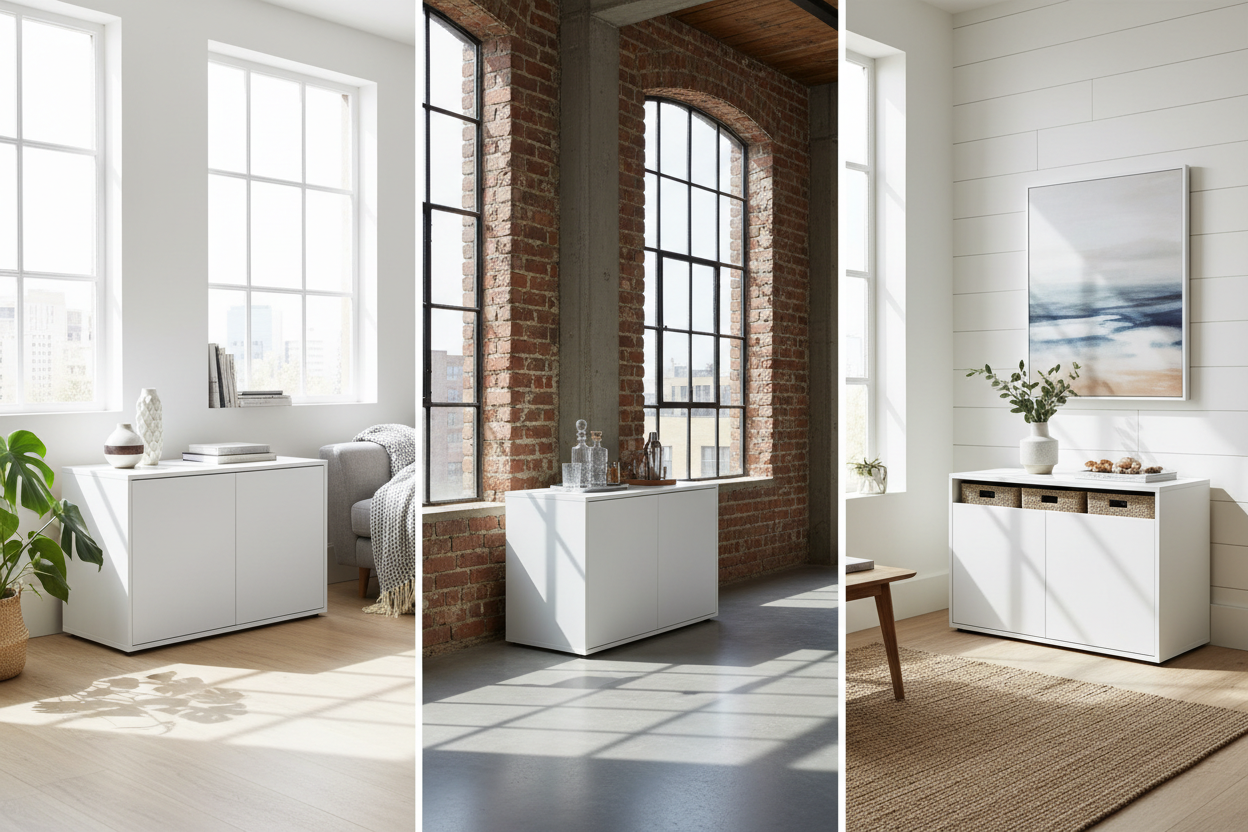
Finding furniture that balances storage needs with limited floor space is a challenge almost everyone faces at some point. You want to hide the clutter, but you don't want a heavy, imposing piece of mahogany sucking the light out of a tiny corner. This is where the humble, compact white cabinet shines. It is perhaps the most versatile piece of furniture you can own, acting as a blank canvas that adapts to almost any interior design style while quietly doing the heavy lifting of organization.
White furniture has a unique optical advantage: it reflects light rather than absorbing it. In tight quarters, this property is invaluable. A dark wood chest of the same dimensions will visually shrink a room, creating a sense of density. A white alternative, however, tends to blend into the walls—especially if your paint is light—making the piece feel less like an intrusion and more like an architectural feature. It offers the utility of storage without the visual weight.
Elevating the Living Area
The living room often becomes a dumping ground for miscellaneous items that don't have a permanent home. Remote controls, coasters, mail, and charging cables tend to pile up on coffee tables. Integrating a small white cabinet for living room organization changes the dynamic of the space entirely. Instead of open shelving, which requires constant curation to look tidy, a cabinet with solid doors allows you to sweep the mess inside and close the door on it.
Placement is key here. Tucked beside a sofa, it functions as an upgraded end table. You gain a surface for a lamp and a drink, but underneath, you have shelves for board games or media accessories. In a hallway entrance that feeds into the living area, it serves as a landing strip for keys and wallets. Because the color is neutral, you can easily change the decor on top of it seasonally—pumpkins in the fall or fresh flowers in the spring—without the cabinet clashing with the new colors.
If you prefer a farmhouse aesthetic, look for units with beadboard detailing or distressed finishes. For a mid-century modern vibe, a sleek white box on tapered wooden legs fits perfectly. The versatility means that even if you move or repaint your walls, the cabinet likely won't need to be replaced.
A Calming Addition to Sleeping Quarters
Bedrooms require a different approach to atmosphere. This is the room where visual noise should be kept to a minimum to promote rest. Using a small white cabinet for bedroom storage is an excellent way to replace a traditional, cluttered nightstand. Many standard nightstands have open cubbies that inevitably fill up with dust and half-read books. A cabinet offers a cleaner, more serene look.
Beyond the bedside, these units are perfect for filling those awkward nooks often found in older homes or apartments. I once lived in a rental with a strange, narrow indentation in the wall between the closet and the window. It was too small for a dresser but looked empty when left bare. I slid a narrow white cabinet into the space, and it instantly transformed the alcove into a purposeful dressing area. It held scarves and accessories that usually cluttered my main dresser, and the white finish bounced the sunlight from the window deeper into the room, making the whole space feel airier.
For children's rooms or guest rooms, these cabinets are particularly useful. They can store linens, toys, or extra blankets, keeping them accessible but out of sight. The neutral tone also means the furniture grows with the room; it works just as well in a nursery as it does in a teenager's room or a home office later on.
Choosing the Right Material and Finish
Not all white furniture is created equal. When shopping, pay close attention to the material and the finish, as these dictate durability and maintenance. Laminate or melamine finishes are common and affordable. They are generally easy to wipe down and resistant to scratches, making them ideal for high-traffic areas. However, if the laminate chips, it can be difficult to repair convincingly.
Painted wood or MDF (Medium Density Fiberboard) offers a softer, more high-end look. The texture is more natural, but painted surfaces can be susceptible to water rings or chipping if knocked. If you plan to place plants on your cabinet, always use a saucer or a coaster. High-gloss finishes offer a modern, lacquer-like appearance that reflects the most light, but be aware that they show fingerprints more readily than matte or satin finishes.
Hardware and Customization
One of the easiest ways to make a mass-produced item feel bespoke is to swap out the hardware. A basic white cabinet can be completely reinvented with the right knobs or pulls. Brushed brass handles can add warmth and elegance, instantly making the piece look more expensive. Matte black hardware creates a high-contrast, monochrome look that suits industrial or Scandinavian styles. Ceramic knobs can introduce a vintage or cottage feel. Since the backdrop is white, you have total freedom to experiment with hardware styles without worrying about clashing wood tones.
Maintenance and Longevity
A common hesitation people have regarding white furniture is the fear of it getting dirty or discoloring. While it’s true that dust shows up less on white than on black furniture, grime and spills are more visible. Regular maintenance is simple, though. A soft, damp cloth with a mild detergent is usually enough for cleaning. Avoid harsh abrasive cleaners that can dull the finish.
Yellowing can occur over time, particularly with oil-based paints or exposure to direct, intense sunlight. To prevent this, try to position the piece away from harsh UV rays or use window treatments to diffuse the light. If you are buying a vintage piece that has already yellowed, a fresh coat of water-based acrylic paint can restore it to a crisp, bright white relatively easily.
Ultimately, the value of these compact cabinets lies in their ability to solve problems. They fit where other furniture won't, they hide what you don't want to see, and they brighten the corners where they stand. Whether used to organize media in the living room or linens in the bedroom, they remain a staple of functional interior design.
Frequently Asked Questions
How do I prevent my white cabinet from turning yellow over time?
Yellowing is often caused by exposure to direct sunlight or the oxidation of oil-based paints. To keep your cabinet crisp, position it away from harsh UV rays or use blinds during the brightest part of the day, and opt for furniture painted with water-based finishes when possible.
Can a small cabinet support the weight of a TV?
It depends entirely on the build quality and material of the specific unit. While many small cabinets are sturdy enough for a small to medium television, you must check the manufacturer's weight limit specifications before placing heavy electronics on top.
What is the best way to style the top of a small white cabinet?
Since the cabinet is neutral, aim for contrast and varying heights. A stack of books, a tall green plant, and a small tray for keys or jewelry create a balanced look. Using metallic accents like a brass lamp or a silver frame can also add a touch of sophistication against the white surface.

Leave a comment
This site is protected by hCaptcha and the hCaptcha Privacy Policy and Terms of Service apply.