










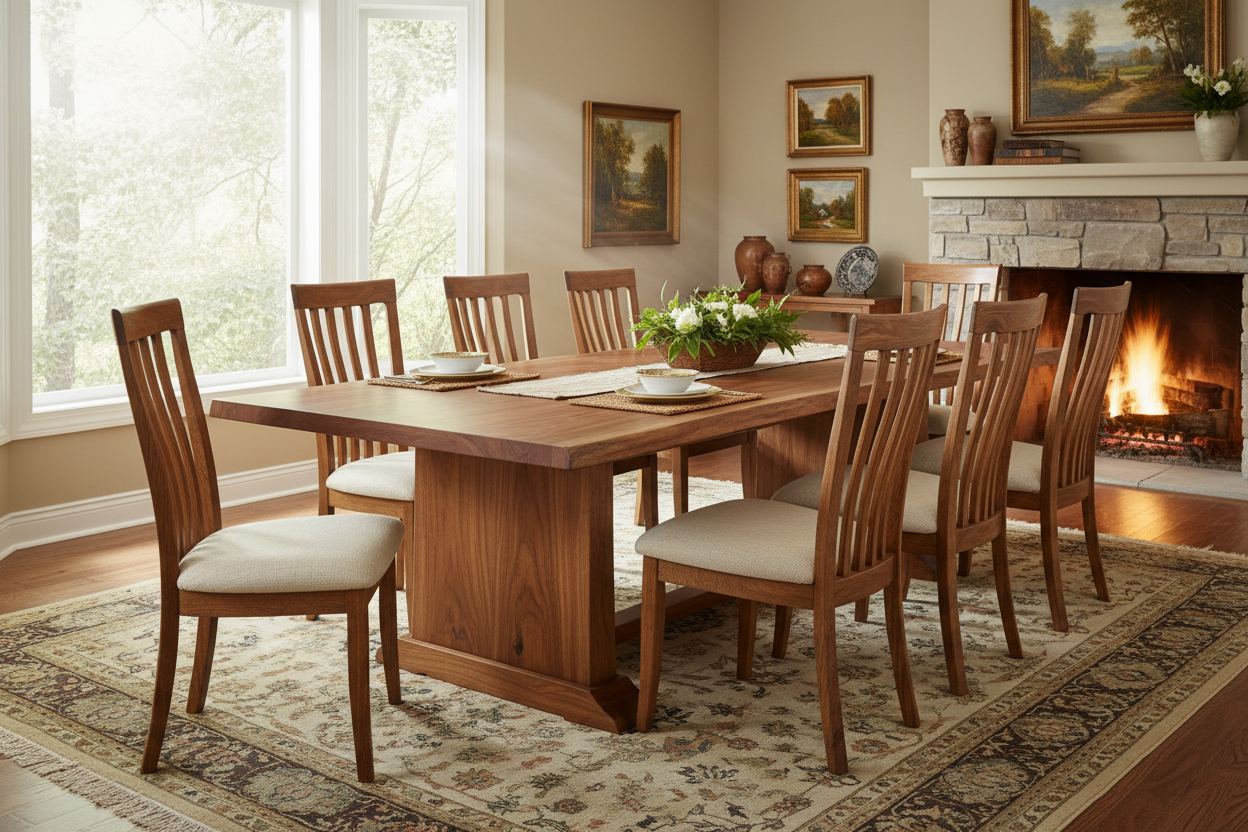
Few things ground a home quite like a solid timber table. It is the silent anchor of the household, the place where homework is finished, taxes are filed, and holidays are celebrated. While trends involving glass, metal, or acrylic come and go, a wooden dining room table set remains the gold standard for durability and warmth. Choosing one, however, is not as simple as picking a stain color. It requires an understanding of wood species, joinery, and how the piece will physically fit into your daily life.
The Unmatched Durability of Timber
Wood is a living material that reacts to its environment, yet its longevity is unmatched when treated correctly. When you are looking for a dining room table and chairs wooden construction offers a resilience that veneers and composites cannot replicate. Solid wood can be sanded down, refinished, and repaired. If you scratch a glass table, it stays scratched. If you dent a cheap particle board table, the laminate eventually peels. A solid wood table simply acquires character.
I learned this lesson the hard way in my first apartment. I bought a trendy, inexpensive table made of MDF with a faux-wood wrap. Within six months, a spilled glass of water that sat too long caused the surface to bubble and warp irrecoverably. Years later, when I inherited my grandmother’s oak pedestal table, the difference was night and day. That table had survived three generations of toddlers banging spoons on it. It had water rings and scratches, sure, but a weekend of sanding and a fresh coat of oil made it look brand new. That experience shifted my perspective entirely: furniture should be maintainable, not disposable.
Hardwood vs. Softwood: What Matters?
Understanding the Janka hardness scale is vital before you swipe your credit card. This scale measures the resistance of wood to denting and wear. If you are buying a wooden dining table with chair options for a high-traffic family home, you generally want hardwoods.
Oak, maple, and walnut are excellent choices. They resist deep scratching and hold up well against the daily grind. Pine, often used in farmhouse-style wooden dining room table and chairs, is a softwood. It is beautiful and usually more affordable, but it will dent easily. If you enjoy the rustic, distressed look where every mark tells a story, pine is fantastic. If you want a pristine surface that looks like a showroom piece for decades, stick to white oak or hard maple.
Sizing for the Kitchen vs. The Dining Room
The function of the room dictates the form of the furniture. A formal dining room can usually accommodate a larger, heavier rectangular trestle table. However, a kitchen wood table and chairs setup often requires more flexibility. Kitchens are high-motion zones. You need clearance for opening the refrigerator, the oven, and for people to walk through with groceries.
For these tighter spaces, a round pedestal table is often the smartest engineering choice. Without corners to bump into, the flow of the kitchen improves. A wood kitchen table set with a pedestal base also allows you to squeeze in an extra chair when guests arrive without anyone straddling a table leg. Drop-leaf or gate-leg tables are also brilliant for kitchen nooks, allowing the table to sit flush against a wall when you are just having a quick morning coffee, and expanding when you need the full surface area.
The Art of Mixing and Matching
Buying a pre-packaged suite is the easiest route, but it isn't the only one. A coordinated wood kitchen table and chair set ensures that the finish and grain patterns match perfectly. This creates a cohesive, calm visual field, which is particularly helpful in smaller rooms where you don't want too much visual chaos.
However, modern interior design often favors a curated look over a "catalog" look. You might pair a heavy, dark walnut table with lighter, painted chairs, or even mix a wood dining table and chair combination with a bench on one side. This breaks up the monotony of the wood grain. If you choose to mix, try to keep the undertones consistent. A warm, reddish cherry wood table might clash with cool, ash-toned chairs. Mixing textures works well, but clashing color temperatures can make the room feel disjointed.
Finishes and Maintenance
The longevity of your wooden kitchen dining set depends entirely on the finish. This is the barrier between your dinner and the wood fibers. Polyurethane is the most common modern finish; it sits on top of the wood like a plastic shield. It is incredibly durable and resistant to water and heat. For families with young children, this is usually the pragmatic choice.
Oil finishes, like tung oil or linseed oil, penetrate the wood rather than sitting on top. They offer a more natural, matte look and feel warmer to the touch. The downside is that they offer less protection against liquids and require re-oiling once or twice a year. A wood kitchen table with chairs finished in oil requires immediate cleanup of spills. If you leave a red wine stain on an oil-finished table overnight, it becomes a permanent part of the furniture.
Investment Value
Sticker shock is real when shopping for solid timber. A quality wooden dining room table set represents a significant financial outlay compared to flat-pack furniture. Yet, the cost-per-use value is exceptionally low. A cheap table might last three to five years before it looks shabby or breaks. A solid wood table lasts fifty years or more. When you amortize the cost over decades of daily meals, homework sessions, and late-night conversations, the investment makes perfect sense.
Look for signs of quality craftsmanship. Drawers should have dovetail joinery, not staples. The underside of the table should be finished, or at least smooth, not rough and splintery. The table should not wobble when you lean on it. These physical checks tell you more about the longevity of the piece than the brand name ever will.
Frequently Asked Questions
How do I fix white water rings on a wooden table?
White rings indicate moisture is trapped in the finish, not the wood itself. You can often remove them by gently applying heat with a hairdryer or placing a thick towel over the spot and running a clothes iron (no steam) over it for a few seconds to draw the moisture out.
Can I mix different wood tones in the same room?
Yes, mixing wood tones adds depth and prevents a room from looking flat. The trick is to identify the undertone (warm, cool, or neutral) and keep that consistent across pieces, or use a rug to create a visual buffer between a wood floor and a wood table.
What is the best wood for a family with young kids?
Oak and maple are top choices due to their high hardness rating, making them resistant to dents from toys and silverware. A distressed or textured finish is also a smart strategic move, as it naturally camouflages new scratches and dings better than a high-gloss, smooth finish.


Leave a comment
This site is protected by hCaptcha and the hCaptcha Privacy Policy and Terms of Service apply.