










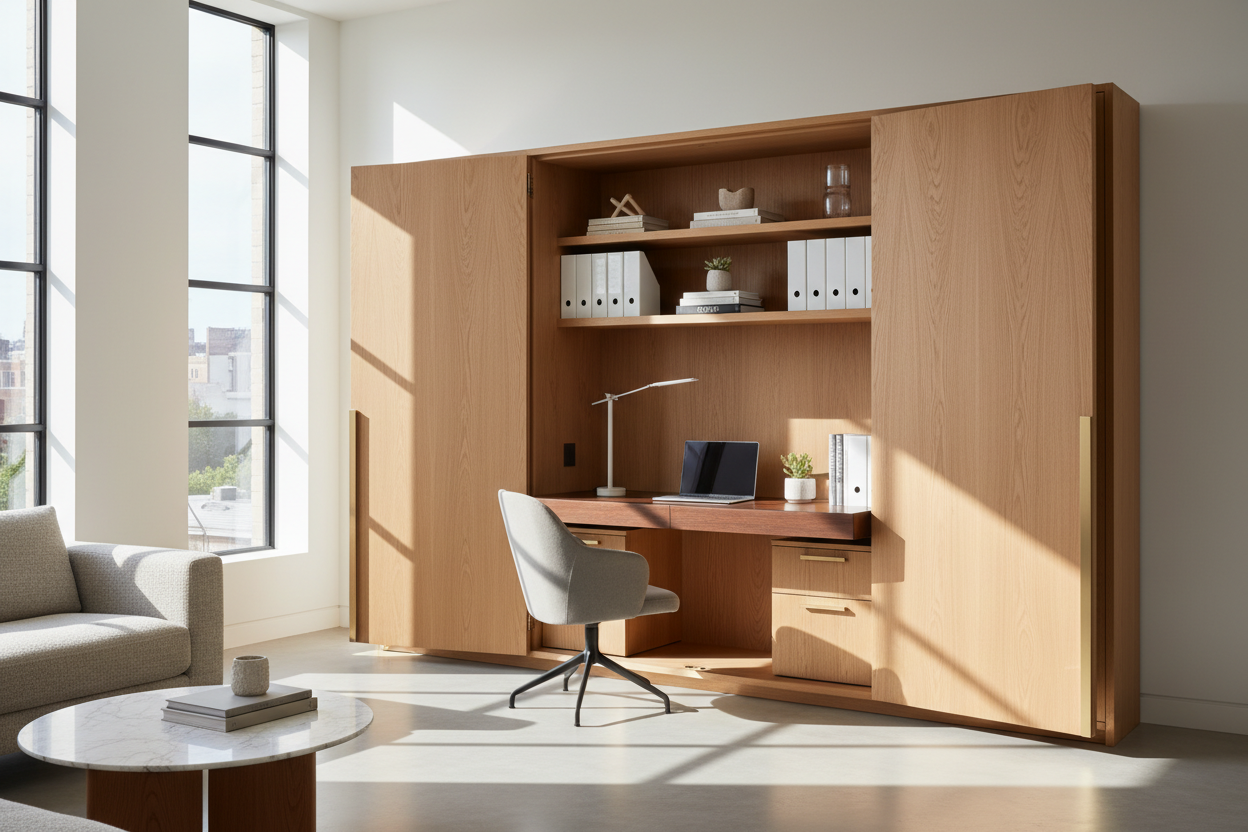
We have all encountered the visual noise that comes with remote work: monitors dominating the guest bedroom, cables snaking across the floor, and the inability to mentally "clock off" because your workspace is constantly in your peripheral vision. As a designer, my clients often ask for a dedicated workspace that disappears when the workday ends. The solution isn't always a separate room; often, it is a sophisticated home office in a cabinet.
This piece of furniture—whether a standalone armoire or a built-in unit—offers the perfect marriage of ergonomics and concealment. It allows you to maintain the architectural integrity of your living space without sacrificing productivity.
Key Features to Look For
- Internal Depth: Ensure a minimum depth of 20-24 inches to accommodate monitors and keyboard trays without hindering door closure.
- Cable Management: Look for pre-drilled grommets or false backs to route cords invisibly to power sources.
- Hinge Durability: Double-check for 270-degree hinges that allow doors to fold flat against the sides, preventing visual obstruction.
- Ergonomic Pull-Outs: A sturdy slide-out shelf is essential for maintaining proper typing height and knee clearance.
Strategic Space Planning and Layout
When curating office cabinet ideas for a client, the first consideration is always the footprint. Unlike a standard desk, a cabinet has significant visual weight. Placing it in a corner can anchor a room, but placing it on a central wall requires it to act as a focal point. If you are working with limited square footage, consider home office wall cabinets that float above the floor. This exposes the skirting board and floor area, tricking the eye into perceiving the room as larger than it actually is.
Materiality and Visual Balance
The finish of your cabinet dictates the mood of the room. For a lighter, Scandinavian approach, pale oak or ash veneers work beautifully to reflect ambient light. However, if you want the piece to feel like a permanent architectural feature, consider office cabinet design ideas involving walnut or painted millwork that matches your wall color. This "drenching" technique helps the bulk of the cabinet recede into the background.
Functionality: Beyond the aesthetic
A beautiful exterior means nothing if the interior lacks function. The best home office cabinet design prioritizes vertical storage. Upper shelving should be adjustable to accommodate binders or reference materials, while lower sections should offer deep drawers for filing. When evaluating home office cabinets ideas, pay close attention to the hardware. Soft-close slides and substantial brass or matte black pulls add a tactile sense of luxury that elevates the daily experience of opening your office.
Integrating Technology Seamlessly
A home office with cabinets must manage heat and power. Enclosed electronics generate warmth; ensure your chosen design includes ventilation slots or mesh backing to prevent hardware from overheating. Furthermore, consider the placement of your router and printer. A dedicated pull-out shelf for a printer, ideally located near the bottom for stability, keeps the desktop surface clear for your actual work.
Lessons from My Own Projects
I want to share a specific realization from a project I completed last year in a pre-war apartment. We designed a stunning custom home office in a cabinet with pocket doors. It looked flawless on paper.
However, once installed, we realized a critical oversight: the monitor stand depth. We measured the screen, but not the bulky stand base plus the stiffness of the HDMI cable sticking out the back. The doors wouldn't close by exactly half an inch. We had to drill a relief hole in the back panel to accommodate the cabling just to get the doors shut. It was a messy, on-site fix that taught me a valuable lesson: always measure your equipment with the cables plugged in. Also, I noticed that on dark matte finishes, natural skin oils from opening the doors without handles became visible immediately. I now almost exclusively recommend textured wood grains or high-quality hardware pulls to avoid that constant need for wiping down surfaces.
Conclusion
Investing in a hideaway workspace is about reclaiming your home's sanctuary status. By selecting the right materials and focusing on internal ergonomics, you can create a space that works hard by day and sleeps elegantly by night. It is not just about hiding the mess; it is about curating a lifestyle where work and rest coexist beautifully.
Frequently Asked Questions
What is the ideal depth for a home office cabinet?
For a comfortable setup involving a laptop and external monitor, aim for an internal depth of at least 22 to 24 inches. This accounts for the monitor stand and the necessary distance for your eyes to focus comfortably on the screen.
How do I handle lighting inside the cabinet?
Relying on room lighting causes eye strain because the cabinet walls cast shadows. Install LED strip lighting recessed into the upper shelves or a slim, rechargeable under-cabinet task light to ensure the workspace is bright and focused.
Can I convert an existing wardrobe into an office cabinet?
Yes, but reinforcement is key. Wardrobe shelves are designed for clothes, not the weight of heavy equipment and the pressure of typing. You will need to reinforce the main desk shelf with heavy-duty brackets and likely drill new holes for power management.


Leave a comment
This site is protected by hCaptcha and the hCaptcha Privacy Policy and Terms of Service apply.