










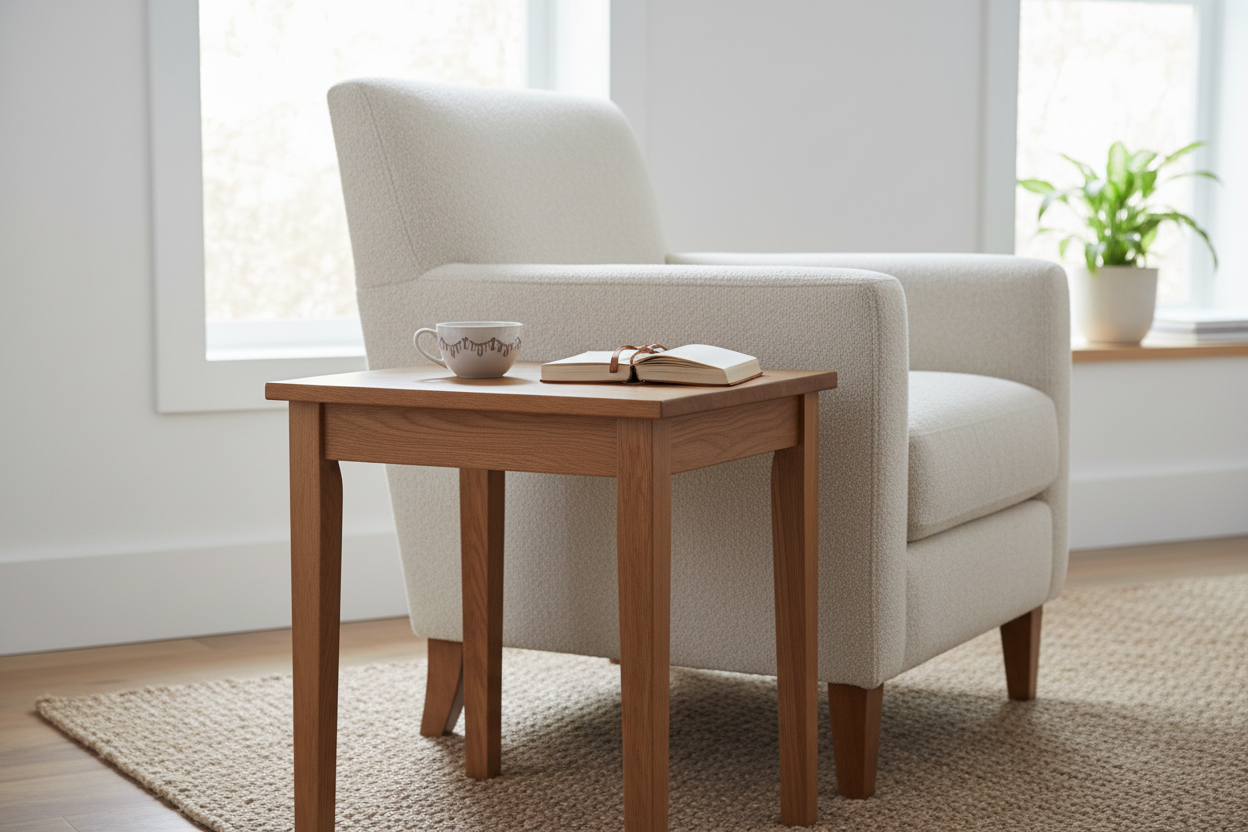
A wood side table does more than just hold your coffee mug. It anchors a space, adds warmth, and provides that perfect spot for a reading lamp or a stack of books you've been meaning to finish. Whether you're furnishing your first apartment or refreshing a tired living room, the right wooden end table can transform how a room feels without breaking the bank.
The beauty of wood end tables for living room spaces lies in their versatility. Unlike glass or metal alternatives, wood brings an organic texture that works with virtually any decor style. A simple wood side table in oak complements modern minimalist interiors just as well as it does farmhouse or traditional settings. The grain patterns, natural color variations, and tactile quality of timber create visual interest that synthetic materials simply can't replicate.
Finding the Right Size and Height
Small wood side tables work particularly well in apartments or cozy living spaces where every square foot counts. The standard height for end tables typically ranges from 22 to 30 inches, roughly matching the arm height of most sofas and chairs. I learned this the hard way after buying a beautiful walnut piece that sat four inches too low next to my couch—it looked awkward and made reaching for my drink feel like a workout.
When shopping for small wood end tables for living room use, measure the height of your seating first. A table that sits within two inches of your sofa arm height creates the most cohesive look. For tight spaces beside a reading chair or tucked into a corner, look for pieces with a footprint of 18 inches square or less. These compact options provide surface area without overwhelming the room.
Budget-Friendly Options That Don't Look Cheap
You don't need to spend hundreds of dollars to get a quality piece. Cheap wood side tables have come a long way in recent years, with many retailers offering solid construction at accessible price points. The key is knowing what to look for. A wood side table cheap in price doesn't have to mean cheap in quality if you focus on good joinery and finish.
Pine and rubberwood offer affordable alternatives to pricier hardwoods like oak or walnut. While they're softer woods, they hold up well to normal use and can be refinished if they get scratched. Many budget-friendly wooden end tables for living room settings use veneer over engineered wood cores—this isn't necessarily a bad thing. Quality veneers provide the look of expensive wood grain while keeping costs down and preventing warping that can occur with solid wood.
Materials and Construction Quality
Look for dovetail or mortise-and-tenon joints rather than simple butt joints held together with screws. Run your hand along edges and corners—they should feel smooth without sharp points or rough patches. The finish should be even without drips, bubbles, or thin spots that expose raw wood underneath.
Timber end tables made from reclaimed wood have gained popularity for good reason. They offer character that new wood can't match, with weathering and patina that tells a story. Each piece is unique, and you're giving new life to materials that might otherwise end up in a landfill. The environmental angle aside, reclaimed wood pieces often cost less than new hardwood furniture while looking more expensive.
Style Variations for Every Taste
A low wood side table—typically 18 to 20 inches high—works beautifully next to floor seating, futons, or low-profile modern sofas. These pieces create a more relaxed, casual vibe and can make a room feel more spacious by keeping sightlines open. They're particularly popular in mid-century modern and Scandinavian-inspired interiors.
Side tables for living room wooden designs range from ornate turned legs to clean-lined rectangular forms. Three-legged designs offer stability on uneven floors and add visual lightness compared to four-legged versions. Nesting tables provide flexibility—use them separately when entertaining or stack them to save space during the week.
A wooden top end table with metal legs bridges industrial and natural aesthetics. The contrast between warm wood and cool metal creates visual interest while maintaining the organic feel that makes wood furniture so appealing. These hybrid designs work especially well in loft-style spaces or contemporary homes that mix materials.
Practical Considerations Beyond Looks
Storage matters more than you might think. End tables with drawers or lower shelves multiply their usefulness. That drawer becomes home to remote controls, charging cables, and reading glasses—all the small items that otherwise clutter surfaces. A lower shelf displays a few favorite books or holds a decorative basket for throw blankets.
Think about your lifestyle before choosing a finish. Light-colored woods show water rings and scratches more readily than darker finishes. If you have kids or tend to set drinks down without coasters, consider a darker stain or a distressed finish that hides wear. Alternatively, embrace the patina—many people love how wood furniture develops character over time, with each mark telling part of your home's story.
Mixing and Matching
Your side tables for living room wooden pieces don't need to match perfectly. In fact, intentionally mismatched end tables often create more visual interest than a perfectly coordinated set. The key is finding a common thread—similar wood tones, matching heights, or complementary styles—that ties them together.
I have a simple wood side table in cherry on one side of my sofa and a painted pine piece on the other. They're completely different styles, but both stand 26 inches tall and have similar proportions. The varied textures and finishes make the room feel collected over time rather than bought all at once from a showroom floor.
Care and Maintenance
Wood furniture needs minimal care to stay beautiful. Dust regularly with a soft cloth and clean spills immediately to prevent water damage. Most finished wood pieces benefit from occasional treatment with furniture polish or wax, which nourishes the wood and adds a protective layer. Avoid placing wood tables in direct sunlight, which can fade and dry out the wood over time.
Small wood end table surfaces can be refreshed with fine-grit sandpaper and a new coat of finish if they get damaged. This repairability is one of wood's greatest advantages over laminate or plastic furniture. A scratched wood table can be restored; a scratched laminate table usually needs replacing.
FAQ
What's the difference between an end table and a side table?
The terms are largely interchangeable, though "end table" typically refers to tables placed at the ends of sofas, while "side table" is a broader term for any small table placed beside seating. In practice, most furniture retailers use both terms to describe the same pieces.
How much should I expect to spend on a quality wood side table?
Quality small wood side tables start around $50-75 for basic pine or rubberwood construction and range up to $200-300 for solid hardwood pieces with better joinery and finishes. Mid-range options between $100-150 offer the best balance of quality and value for most buyers.
Can I use outdoor wood furniture as indoor side tables?
You can, though outdoor furniture is typically bulkier and heavier than necessary for indoor use. Teak and cedar outdoor pieces work well indoors if you like the weathered look, but they often cost more than comparable indoor furniture and may have finishes designed to withstand weather rather than complement interior decor.


Leave a comment
This site is protected by hCaptcha and the hCaptcha Privacy Policy and Terms of Service apply.