










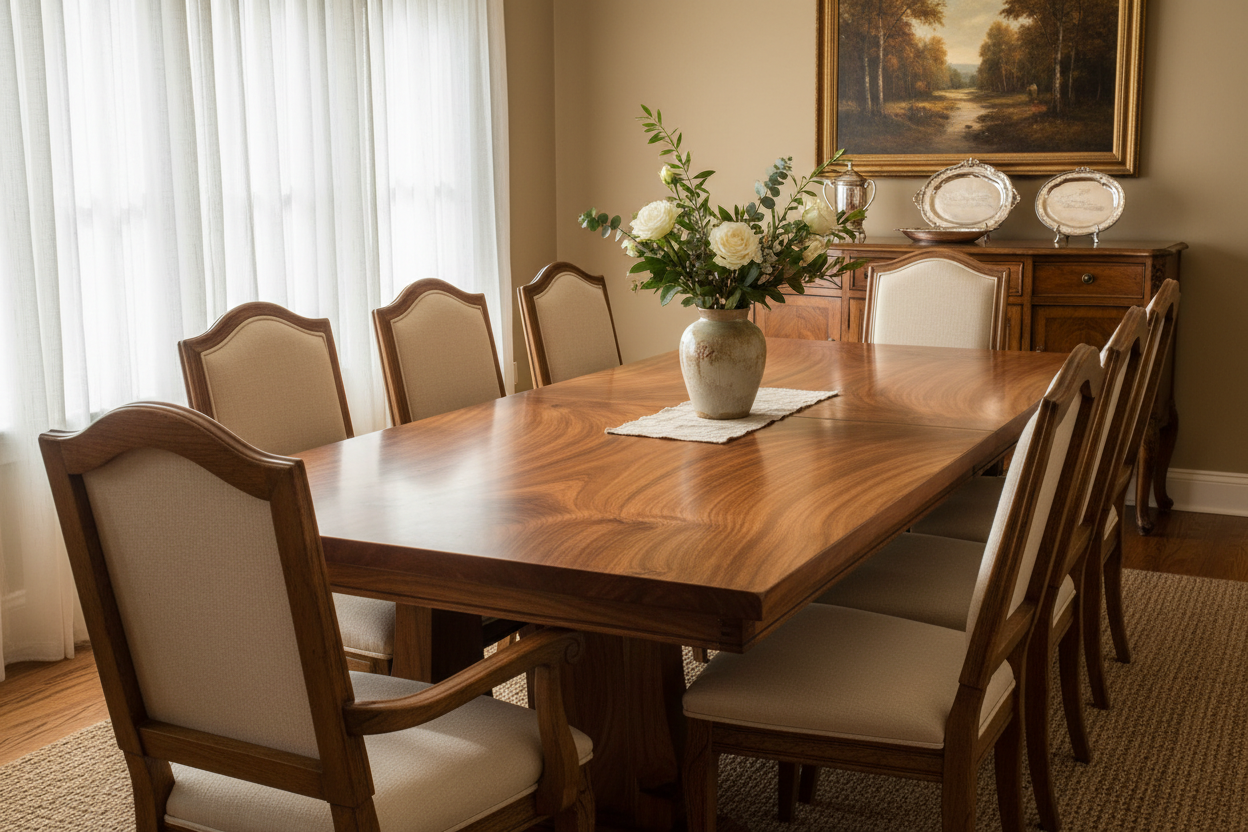
The dining room is rarely just a place to eat. It operates as the command center for family meetings, a makeshift home office, and the stage for your most memorable social gatherings. At the heart of this activity sits the table. While trends in interior design shift rapidly, an elegant wood dining table remains a constant anchor. It does not merely fill a space; it defines the atmosphere. Finding the right piece involves looking past the surface shine to understand the construction, the timber's character, and how the furniture communicates with the rest of your home.
True elegance in wooden furniture comes from the marriage of high-quality material and intentional design. It isn't necessarily about ornate carvings or a high gloss finish. Often, the most sophisticated tables rely on the natural beauty of solid hardwood—walnut, white oak, or mahogany—paired with joinery that allows the wood to breathe and move over time. When you walk into a room, a well-crafted table commands attention through its proportions and the depth of its grain, serving as a functional piece of art that improves with age rather than deteriorating.
Understanding Wood Species and Grain Patterns
Selecting the timber is the most critical decision in this process. Different species evoke different moods. Walnut, for instance, offers a rich, dark chocolate hue that brings immediate warmth and formality to a dining space. It is often the top choice for mid-century modern designs where the focus is on sleek lines and smooth surfaces. The grain is usually straight but can feature intricate swirls that catch the light, adding a layer of visual texture without feeling cluttered.
White oak takes a different approach. It is harder and more durable, making it an excellent option for high-traffic homes. Its pale, wheat-colored tones fit perfectly into Scandinavian or farmhouse chic aesthetics. The grain in oak is more pronounced, offering a tactile experience that feels organic and grounded. For those seeking something with a reddish tint and historical weight, mahogany or cherry provide a traditional grandeur that deepens in color as the wood oxidizes over the years.
I recall my own search for the perfect dining table a few years ago. I had initially set my sights on a sleek, glass-top piece, thinking it would make my small dining area look larger. After weeks of browsing, I stumbled upon a local craftsman selling a restored Danish teak table from the 1960s. The moment I ran my hand along the beveled edge, the glass option evaporated from my mind. There was a warmth to the timber that glass could never replicate. Bringing that table home changed how we used the room. We stopped eating on the couch. The wood felt inviting; it didn't feel cold against your arms while reading the morning news. That purchase taught me that the tactile nature of furniture is just as important as the visual.
The Architecture of the Base
While the tabletop gets the glory, the base determines the comfort and flow of the room. An elegant wood dining table must accommodate chairs and legs without awkward collisions. Trestle bases are a fantastic solution for maximizing seating capacity. By moving the support structure to the center or the far ends, you eliminate the corner legs that always seem to get in the way of guests' knees. This style works exceptionally well in rustic or industrial settings, where the heavy timber construction adds a sense of permanence.
Pedestal tables, often found in round or oval shapes, offer the ultimate flexibility. They facilitate conversation by angling everyone toward the center. A round walnut table with a sculptural pedestal base can soften a square room, breaking up the rigid lines of walls and cabinetry. For rectangular rooms, a double pedestal or a modern spider-leg base provides stability while maintaining an airy, open feel underneath.
Solid Wood vs. Veneer: The Longevity Factor
A common point of confusion is the distinction between solid wood and wood veneer. High-end veneers are not inherently bad; in fact, they allow for intricate marquetry patterns that are impossible with solid planks. However, for a dining table that will see daily use, solid hardwood offers the benefit of refinishing. If a solid oak table suffers a deep scratch or a heat mark, it can be sanded down and resealed, effectively resetting its lifespan. An elegant table is an heirloom, meant to outlast the buyer. Veneer, if chipped, is difficult to repair convincingly.
Sizing and Room Flow
Elegance collapses if the proportions are wrong. A massive banquet table in a modest apartment feels claustrophobic, while a delicate bistro table in a grand hall looks lost. A general rule is to leave at least 36 inches of clearance between the edge of the table and the nearest wall or piece of furniture. This allows ample room for guests to slide their chairs back and for people to walk behind seated diners.
Consider the visual weight of the piece as well. A table with thick, chunky legs and a dark finish will dominate the room. If your dining space shares an open floor plan with the living room, you might prefer a table with tapered legs and a lighter finish to maintain a sense of airiness. Extendable tables are a brilliant compromise for those who host occasionally but prefer a cleaner look for daily living. Modern extension mechanisms are often hidden completely beneath the top, preserving the table's silhouette until the extra length is needed.
Protecting the Finish
Wood is a living material, even after it has been cut and kiln-dried. It reacts to humidity and temperature. The finish you choose dictates how the table interacts with your lifestyle. A hard lacquer or polyurethane finish sits on top of the wood, creating a robust shield against wine spills and water rings. This is practical, but it can sometimes look plastic if applied too thickly.
Oil finishes, such as linseed or tung oil, penetrate the grain. They offer a matte, natural look that highlights the timber's depth. The trade-off is maintenance. You may need to re-oil the table once or twice a year, but this process helps the table develop a rich patina that synthetic finishes cannot achieve. Scratches on an oiled table blend in over time, becoming part of the furniture's story rather than a defect.
Investing in an elegant wood dining table is about choosing a companion for your home's future. It requires balancing the practical needs of your household with the aesthetic desire for beauty. Whether you choose a reclaimed oak farmhouse table or a sleek walnut mid-century piece, the right table grounds your home, inviting people to sit, stay, and connect.
Frequently Asked Questions
How do I fix water rings on a wood dining table?
For oil finishes, you can often buff the ring out with a little extra oil and fine steel wool. For lacquer finishes, a common trick is to gently apply low heat with a hair dryer to draw out the moisture, or use a specialized watermark remover cloth. Always test a small, hidden area first.
Can I mix different wood tones in the dining room?
Yes, mixing wood tones creates a layered, curated look rather than a "showroom" feel. The key is to keep the undertones consistent (warm with warm, cool with cool) or use a rug to create a visual buffer between a dark wood table and light wood floors.
Is a custom-made table worth the extra cost?
If you have a non-standard room shape or specific sizing requirements, custom is often the best route. It allows you to select the exact slab of wood and base style, ensuring the piece fits your space perfectly and meets your quality standards for long-term durability.

Leave a comment
This site is protected by hCaptcha and the hCaptcha Privacy Policy and Terms of Service apply.