










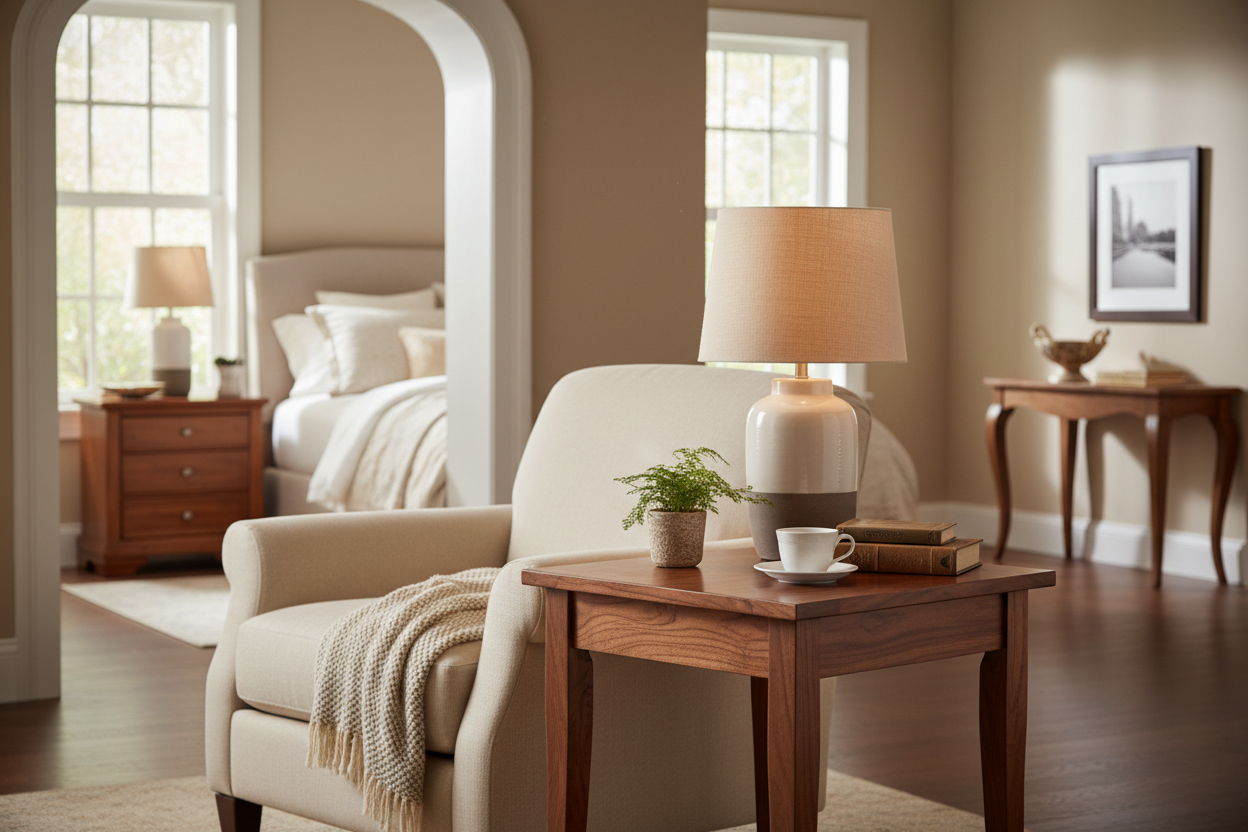
Walking into my living room last spring, I realized something odd: I had nowhere to set my coffee cup. My couch sat there, looking lovely but completely impractical. That's when I discovered the quiet magic of wooden side tables—those unassuming pieces of furniture that somehow make every space feel complete.
A wooden side table is more than just a place to rest your drink. It's the furniture equivalent of a Swiss Army knife, adapting to whatever your room needs while adding warmth and character that plastic or metal alternatives simply can't match. Whether you're furnishing your first apartment or refreshing a well-loved home, understanding how these versatile pieces work can transform how you use your space.
The Versatility That Makes Wood Stand Out
Wood small tables have this remarkable ability to blend into virtually any design scheme. I've moved mine from a modern minimalist bedroom to a farmhouse-style living room, and it looked right at home in both. The natural grain patterns and warm tones of wood create a visual anchor that feels both timeless and current.
What makes a wood stand table particularly useful is its ability to serve multiple functions throughout the day. Mine holds my laptop during morning work sessions, transforms into a display surface for family photos by afternoon, and becomes a convenient spot for evening reading materials. This adaptability means you're not just buying furniture—you're investing in a functional piece that earns its place in your home.
Finding the Right Size and Style
The beauty of wood occasional tables lies in their range. I learned this the hard way after buying a table that looked perfect in the store but overwhelmed my small reading nook. The piece itself was beautiful, but proportion matters more than most people realize.
A wood little table works wonders in tight spaces. I have one tucked beside my favorite armchair that's barely 12 inches across, yet it holds everything I need for a cozy evening: a book, reading glasses, and that essential cup of tea. These compact options prove that you don't need a large footprint to add functionality.
For larger spaces, a long wood side table can define an area without blocking sight lines. I use one behind my sofa that stretches nearly four feet but stands only about 10 inches deep. It creates a boundary between my living and dining areas while providing surface space for lamps and decorative items that make the whole room feel more intentional.
The Appeal of Wooden Shelf Tables
One upgrade I wish I'd made sooner was switching to a wooden shelf table in my entryway. The additional tier underneath changed everything. Suddenly I had a spot for my keys and mail on top, with shoes and bags tucked discretely below. This vertical storage approach maximizes usefulness without requiring more floor space.
These multi-level designs work particularly well in bathrooms and bedrooms where you need to keep multiple items organized but accessible. The open shelf design also prevents that cluttered feeling you get with closed cabinets, making it easier to see what you have and keep things tidy.
Investing in a Wood Side Table Set
After living with mismatched tables for months, I finally understood why a wood side table set makes sense for certain rooms. Matching pieces create visual harmony that's hard to achieve otherwise. I placed two identical tables on either side of my bed, and the symmetry instantly made the room feel more pulled-together and intentional.
Sets also solve the problem of finding complementary pieces later. Wood finishes can vary dramatically even within the same species, and what looks like a match in the store might clash once you get it home. Buying a set eliminates this guesswork while often saving money compared to purchasing pieces individually.
Material Choices That Matter
Not all wooden side tables are created equal, and the type of wood affects both appearance and durability. Oak offers incredible strength and a prominent grain pattern that adds character. Walnut brings rich, dark tones that age beautifully. Pine provides an affordable option with a lighter, more casual feel that suits cottage or Scandinavian styles.
I've owned tables made from each of these woods, and they've all held up well with basic care. The key is matching the wood type to your lifestyle. If you have young children or pets, harder woods like oak or maple resist scratches and dents better than softer options.
Caring for Your Wood Tables
Maintaining wooden furniture doesn't require special skills or expensive products. I learned from my grandmother to simply dust regularly and wipe up spills immediately. Once every few months, I apply a thin coat of furniture polish or oil, which takes maybe five minutes per table and keeps the wood looking nourished.
Avoid placing wooden side tables directly in sunlight or near heating vents, as extreme temperature changes can cause warping or cracking. I use coasters religiously—not just for cold drinks but also for hot ones, since heat can leave permanent marks on the finish. These small habits have kept my tables looking great through years of daily use.
Styling Your Wooden Side Table
The surface of a wooden side table offers a perfect opportunity for personal expression. I keep mine relatively simple: a small lamp, a plant, and one decorative object that changes with the seasons. This approach provides functionality while leaving enough empty space that the table doesn't feel cluttered.
Layering different heights creates visual interest. I might place a stack of books with a small sculpture on top, or use a tray to corral smaller items while adding another level to the composition. The wood itself is beautiful enough that you don't need to cover every inch—sometimes less really is more.
Where to Place Them
Beyond the obvious spot next to a sofa or bed, wooden side tables work in unexpected places. I have a small one in my bathroom holding hand towels and a candle, transforming a purely functional space into something spa-like. Another sits in my home office, bridging the gap between my desk and a filing cabinet while providing extra surface area for reference materials.
Entryways, hallways, and even large closets can benefit from a well-placed wood occasional table. The key is identifying those moments throughout your day when you wish you had a surface nearby—that's probably where a side table belongs.
These pieces have become so integral to how I live that I can't imagine my home without them. They're the supporting actors that make everything else work better, providing both practical function and aesthetic warmth. Whether you need just one or several, choosing wooden side tables means investing in furniture that will serve you well for decades to come.
Frequently Asked Questions
What's the ideal height for a wooden side table?
The top of your side table should sit level with or slightly below the arm of your sofa or chair, typically between 22-30 inches tall. This height makes it comfortable to reach items without awkward stretching. For bedside tables, aim for the same height as your mattress top for easy access while lying down.
Can wooden side tables work in modern or contemporary spaces?
Absolutely. Wood adds warmth to modern interiors that might otherwise feel cold or sterile. Choose pieces with clean lines, minimal ornamentation, and lighter wood tones like ash or maple for contemporary settings. The natural material actually creates an appealing contrast against modern elements like metal and glass.
How do I prevent water rings on my wooden side table?
Always use coasters under drinks, both hot and cold. If a water ring does appear, try gently rubbing the area with a mixture of equal parts white vinegar and olive oil, following the wood grain. For stubborn rings, a paste of baking soda and water applied carefully can help lift the moisture stain without damaging the finish.


Leave a comment
This site is protected by hCaptcha and the hCaptcha Privacy Policy and Terms of Service apply.