










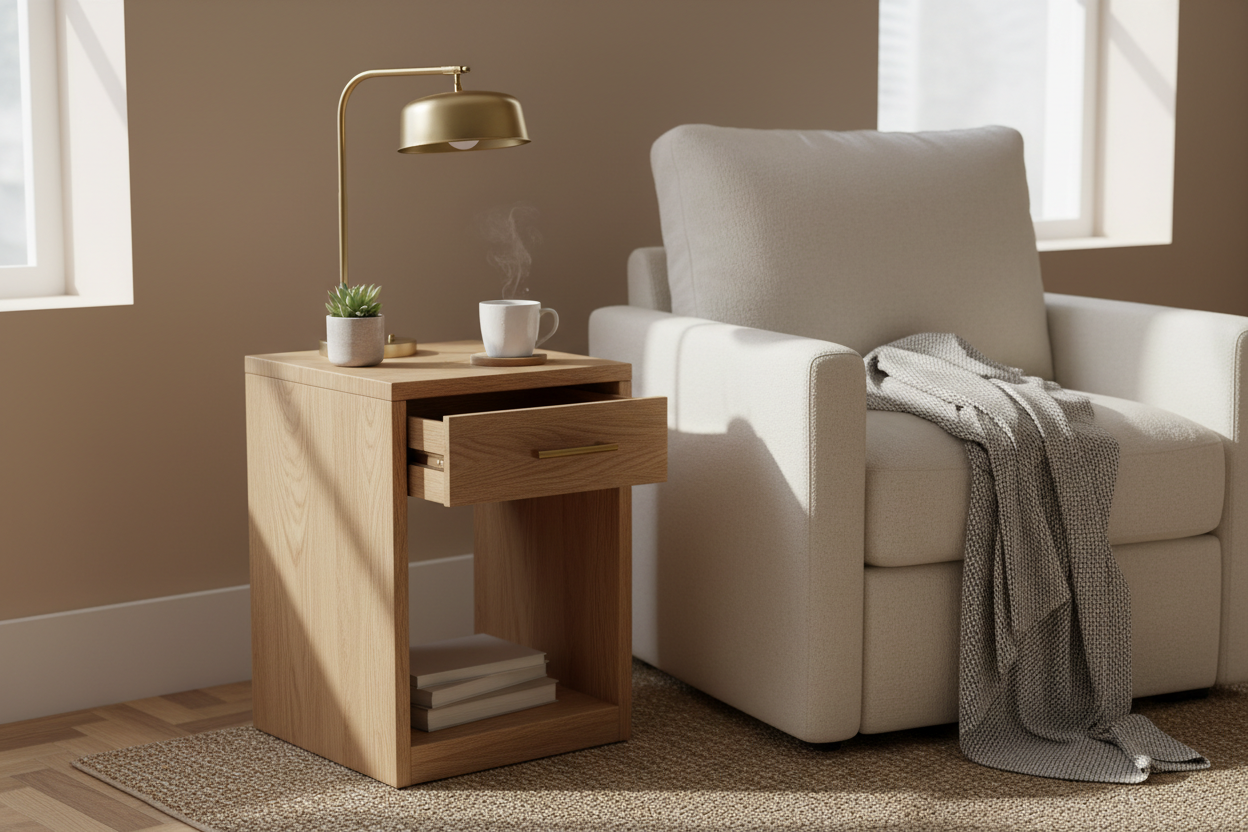
A small table with drawer isn't just furniture—it's the solution to that nagging problem of where to put your phone charger, reading glasses, or remote control without creating visible clutter. These compact pieces combine surface space with hidden storage, making them incredibly practical for apartments, bedrooms, and living rooms where every square foot counts.
The beauty of a small side table with drawer lies in its versatility. You can tuck one beside your sofa to hold drinks and magazines while keeping charging cables out of sight. Place it next to your bed as a nightstand that stores medications, journals, or whatever you need within arm's reach but don't want on display. I discovered this myself when I moved into a smaller apartment last year—what seemed like a simple furniture purchase became the organizational hero of my living space.
What Makes a Small Table with Drawer Different
Unlike open shelving or standard side tables, models with drawers give you the best of both worlds. The top surface handles your everyday items—a lamp, coffee cup, or decorative plant—while the drawer conceals everything else. This matters more than you might think, especially in open-plan spaces where visual clutter can make rooms feel cramped and chaotic.
Size matters here. Most small side tables with drawers measure between 15 to 24 inches wide, making them narrow enough to fit in tight spaces but substantial enough to be useful. The drawer depth typically ranges from 8 to 12 inches, which is perfect for storing books, electronics, or personal items without the table becoming bulky.
Materials and Construction Quality
Wood remains the most popular choice, with options ranging from solid hardwood to engineered wood with veneer finishes. Solid wood tables cost more but last decades with proper care. I've seen oak and walnut tables from the 1960s that still function perfectly, their drawers gliding smoothly despite half a century of use.
Metal frames with wood or glass tops offer a modern aesthetic and tend to be lighter, making them easier to move around. The drawer mechanisms matter just as much as the materials—dovetail joints and ball-bearing glides indicate quality construction that won't frustrate you every time you open the drawer.
Drawer Configurations That Actually Work
Single-drawer designs keep things simple and maintain a sleek profile. They work well in minimalist spaces or when you only need to hide a few items. Two-drawer models provide more organization options, letting you separate different types of items—tech accessories in one drawer, personal items in another.
Some tables feature deeper drawers that can accommodate tablets or thin laptops, transforming your side table into a mini workstation. Others include divided compartments within the drawer, though I find these less flexible than a single open space where you can arrange things as needed.
Placement Strategies for Different Rooms
In bedrooms, a small table with drawer serves as the perfect nightstand alternative. The drawer keeps your bedside essentials organized while the top holds your phone, water glass, and reading light. Look for models with rounded corners if your bedroom is tight—you'll thank yourself when you're not bumping into sharp edges in the dark.
Living rooms benefit from these tables placed at sofa ends or between chairs. The drawer can store remote controls, coasters, and reading materials, keeping your entertainment area tidy. Choose a height that aligns with your sofa arm for the most comfortable reach.
Entryways and hallways often have awkward spaces where a small side table with drawer fits perfectly. Use the top for keys and mail, the drawer for dog leashes, sunglasses, or masks. This creates a natural landing zone that prevents these items from migrating throughout your home.
Style Considerations Beyond Function
Traditional designs feature ornate hardware, turned legs, and rich wood finishes that complement classic interiors. These tables often become statement pieces that add character to a room. Mid-century modern styles emphasize clean lines, tapered legs, and minimal ornamentation—perfect for contemporary spaces.
Industrial aesthetics combine metal frames with reclaimed wood, creating pieces that feel both rugged and refined. Scandinavian-inspired tables prioritize light woods, simple forms, and functional beauty. The style you choose should echo other furniture in the room, but don't be afraid of mixing periods if you maintain a consistent color palette.
Color and Finish Impact
Dark finishes like espresso or walnut create visual weight and sophistication, making them ideal for formal living rooms or master bedrooms. Light finishes such as white, gray, or natural wood keep spaces feeling open and airy—particularly valuable in smaller rooms where you want to maximize the sense of space.
Painted finishes offer personality and can tie together different elements in a room. A navy blue table might echo your throw pillows, while a sage green piece could complement your wall color. Just remember that painted furniture shows wear more readily than stained wood, so consider your household's activity level.
Practical Shopping Advice
Measure your space before shopping, accounting for drawer clearance. A drawer needs roughly 12-15 inches of space to open fully, so ensure nothing will block it. Check the table height against your seating—side tables should be within 2 inches of your sofa or chair arm height for comfortable use.
Test drawer operation in person when possible. The drawer should glide smoothly without sticking or wobbling. Cheap drawer slides create daily frustration, while quality mechanisms remain smooth for years. Inspect joints and connections—wobbling indicates poor construction that will only worsen with use.
Read reviews focusing on durability and assembly experiences. Many small tables with drawers arrive flat-packed, and assembly difficulty varies wildly between manufacturers. Reviews mentioning stripped screws or misaligned holes signal potential headaches.
Maintenance and Longevity
Wood tables need occasional dusting and periodic treatment with furniture polish or wax to maintain their finish. Avoid placing hot items directly on wood surfaces—use coasters and trivets religiously. Metal frames simply need wiping with a damp cloth, though you should dry them immediately to prevent water spots.
Drawer maintenance involves keeping the tracks clean and occasionally applying a dry lubricant like wax or silicone spray. Remove the drawer completely once or twice a year to vacuum out accumulated dust and debris. This simple habit prevents the grinding and sticking that develops when dirt builds up in the slides.
FAQ
What's the ideal height for a small side table with drawer next to a sofa?
The table should be roughly the same height as your sofa arm, typically 24-26 inches tall. This allows you to comfortably reach items without stretching or bending. If you're between sizes, go slightly lower rather than higher for easier access.
Can a small table with drawer work as a nightstand in tight bedrooms?
Absolutely. Look for models 18-20 inches wide that won't overwhelm the space. Wall-mounted options or tables with a small footprint maximize floor space while still providing the storage and surface area you need beside your bed.
How much weight can the drawer in a small side table typically hold?
Most quality drawers handle 10-15 pounds safely, enough for books, electronics, and typical household items. Cheaper models with thin drawer bottoms may sag with heavy loads, so check construction quality if you plan to store heavier items.

Leave a comment
This site is protected by hCaptcha and the hCaptcha Privacy Policy and Terms of Service apply.