










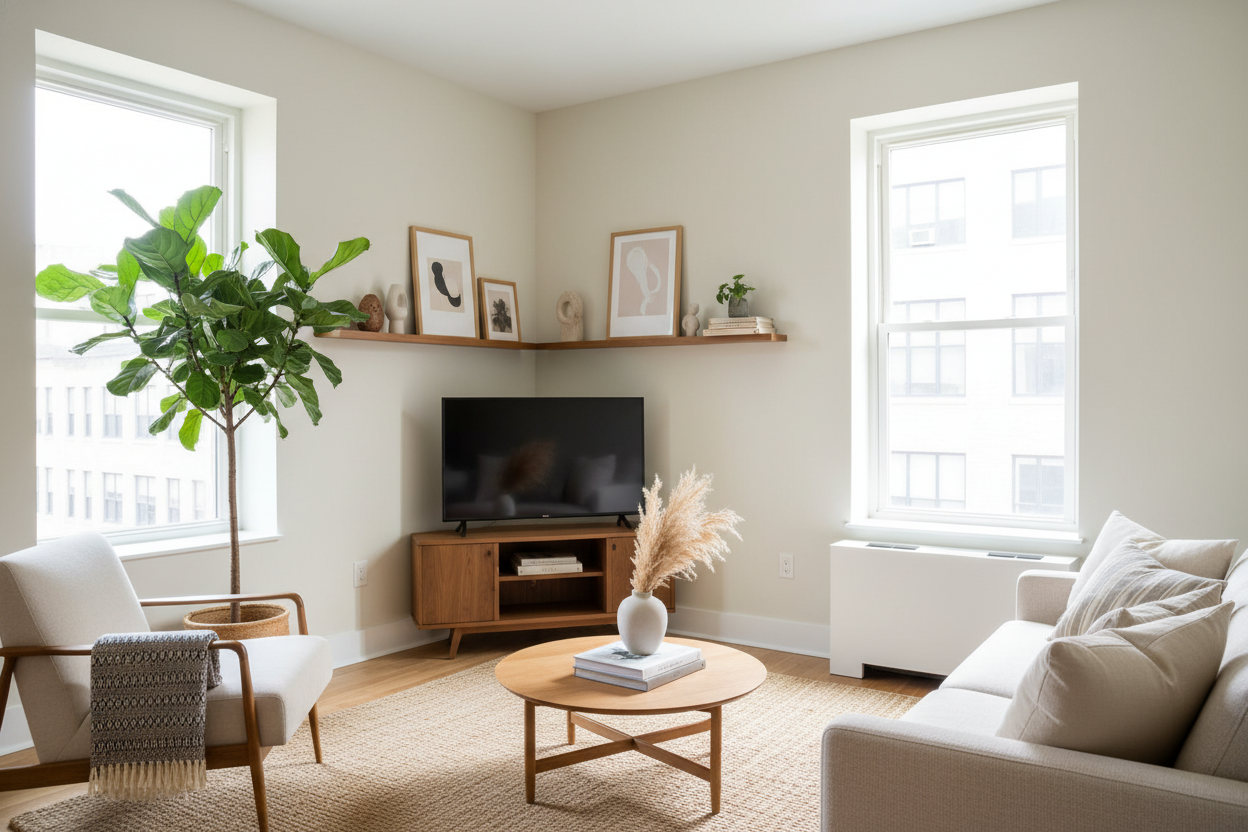
I spent three weeks staring at my living room floor plan like it was a high-stakes puzzle with missing pieces. My previous 70-inch media console was beautiful in the showroom, but in my actual house, it turned the path from the kitchen to the sofa into a narrow canyon. I was constantly bumping my hip on the corner of the wood. I finally realized that my obsession with a 'grand' focal point was ruining the actual flow of my life.
The fix wasn't a bigger room; it was a small tv stand. I swapped the monstrosity for a unit that barely cleared 40 inches in width, and suddenly, I could actually walk through my home without bruising myself. It felt like the room finally took a deep breath. Sometimes, less furniture really does mean more living space.
Quick Takeaways
- Corner placement clears high-traffic zones and opens up blocked doorways.
- Mini tv consoles require vertical styling (plants, art) to avoid looking 'lost' on a big wall.
- Cable management is non-negotiable when the furniture footprint is small and open.
- Always measure your largest piece of tech—usually a PS5 or soundbar—before committing to a small footprint.
The 'Doorway vs. Couch' Dilemma
Most of us are taught that the TV belongs on the longest, flattest wall in the room. In theory, that sounds great. In my 12x14 living room, however, that wall sits directly between the front door and the hallway. By the time I centered a standard-sized console, the 'walking path' was down to about 18 inches. It was claustrophobic and, frankly, annoying.
I resisted the change for months because I thought small furniture looked 'cheap' or temporary. I was wrong. The moment I started swapping giant furniture for small entertainment units, the proportions of the room finally made sense. You don't need a six-foot sideboard to hold a 50-inch screen. A little tv stands can do the job without swallowing the floor space or blocking the natural flow of the room.
Why I Finally Embraced the Corner Setup
There is a weird mental block about putting a TV in the corner. We think it looks like a 90s dorm room. But when you have three doorways and a fireplace competing for attention, the corner is often the only sanctuary left. Angling a mini tv console or a tv bench small into that dead space creates a cozy viewing nook that doesn't compete with the rest of the room's architecture.
It also fixed my glare issues. By tucking the screen into the corner farthest from the window, I stopped having to close the blackout curtains at 3 PM just to see the screen. If you’re looking for a small tv stand nearby, don't just look for 'corner units'—any simple small tv stand with a narrow depth can be angled effectively to save space.
Finding a Simple Small TV Stand That Doesn't Look Puny
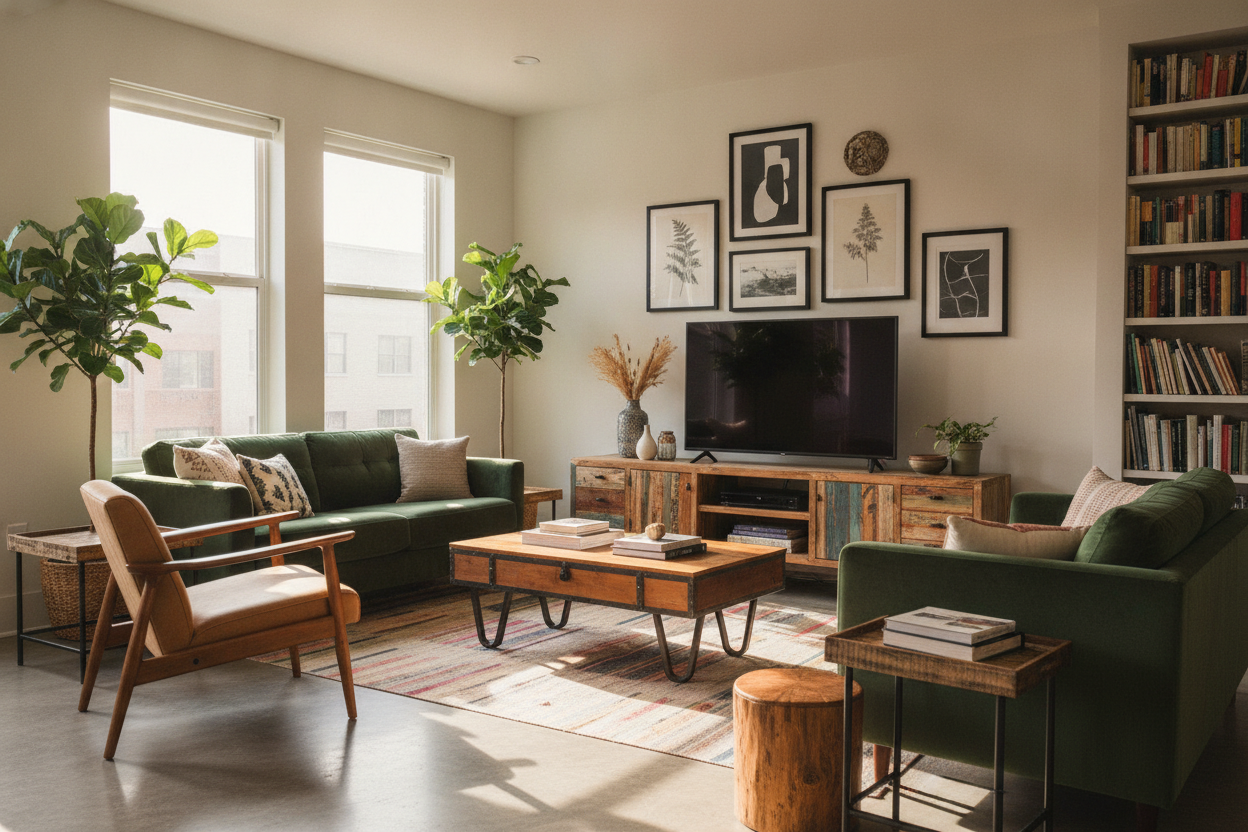
The danger of very small tv stands is the 'dollhouse effect.' If you put a 30-inch stand against a massive blank wall, it looks like you forgot to buy the rest of the furniture. You have to anchor it. I used a 5-foot fiddle leaf fig on one side and a gallery wall above the TV to give the setup some visual height and weight.
Scale is everything. I learned these tv stand for small space secrets the hard way after buying a unit that was so low it felt like I was watching TV from the floor. Look for something at least 18-22 inches high. If the piece is too short, it loses its presence. A small entertainment table should feel intentional, not like a placeholder while you wait for something better.
The Cord-Hiding Reality of Very Small TV Stands
Here is the ugly truth: small stands have nowhere to hide your mess. On a big console, you just shove the tangled nest of HDMI cables behind a solid backboard and forget they exist. With a mini tv stand, those wires are often visible from the side. I spent two hours with velcro ties and a cable box just to make my setup look civilized.
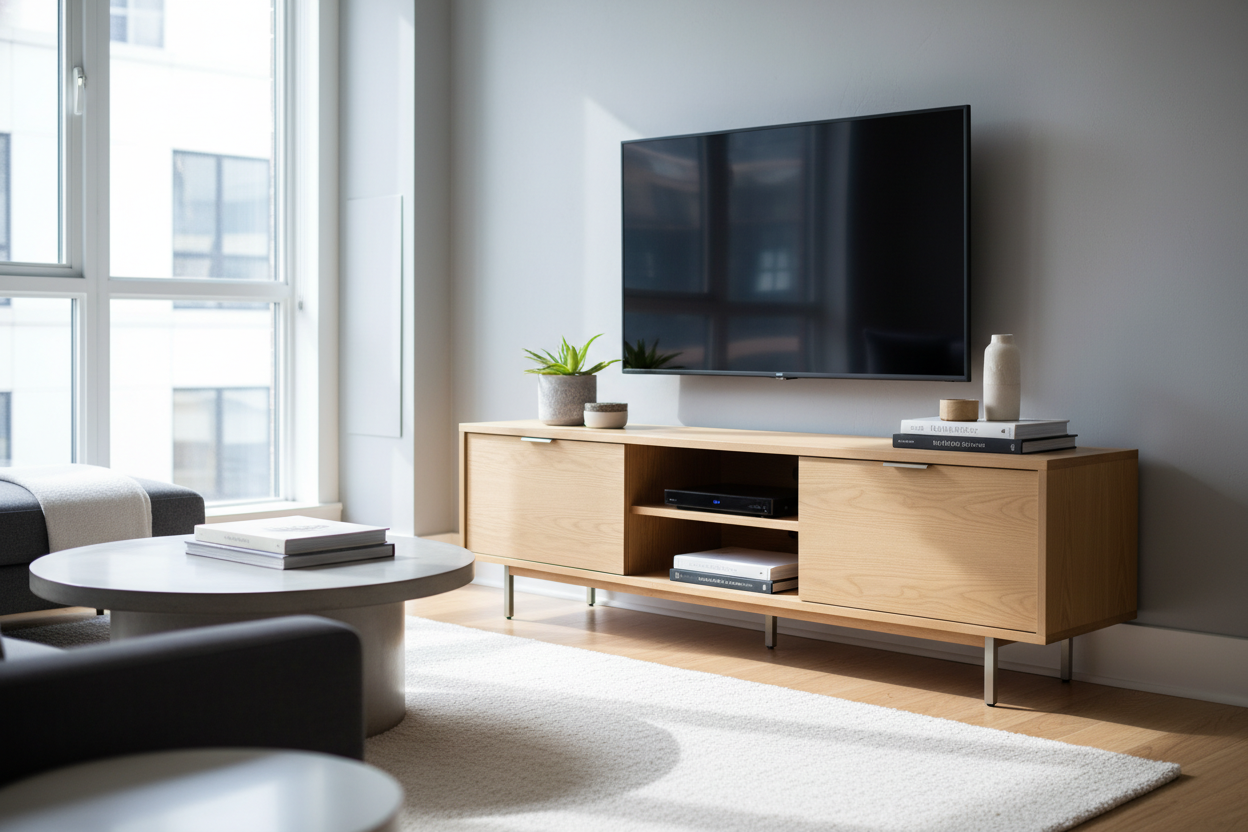
If you hate the look of wires and your small entertainment stand is more 'legs' than 'cabinet,' consider a wall-mounted media console. It keeps the floor clear, which makes the room feel even larger, and most models have built-in channels to route cables. If you're renting and can't mount, white cord covers that stick to the baseboard are your best friend for keeping things clean.
But Will My Soundbar and PS5 Actually Fit?
Before you buy that small under tv table, measure your gear. My soundbar is 36 inches long. If I bought a 34-inch stand, it would overhang and look ridiculous. Most modern consoles like the PS5 are also surprisingly deep—around 15 inches once you factor in the cables sticking out the back. A lot of little tv stands are only 12 to 14 inches deep.
Don't guess. Pull out the tape measure. I once bought a beautiful mid-century mini tv console only to realize my receiver was too tall for the shelf by a quarter of an inch. I ended up having to drill new holes for the shelf pins, which was a nightmare. Check the 'clearance' height of the shelves, not just the overall width of the unit.
FAQ
Can I put a TV larger than the stand?
Technically yes, but it’s a tipping hazard and looks top-heavy. Ideally, your stand should be at least 2-4 inches wider than the TV frame on both sides for visual balance and safety.
Are corner TV stands out of style?
Traditional 'triangle' cabinets can look dated. Instead, use a rectangular simple small tv stand and angle it. It looks more modern and gives you more flexibility if you decide to move the layout again.
How do I hide a router on a small stand?
Use a decorative basket with an open weave. It hides the blinking lights and plastic casing but allows the signal to get through and prevents the tech from overheating in a tight space.

Leave a comment
This site is protected by hCaptcha and the hCaptcha Privacy Policy and Terms of Service apply.