










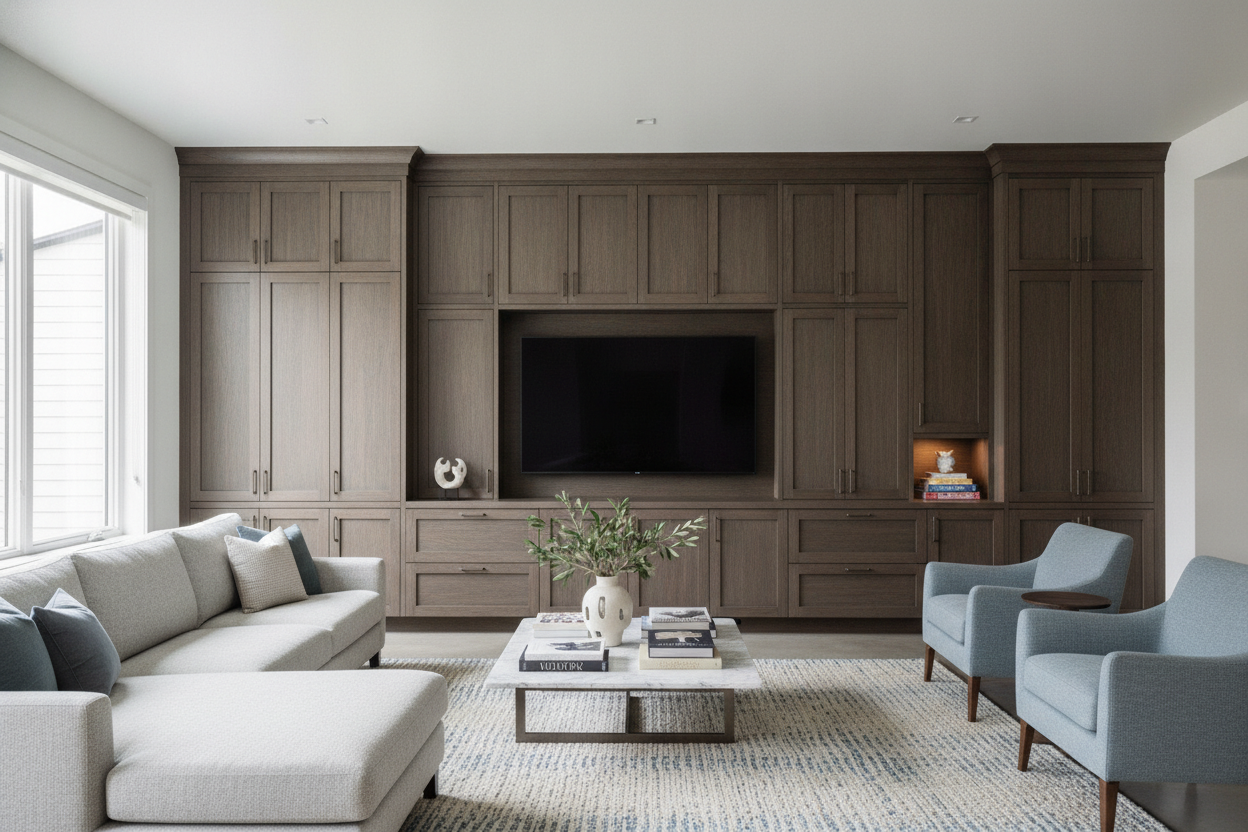
I spent three years pretending I was the kind of person who could pull off an 'airy' living room. I bought the minimalist metal frame, the one with the thin glass shelves that looked so chic in the catalog. In reality? It was a disaster. Within a week, my living room looked like a tech support graveyard, with every tangled HDMI cable and dusty router on full display. I finally snapped and realized I needed a cabinets entertainment center to hide my actual life.
- Open shelving is a full-time job; cabinets are a lifestyle choice for the busy.
- Always measure your deepest component (usually a receiver or PS5) before buying.
- Proper ventilation is the difference between a cool console and a melted one.
- Mixing closed bases with open tops prevents the 'monolith' look in small rooms.
The 'Open Shelving' Lie We Have All Been Fed
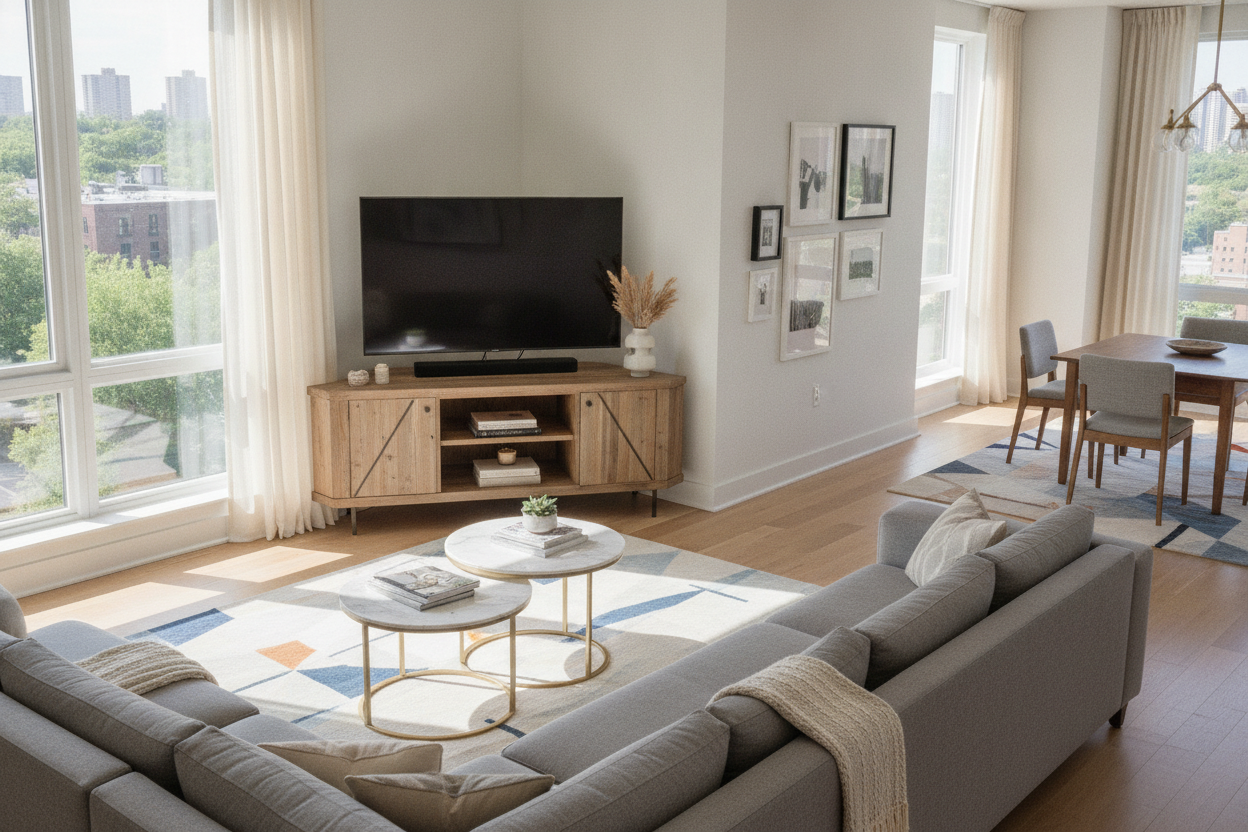
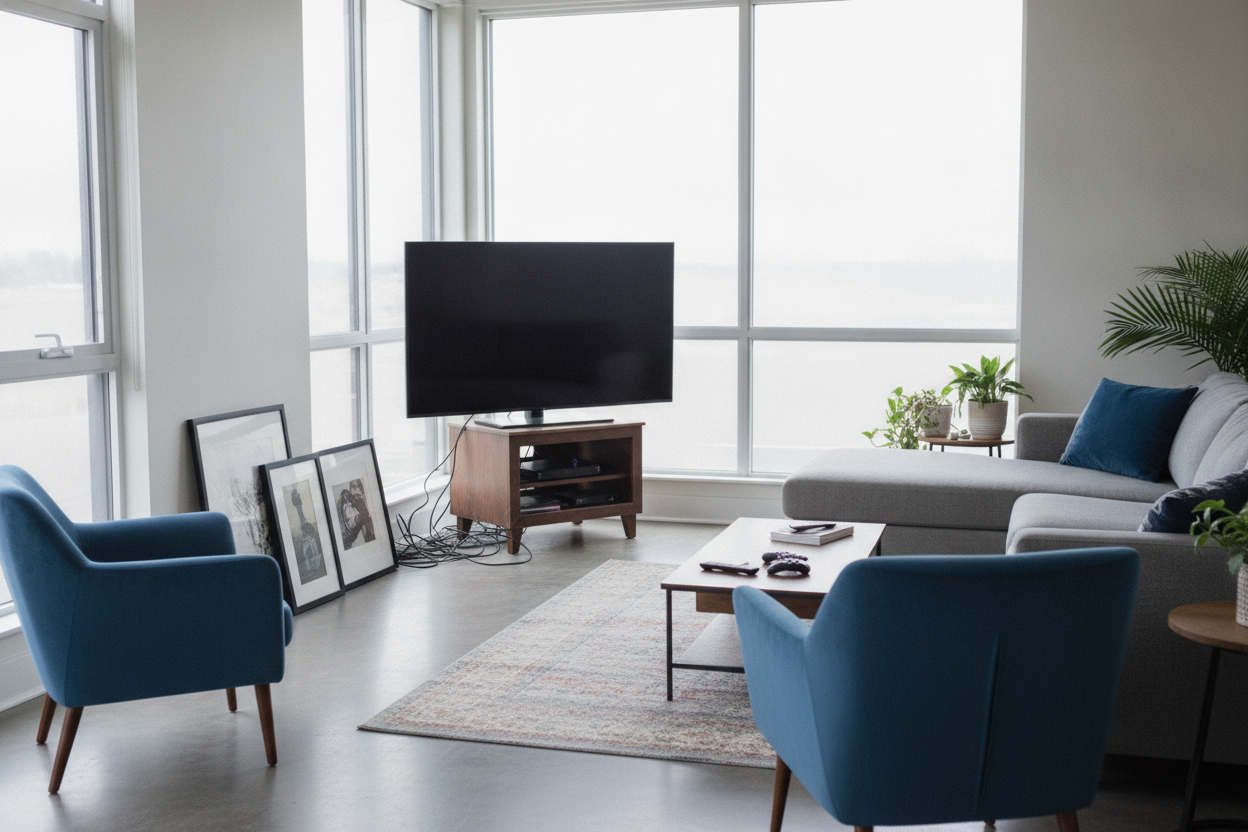
We have all seen the photos. A perfectly staged living room with a slim TV stand, three artfully placed books, and a single ceramic bird. It looks peaceful. It looks intentional. It is also a total lie for anyone who actually lives in their home. The moment you add a soundbar, a gaming console, a router, and a streaming box, that 'airy' look turns into a bird's nest of black plastic and copper wiring. I tried to zip-tie my way out of it, but you can't hide the sheer volume of stuff modern media requires on an open shelf.
Beyond the visual clutter, open shelving is a magnet for dust. I found myself Swiffering every other day just to keep the black glass from looking gray. It felt like my furniture was demanding a level of housekeeping I simply wasn't prepared to give. If you aren't prepared to curate every single object in your line of sight, open shelving isn't 'minimalism'—it's just an unorganized storage unit without doors. Real life is messy, and your furniture should be designed to handle that, not punish you for it.
My Breaking Point with Wires and Board Games
The final straw came on a Tuesday night when I was looking for the 'Settlers of Catan' box. I had it shoved under the open TV stand, behind a pile of dog toys and a thick layer of dust. As I pulled the box out, I snagged the power cord for the router, taking the entire house offline in the middle of my partner's Zoom call. That was the moment I realized my 'aesthetic' furniture was actually making my life harder. I spent that entire evening scouring the internet for a proper entertainment center that actually had doors.
I needed a place for the things that don't look good on a shelf: the half-empty expansion packs, the tangled controller chargers, and the bulky subwoofer. I wanted to be able to walk into my living room and see a clean surface, not a to-do list of organization projects. Transitioning to entertainment center cabinetry wasn't just about aesthetics; it was about reclaiming my sanity. I wanted to be able to shove the mess away and deal with it on my own time, rather than having it stare me down while I tried to watch a movie.
Hiding the Ugly Tech (Without Overheating It)
The biggest fear with closing the doors on your tech is heat. I've seen enough fried motherboards to know that airflow isn't optional. When you're shopping for cabinets for entertainment center setups, check the back panel. Many cheap units use a thin cardboard back that traps heat like an oven. I prefer plywood for entertainment center bases because it is sturdy enough to support heavy equipment but easy to modify. I took a 2-inch hole saw to the back of my cabinet to create extra exhaust ports right behind the hottest components.
Don't forget to measure the 'plug depth.' A receiver might be 15 inches deep, but once you plug in those stiff HDMI cables, you need at least 18 inches of internal clearance. If you buy a cabinet that is too shallow, you'll end up with doors that won't shut or a unit that sits three inches away from the wall. Neither is a good look. Aim for a cabinet depth of at least 19 to 20 inches if you're running a full home theater setup.
Finding the Right Mix of Open and Closed Storage
One mistake I made early on was thinking I needed a solid wall of cabinets. I bought a massive, all-closed unit that looked like a kitchen pantry had wandered into the wrong room. It was heavy, dark, and made the room feel five feet smaller. The trick is balance. You want the bottom half to be a fortress for your clutter, but the top half should breathe. I eventually swapped it for a 100 entertainment center with storage cabinets that kept the mess at floor level while giving me some light shelving above for the few things I actually like looking at.
This 'hybrid' approach is the sweet spot. You can hide the unsightly plastic bins and the router behind solid doors, then spend your energy styling a bookcase and entertainment center on the upper levels. It allows the furniture to feel like a built-in architectural feature rather than just a big box. I keep my 'ugly' stuff like the Nintendo Switch dock and the DVD collection (yes, I still have them) in the lower cabinets, and put my favorite vases and hardcovers up top where they can actually be appreciated.
Is Heavy Entertainment Center Cabinetry Worth the Floor Space?
People often worry that a large cabinet unit will overwhelm a small living room. In my experience, the opposite is true. A single, large piece of furniture that hides all your clutter actually makes a room feel bigger than five small, 'leggy' pieces that let you see the mess behind them. It’s about visual noise. When your eye isn't jumping from a wire to a box to a stray remote, the room feels calmer and more expansive. I’d rather lose six inches of floor depth to a cabinet than lose my mind looking at a pile of electronics.
I once owned a 'minimalist' stand that was only 12 inches deep. It saved floor space, sure, but it couldn't hold anything. I ended up with baskets on the floor around it, which actually took up more room and looked twice as cluttered. Going with a substantial cabinet unit allowed me to get rid of two extra storage bins and a side table. If you're on the fence, go for the cabinetry. Your future, less-stressed self will thank you every time you close those doors and the mess disappears.
Frequently Asked Questions
Will my remote work through cabinet doors?
If you have solid wood or MDF doors, traditional IR remotes won't work. You’ll need an IR repeater kit (they're cheap and easy to hide) or devices that use Bluetooth/RF, like the Apple TV or modern gaming consoles. Alternatively, look for cabinets with slat doors or glass inserts.
How do I prevent my PS5 from overheating inside a cabinet?
Never shove a console into a tight space with no airflow. Ensure there is at least 3 inches of clearance on all sides and a large cutout in the back for hot air to escape. If the cabinet feels hot to the touch after an hour of gaming, it's time to add an active USB fan to the back panel.
What is the ideal height for an entertainment center?
Your TV should be at eye level when you're sitting on the sofa. For most people, this means the top of the cabinet should be between 24 and 30 inches off the floor. If you go higher, you'll be crane-necking your way through every movie night.

Leave a comment
This site is protected by hCaptcha and the hCaptcha Privacy Policy and Terms of Service apply.