










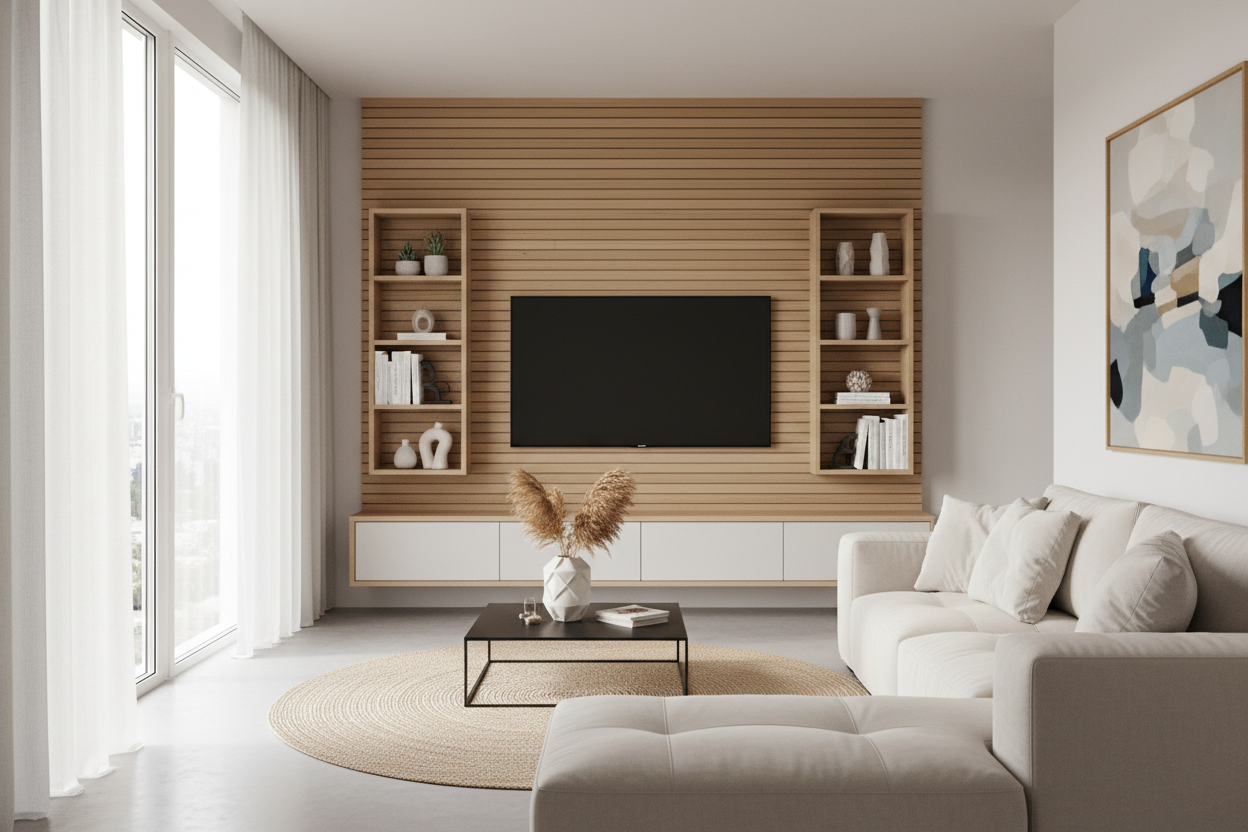
I spent three years staring at a 65-inch black rectangle that looked like it was floating in an abyss. My living room wall was a vast expanse of builder-grade eggshell drywall, and no matter how many oversized floor plants I shoved into the corners, the TV still looked like an afterthought. It was a classic case of 'big tech, zero soul.'
Then I finally pulled the trigger on a panel entertainment center. It wasn't just another piece of furniture; it was like giving my TV an actual home instead of a temporary parking spot. If you're tired of that stark, 'I just moved in' vibe, this is the fix.
- Grounds the Room: Gives your screen architectural weight.
- Cord Hider: Manages the cable 'spaghetti' without opening up your walls.
- Rental Friendly: Most systems mount with just a few brackets.
- Texture: Breaks up the monotony of flat, painted walls.
The Problem With Floating a Giant Screen on Bare Drywall
There is nothing more sterile than a massive TV slapped onto a blank wall. It creates a weird visual imbalance where the screen feels too heavy for the space. Without some kind of frame or backdrop, the TV just sits there, sucking the life out of your decor.
I tried the gallery wall approach first—big mistake. Surrounding a screen with tiny frames just made the whole area look cluttered and frantic. If you're scrolling through entertainment center wall ideas, you'll notice the best designs all have one thing in common: they treat the wall as part of the furniture rather than just a place to hang it.
Wait, What Is a TV Wall Panel Entertainment Center Anyway?
Think of it as a vertical extension of your media unit. While a modern entertainment center used to mean a chunky cabinet with '90s-style glass doors, the panel version is all about the backdrop. It’s usually a series of wood slats or textured boards that mount directly to the wall behind your screen.
Most of these systems include integrated LED lighting and slim floating shelves. It’s a modular approach that feels more like a feature wall than a heavy wardrobe. I went with a walnut slat version, and the depth it added to my room was immediate. It’s the difference between a basic apartment and a space that feels curated.
Why I'm Never Going Back to a Basic Floor Console
Standard consoles are fine, but they’re often too low, leaving a weird four-foot gap of 'nothingness' between the TV and the ceiling. A panel system draws the eye upward. It makes the room feel intentional, like you actually hired a designer instead of just panic-buying whatever was on sale at the big-box store.
It Actually Hides the Dreaded Cord Avalanche
My biggest pet peeve is seeing a single black power cord dangling from a mounted TV. It ruins the illusion. The beauty of the tv wall panel entertainment center is the hidden cavity behind the slats. I managed to tuck a power strip, a router, and three HDMI cables behind mine with zero visible wires.
It’s a clean look that usually requires an electrician to install recessed outlets. With a panel, you just route everything through the built-in channels. It’s a total revelation for people who want the 'clean' look but aren't ready to start cutting holes in the studs of a rental.
You Get That Custom Built-In Look for Way Less
I once got a quote for custom millwork—$4,500 for a basic floor-to-ceiling oak unit. I laughed and then cried. A pre-made panel system gives you that high-end architectural feel for about 20% of the cost. It’s a smart hack for getting those floating entertainment center ideas into your home without the permanent commitment of a contractor.
I assembled mine in about two hours. The hardest part was making sure the first panel was level. Once that’s set, the rest usually just clips or screws into place. It’s sturdy, looks expensive, and the best part? I can take it with me when my lease is up.
Does This Trend Actually Work in Small Apartments?
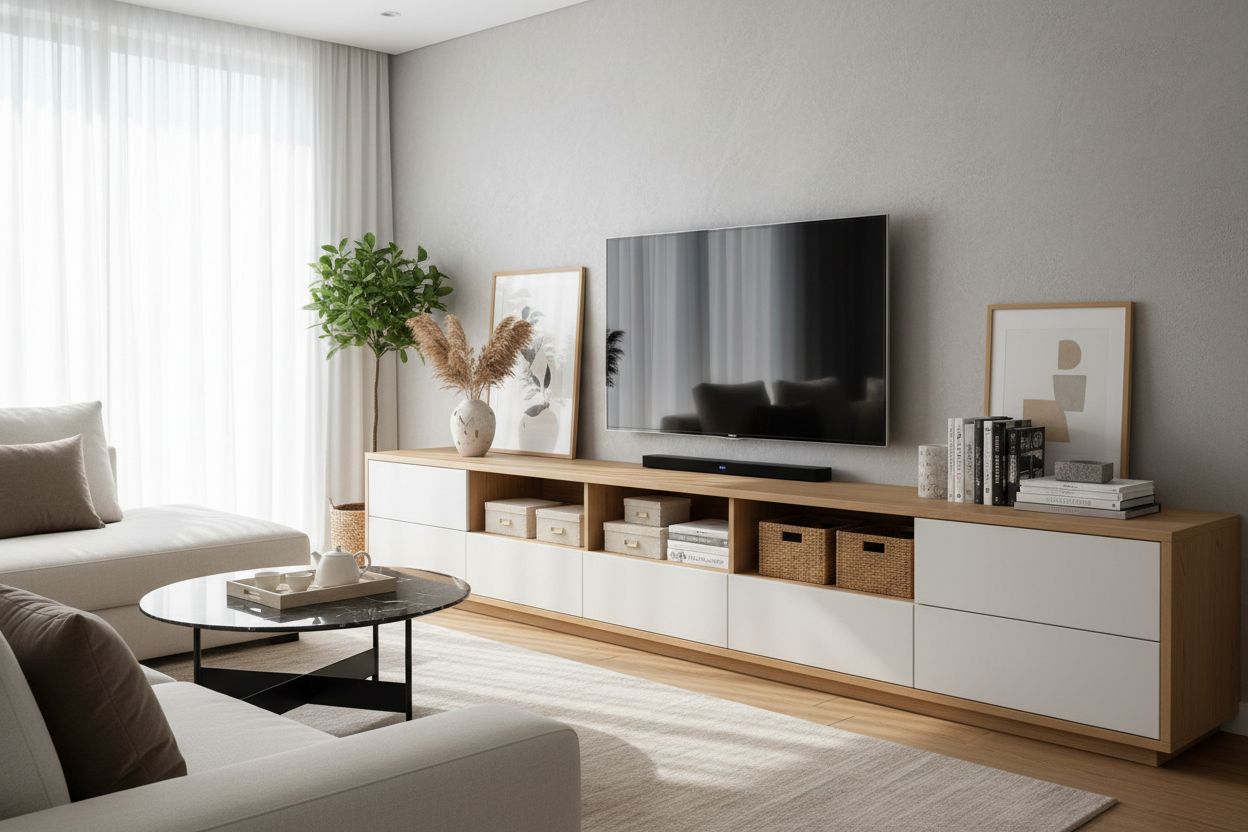
Actually, it works better in small spaces than a bulky cabinet does. Because the panel is thin and vertical, it doesn't eat into your floor space. If you pair it with a wall mounted media console, you keep the floor clear, which tricks the brain into thinking the room is much larger than it is.
I have a friend in a 500-square-foot studio who used a light oak panel to define her 'living room' area. It acted as a visual anchor that separated her bed from her lounge space without needing a physical room divider that would have blocked the natural light.
How to Style Around a Wood Slat Backdrop
The wood slats do a lot of the heavy lifting, so don't over-decorate. I found that adding one or two matte white ceramic vases on a side shelf provides a nice contrast to the dark wood. Avoid anything too shiny or reflective; it competes with the TV screen and creates annoying glare during movie night.
Trailing plants like a Pothos or a Heartleaf Philodendron look incredible draped over the edge of a panel. The organic green leaves soften the hard lines of the wood and the tech-heavy vibe of the TV itself. Throw some warm LED strips behind the panel for a soft glow at night, and you've got an instant mood.
FAQ
Is it hard to mount a TV on the panel?
Not at all. Most panels are designed to work with standard VESA mounts. You usually mount the bracket through the panel directly into the wall studs for maximum security. Just check the weight rating before you buy.
Will it damage my walls?
It’s roughly the same as hanging a heavy mirror or a few large pictures. You’ll have a few screw holes to patch when you leave, but it’s nothing a little spackle can’t fix in five minutes. It's much less invasive than building actual cabinetry.
Can I cut the panels to fit around outlets?
Yes, most wood or composite panels can be trimmed with a standard circular saw or even a hand saw. Just measure three times before you make the cut—I learned that lesson the hard way so you don't have to.

Leave a comment
This site is protected by hCaptcha and the hCaptcha Privacy Policy and Terms of Service apply.