










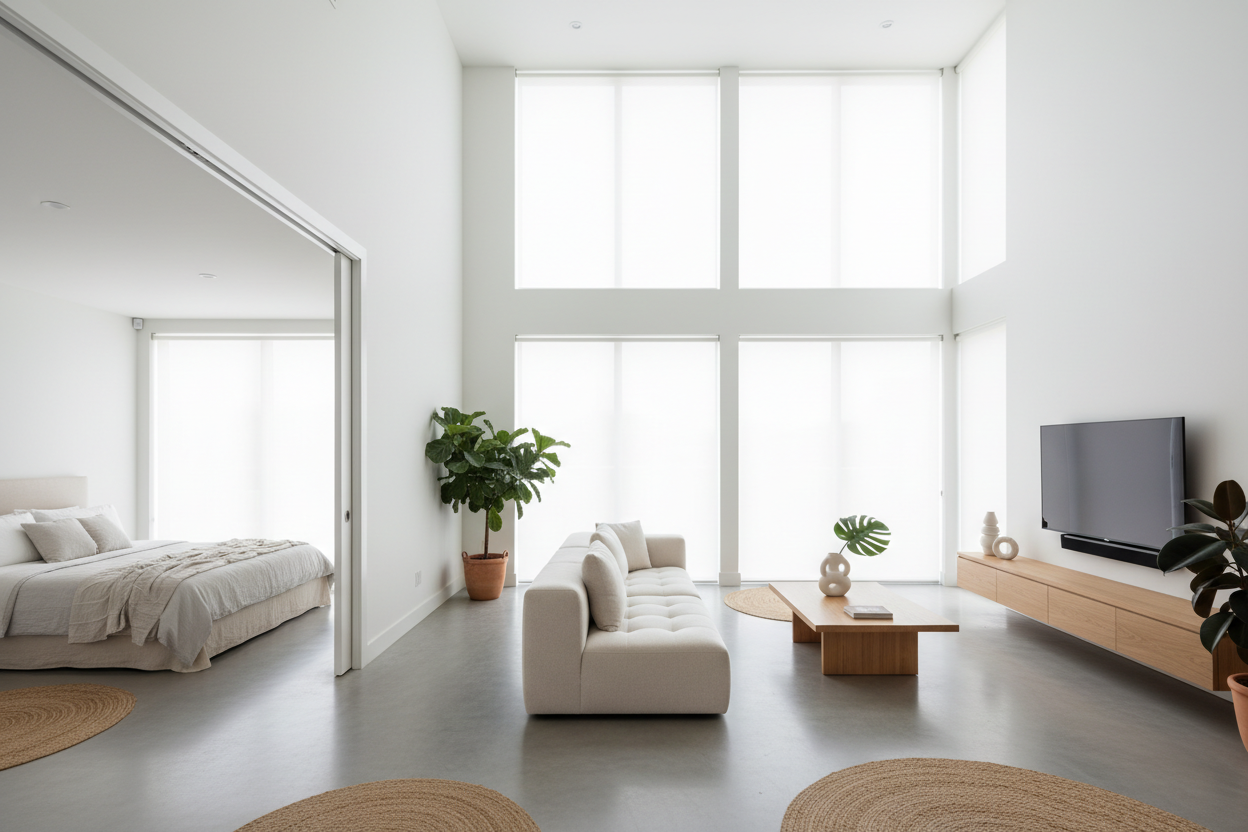
Low storage units are the interior design world's most effective tool for managing visual weight. By keeping furniture below eye level, you allow light to travel freely across the room, making ceilings appear higher and floor plans feel more expansive. Choosing the right low cabinet isn't just about finding a place to stash your belongings; it is about anchoring a room without overwhelming it.
The key to selecting the perfect piece lies in understanding the specific constraints of your floor plan. You need to measure not just the width of the wall, but the depth of the traffic path in front of it. A piece that protrudes too far can ruin the flow of a hallway or living area. Once dimensions are settled, the choice comes down to the balance between open display and concealed storage, and how the material interacts with your existing decor.
The Anchor of the Living Room
In larger living spaces or media rooms, the furniture needs to command presence without dominating the vertical space. This is where a long low cabinet with drawers shines. Unlike a tall bookshelf or a bulky entertainment center, a horizontal unit runs parallel to the floor, emphasizing the width of the room. This linear orientation is particularly effective under a mounted television or a large piece of artwork.
Functionally, drawers are often superior to shelves for living room storage. They allow you to access the back of the storage space without getting on your hands and knees. You can organize cables, remotes, and media collections in a way that keeps surfaces completely clear. When styling this type of unit, the surface becomes a gallery. Because the cabinet is low, you can lean large framed prints against the wall or place tall table lamps on either end to create a balanced triangle of height.
Bringing Warmth with Natural Materials
The material you choose dictates the mood of the room. While painted finishes have their place, a low wood storage cabinet offers a texture and warmth that synthetic materials struggle to replicate. In a room dominated by soft upholstery and painted drywall, the grain of timber adds necessary organic complexity.
Walnut and teak tend to lean towards mid-century modern aesthetics, offering rich, dark tones that look exceptional against lighter walls. Oak or ash provides a Scandi-style lightness that keeps a room feeling airy. When inspecting wood cabinets, pay close attention to the joinery. Since these pieces are low, the top surface is always on display. You want a piece where the grain flows continuously across the top, or where the edge banding is applied skillfully enough to be invisible. Solid wood will last longer, but high-quality veneers are often more stable in fluctuating humidity.
Solving the Small Space Puzzle
Not every room can accommodate a six-foot credenza. In entryways, narrow corridors, or beside a bed, a small low storage cabinet is often the only viable solution. These compact units serve a dual purpose: they utilize dead space under windows or chair rails, and they provide a landing pad for daily essentials like keys and mail.
One specific variation that works wonders in tight layouts is the small single cabinet. These standalone units are typically square or slightly rectangular and can function as modular building blocks. You might place one next to a reading chair today, but move it to the bathroom for towel storage tomorrow. Their portability makes them an excellent investment for renters who move frequently. Unlike built-ins, these pieces adapt to the architecture of whichever home they inhabit.
The Clean Aesthetic of Modern Design
If your goal is to reduce visual clutter entirely, a modern low storage cabinet is the standard choice. These designs prioritize clean lines, often eliminating visible hardware in favor of push-to-open mechanisms or integrated finger pulls. The lack of knobs and handles creates a sleek, uninterrupted facade that blends into the architecture rather than standing out as a piece of furniture.
Modern units often utilize legs to lift the body of the cabinet off the floor. This clearance is crucial for smaller rooms. Being able to see the floor continue underneath the furniture tricks the brain into perceiving the room as larger than it actually is. It also makes vacuuming significantly easier—a practical benefit that shouldn't be overlooked.
Concealing the Clutter
Open shelving requires constant curation. If you are not interested in artfully arranging books and dusting knick-knacks every week, you are better off with a small low cabinet with doors. Doors are the ultimate solution for "ugly" storage. They hide stacks of paperwork, board games, or extra linens that are necessary to have on hand but visually chaotic.
When selecting a cabinet with doors, consider the swing radius. If the space is tight, sliding doors or tambour doors (which roll back into the unit) are preferable to standard hinged doors that swing outward into the room. This allows you to place a coffee table or rug closer to the unit without obstructing access.
A Lesson from My Own Living Room
I spent months trying to furnish a difficult alcove in my dining area. The space was under a window with a particularly deep sill, making standard-height buffets impossible to fit. I initially tried open shelving, but it just looked messy and gathered dust rapidly. I eventually found a vintage sideboard that had been cut down—essentially a modified low wood storage cabinet.
The transformation was immediate. The piece slid right under the window sill with an inch to spare. Suddenly, that awkward corner wasn't just dead space; it became the focal point for serving food during dinner parties. The drawers held all the silverware and napkins that used to clutter the kitchen drawers, and the top surface caught the natural light from the window, brightening the whole corner. It taught me that fighting the architecture with tall furniture rarely works; working with the horizontal lines is almost always the better path.
Styling Your Low Surfaces
Once your cabinet is in place, the styling defines the room's character. Avoid covering the entire surface with small objects, which can look like clutter. Instead, group items in odd numbers. A stack of three large coffee table books, a tray for containing smaller items, and a sculptural vase can create a vignette that looks intentional.
Don't be afraid to leave negative space. If you have purchased a beautiful wood piece, let the material speak for itself. A low cabinet offers a stage for your life's artifacts, but it performs best when it isn't crowded.
Frequently Asked Questions
How much clearance do I need in front of a low cabinet?
You generally need at least 30 to 36 inches of clearance between the front of the cabinet and any other furniture to allow for a comfortable walkway. If the cabinet has drawers or swinging doors, add another 10 to 12 inches to ensure you can open them fully while standing in front of the unit.
Can I use a low storage cabinet as a TV stand?
Yes, this is one of their most common uses. Ensure the cabinet is at least a few inches wider than your TV on both sides for visual balance. Also, check the weight capacity of the top surface to ensure it can support your specific television model without bowing.
What is the ideal height for a low cabinet?
"Low" typically falls between 18 and 30 inches high. For use under a window, measure from the floor to the sill and subtract two inches. If used as a media console, a height of 20 to 24 inches usually places the center of the TV at the optimal eye level for seated viewing.

Leave a comment
This site is protected by hCaptcha and the hCaptcha Privacy Policy and Terms of Service apply.