










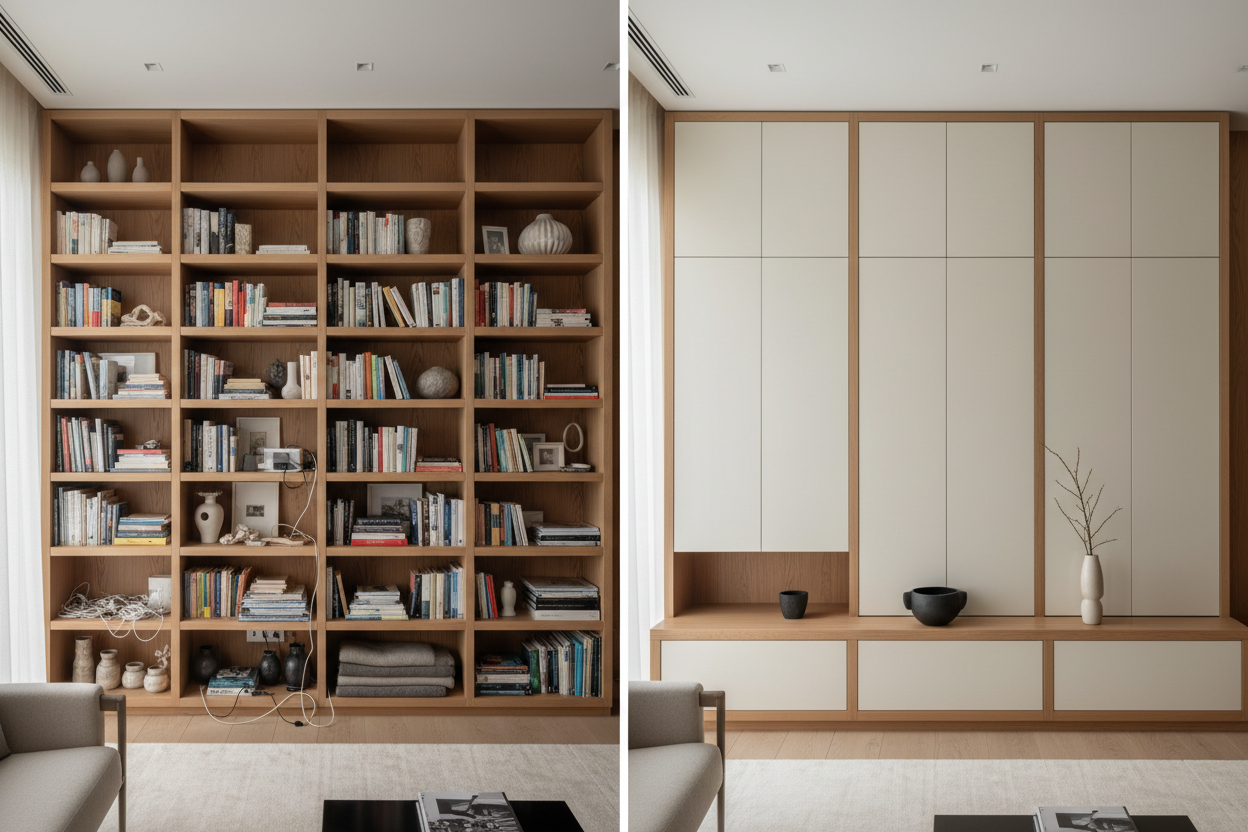
We have all been sold the dream of the perfectly curated open bookshelf. You know the one: color-coded spines, a few strategically placed succulents, and plenty of negative space. But the reality of daily life rarely matches that Pinterest board. For most of us, storage needs are functional, messy, and constantly expanding. This is where a shelving unit with door capabilities becomes the unsung hero of home organization. It offers the structural utility of a bookcase but allows you to simply close the cabinet and instantly silence the visual noise of clutter.
The primary advantage of choosing enclosed cabinetry over open racking is control. When you rely on open shelving, every item you own becomes a part of your room's decor, whether you want it to or not. Board games with ripped corners, stacks of printer paper, or that tangle of charging cables aren't exactly aesthetic highlights. By switching to shelving storage with doors, you reclaim the visual peace of your living space while keeping essential items accessible.
My Battle with the "Zoom Background" Mess
I learned the value of concealed storage the hard way a few years ago. My home office was essentially a desk flanked by two cheap, open metal racks. I convinced myself it was an "industrial look." In reality, it was a chaos of binders, sample boxes, and tech gadgets. During video calls, I would frantically try to angle my camera to crop out the mess, or worse, drape a sheet over the shelves like I was covering a birdcage at night.
Finally, I swapped those racks for a floor-to-ceiling cabinet with solid wood doors. The difference in my mental clarity was immediate. I didn't just gain storage; I gained a room that felt finished. I could toss a mess of cables into the bottom cupboard, close the latch, and the room looked pristine. That experience taught me that furniture should serve your lifestyle, not force you to become a minimalist just to keep your house looking tidy.
Choosing the Right Material for Durability
Not all cabinets are created equal, and the material you choose dictates both the lifespan of the unit and what you can actually store inside it. If you are looking for a storage shelving unit with doors for a garage or utility room, steel is the gold standard. It resists temperature fluctuations and can hold heavy power tools or paint cans without bowing. However, steel units often lack the aesthetic warmth required for interior living spaces.
For living rooms and bedrooms, you are likely looking at engineered wood (MDF or particleboard) or solid wood. Engineered wood is cost-effective and comes in various laminates, but you have to be careful with weight. If you load up a wide particleboard shelf with heavy encyclopedias, it will sag over time. Solid wood is sturdier but significantly heavier and more expensive. A good middle ground is looking for units with reinforced shelving supports or metal under-frames disguised by wood veneers.
The Hinge Factor: Installation Realities
If you have ever assembled flat-pack furniture, you know that the doors are often the most frustrating part. You build the frame, slide in the back panel, and stand it up. Then you attach the doors, and they look terrible—crooked, rubbing against each other, or leaving a massive gap in the middle. This is rarely a manufacturing defect; it is usually a matter of adjustment.
Most modern cabinetry uses Euro-style hinges, which are adjustable in three directions. There is usually a screw to move the door up and down, one to move it left and right, and one to change the depth (how close the door sits to the frame). Taking ten minutes to understand these screws turns a cheap-looking cabinet into a professional-looking piece. Don't rush this step. A properly aligned door seals better, which is crucial for keeping dust away from your belongings.
Styling and Placement in Different Rooms
Integrating a large cabinet into a room without it feeling imposing requires some design strategy. In a smaller living room, a tall, dark shelving unit with door panels can suck the light out of the space. In these instances, consider units that are painted the same color as your walls, or opt for lower, sideboard-style units that provide surface area for lamps and art while hiding clutter below.
The Dining Room Buffet
In dining areas, these units function as sideboards. Here, you want shelving storage with doors that seal tightly to protect linens and serving platters from dust. Sliding doors are particularly useful in dining rooms where space might be tight between the storage unit and the dining chairs. You don't want to have to ask a guest to stand up just so you can swing a door open to get a napkin.
The Entryway Command Center
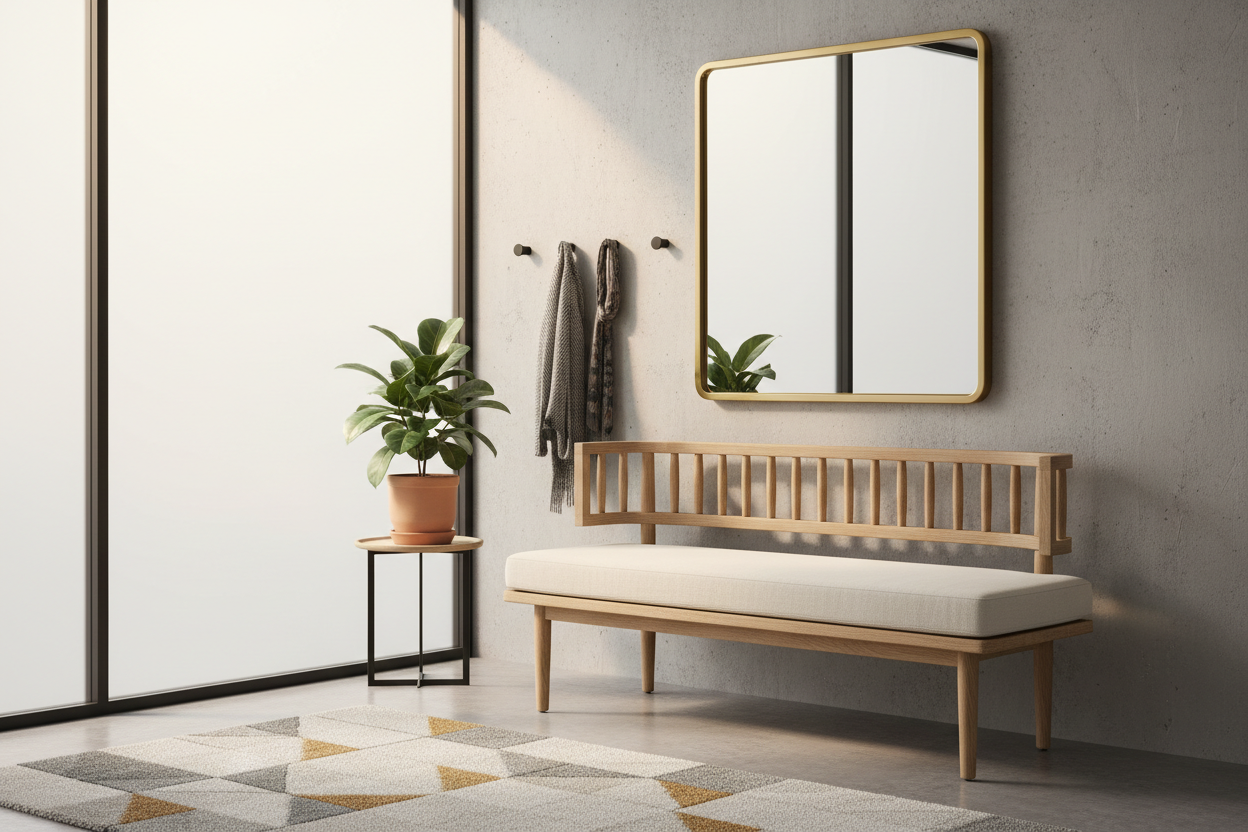
Entryways are magnets for clutter. Shoes, bags, mail, and keys pile up quickly. A storage shelving unit with doors here acts as a filter for the rest of the house. Look for units that have adjustable internal shelves so you can create a tall space for boots and narrower spaces for baskets of gloves or keys. If the unit has legs (raising it off the floor), it often makes a narrow hallway feel less cramped than a unit that sits flush against the ground.
Glass vs. Solid Doors
There is a hybrid option that sits between open shelving and full concealment: glass doors. These are excellent for protecting items from dust and pet hair while still displaying them. They work best for items you actually want to see, like china, collectibles, or a neat library of books. However, they do not solve the clutter problem. If you plan to store tax documents, spare router cables, or kids' toys, stick to solid doors. Solid doors allow you to organize loosely without worrying about presentation. You can use ugly plastic bins inside a solid-door cabinet, and no one will ever know.
Maintaining Your Storage Units
Over time, even the best hardware can loosen. If you notice a door starting to scrape the bottom of the frame, check the hinge screws immediately. Ignoring it can lead to the screws stripping out of the wood, which is a much harder fix involving wood filler and re-drilling. For the finish, avoid harsh chemical cleaners on laminate surfaces, as they can cause peeling over time. A damp cloth is usually sufficient.
Ultimately, the move toward enclosed storage is a move toward a calmer home environment. By acknowledging that not everything we own is display-worthy, we create spaces that feel curated rather than chaotic.
Frequently Asked Questions
How do I stop the doors on my shelving unit from slamming shut?
You can install soft-close dampers or adhesive silicone bumpers. Many modern Euro-hinges allow for a clip-on soft-close adapter, or you can simply stick small silicone pads on the inside corners of the doors to dampen the noise and protect the frame.
Can I add doors to an open shelving unit I already own?
It is difficult unless the unit was designed with pre-drilled holes for hinges. A better alternative is often to use insert boxes or baskets that fit the dimensions of your cubbies, effectively creating "drawers" that hide contents without requiring complex carpentry.
What is the best depth for a storage cabinet?
For general storage, a depth of 12 to 15 inches is standard and sufficient for books and binders. If you are storing clothes or large kitchen appliances, aim for a depth of at least 20 to 24 inches to ensure the doors can close fully without hitting the items inside.


Leave a comment
This site is protected by hCaptcha and the hCaptcha Privacy Policy and Terms of Service apply.