










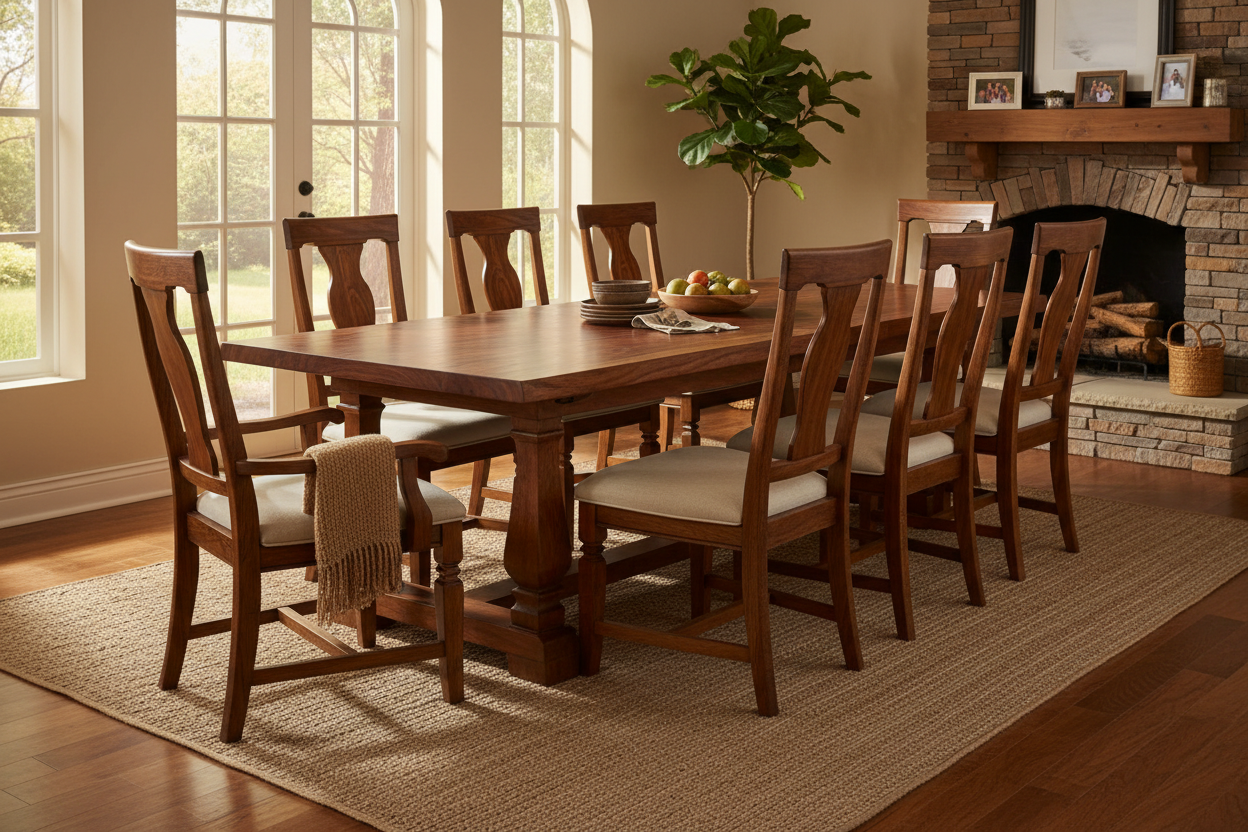
Choosing the right furniture for your dining area is rarely just about filling a space. It is about creating a gathering point where bills get paid, homework gets finished, and holiday meals are shared. While trends shift toward glass, metal, or composite materials, a solid wood foundation remains the superior choice for longevity and character. Real wood breathes life into a room in a way that veneers and plastics simply cannot replicate. It offers a tactile warmth and a structural integrity that, with the right care, allows it to outlast the person who bought it.
Many buyers get overwhelmed by the sheer volume of options. You might see a listing for a wood table and chair set and wonder if it is solid oak, a softwood pine, or a clever laminate disguise. Understanding the grain, the joinery, and the finish is the only way to ensure you are getting furniture that survives daily wear and tear. If you are looking for a straightforward answer on what to buy: prioritize hardwoods like oak, maple, or walnut for high-traffic areas, and look for kiln-dried lumber to prevent warping over time.
The Real Value of Hardwood Over Alternatives
I recall the first real piece of furniture I bought for my own apartment. It was a second-hand oak table that had clearly seen better days. It had a deep gouge near the center and water rings from decades of use. Instead of replacing it, I sanded it down. The smell of the sawdust and the reveal of the fresh grain underneath taught me a valuable lesson: quality timber is renewable. Unlike particle board, which crumbles once the veneer is breached, solid table and chair wood can be refinished multiple times. That table is still in my family today, looking completely different than the day I bought it, but structurally just as sound.
This durability is the primary reason to invest in a wooden dining table and chair set. Hardwoods differ significantly from softwoods on the Janka hardness scale. A pine table might dent if your child presses too hard with a ballpoint pen, whereas a maple or hickory surface will shrug off the same impact. When you shop, ask specifically about the species of wood. "Solid wood" is a broad term; knowing whether it is rubberwood (softer, common in budget sets) or white oak (dense, highly durable) makes a massive difference in how the furniture ages.
Understanding Construction and Joinery
The material is only half the equation. The way the pieces are put together dictates stability. When you are inspecting a wood table with chairs, look underneath. You want to see corner blocks reinforcing the legs. If the chairs are held together merely by glue and staples, they will start to wobble within a year. Mortise and tenon joints or dovetail construction are hallmarks of craftsmanship that ensure the piece stays rigid.
Chair construction is particularly critical. Chairs take more abuse than tables because they are constantly dragged, tilted, and sat upon. A wood table chair set should have chairs with stretchers (the horizontal bars connecting the legs) for added stability. If you sit in a chair and shift your weight, there should be zero flex. Silence is a sign of quality; creaking suggests loose joints or poor assembly.
Navigating the Marketplace
You will find thousands of wooden tables and chairs for sale online and in showrooms, which leads to decision paralysis. A helpful strategy is to filter by finish and size rather than just style. Darker woods like walnut or mahogany lend a formal gravity to a dining room, while lighter woods like ash or birch make a kitchen nook feel airy and open. Keep in mind that dark finishes show dust and scratches more readily, while natural, matte finishes tend to hide imperfections better.
Size matters more than just fitting in the room. You need at least 36 inches of clearance around the table for people to slide their chairs out comfortably. If your space is tight, look for a round pedestal table. It eliminates the sharp corners and leg obstructions, allowing you to squeeze in an extra guest when necessary without anyone straddling a table leg.
Buying Sets vs. Mixing and Matching
There is an ongoing debate about whether to buy a pre-packaged bundle or to curate the look yourself. Buying a complete wood table and chair set takes the guesswork out of the equation. The heights are ergonomically matched, the stains are identical, and the proportions are balanced. For most households, this is the safest and most convenient route. It ensures that the armchairs slide under the tabletop correctly—a detail often overlooked until you get the furniture home.
However, mixing styles can add a layer of sophistication. You might pair a heavy, farmhouse-style harvest table with lighter, spindle-back chairs. If you go this route, try to keep one element consistent. If the woods are different species, perhaps match the finish tone. If the finishes are different (e.g., a painted chair with a stained table), ensure the shapes share a similar design language, such as tapered legs or curved backrests.
Maintenance and Care for Long-Term Use
Wood is organic; it reacts to its environment. Humidity is the silent killer of fine furniture. If your home fluctuates wildly between dry winters and humid summers, wood expands and contracts. This movement can crack joints or split tabletops. Keeping your home's humidity levels relatively stable helps, but the finish is your first line of defense. A good oil or lacquer seal slows down moisture exchange.
Cleaning should be simple. Avoid harsh chemical sprays that can strip the finish or leave a cloudy residue. A damp cloth followed by a dry one is usually sufficient for daily wiping. For deeper cleaning or to revive the luster, use a product specifically designed for wood, like a high-quality beeswax or lemon oil, but use it sparingly. Over-polishing can lead to buildup that attracts dust and makes the surface sticky.
Ultimately, a wooden dining table and chair set is an anchor for your home life. It is where you start your day with coffee and end it with conversation. By choosing a hardwood species, inspecting the joinery, and committing to basic maintenance, you secure a piece of history that will serve your family for generations.
Frequently Asked Questions
How do I fix white heat rings on a wood table?
White rings indicate moisture is trapped in the finish, not the wood itself. You can often remove them by gently ironing a towel placed over the spot on a low, dry setting, or by massaging the area with a mixture of baking soda and toothpaste. If the ring is black, the damage has penetrated to the wood, and you may need to refinish the area.
Is a veneer table ever a better choice than solid wood?
High-quality veneer over a stable core (like MDF) can actually be better than solid wood in very humid climates because it is less prone to warping or splitting. However, veneer cannot be sanded down and refinished as many times as solid wood, so deep scratches are harder to repair.
Can I mix different wood tones in the same room?
Yes, mixing wood tones creates a layered, organic look, but aim for contrast rather than a near-miss match. Try to keep the undertones consistent (e.g., mixing warm walnut with warm oak) and use a rug to break up the visual space between the wood floor and the wood table.


Leave a comment
This site is protected by hCaptcha and the hCaptcha Privacy Policy and Terms of Service apply.