










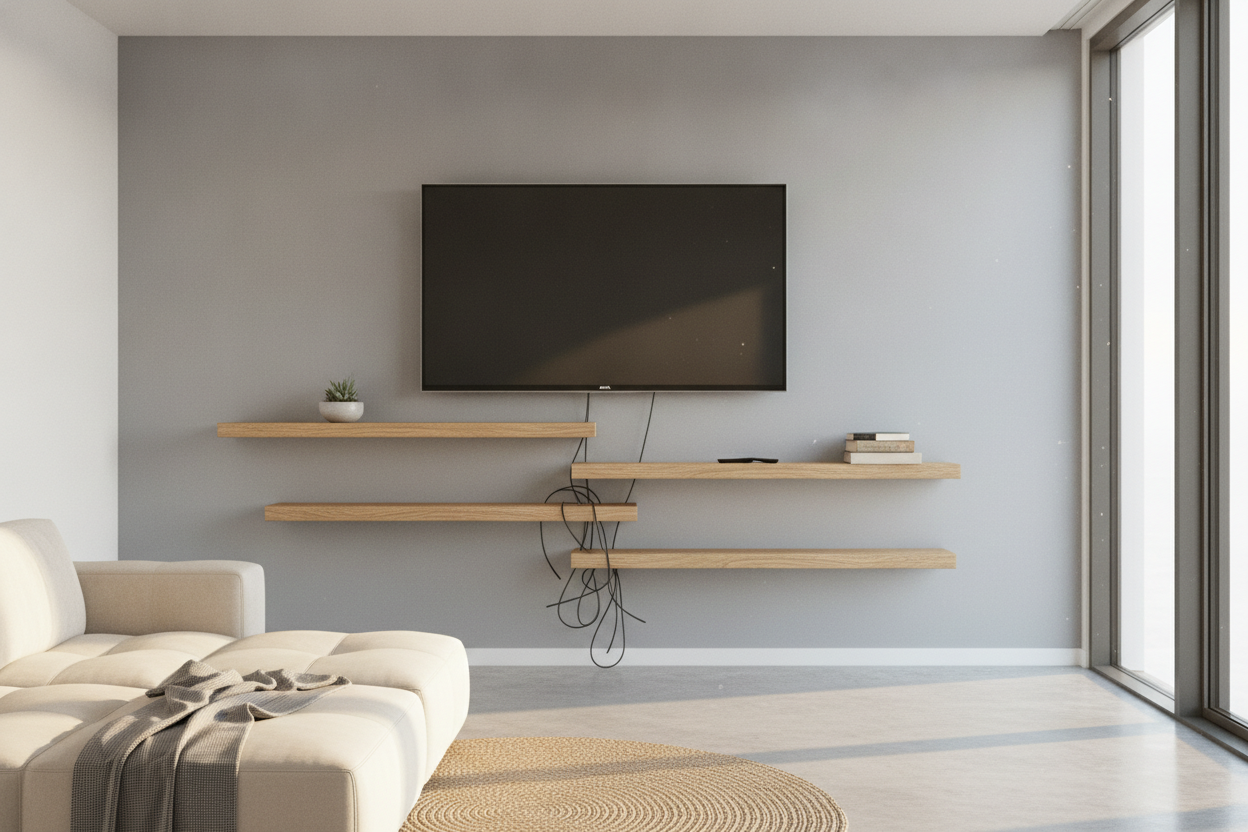
I spent three hours leveling a 48-inch ledge under my new 65-inch screen, stepped back, and realized it looked like a tiny mustache on a giant face. It was pathetic. Most people treat a floating shelf under tv like a secondary accessory, but if the proportions are off, the whole wall feels top-heavy and accidental.
Quick Takeaways
- Your shelf should be at least 25% wider than your TV to avoid the 'shrinking' effect.
- Solid wood beats MDF every time for durability and visual weight.
- Standard depth should be 10-12 inches if you plan on housing a soundbar or console.
- Always mount into studs; drywall anchors are a recipe for a sagging disaster.
The Number One Mistake: It's Just Too Short
The biggest crime in living room design is the undersized ledge. If your TV is 55 inches wide and your shelf is 48 inches, the screen will look like it's crushing the furniture beneath it. It creates a visual 'V' shape that feels unstable and cramped.
You need a long floating shelf under tv that extends past the edges of your screen. Aim for the golden ratio: the shelf should be about 1.25 to 1.5 times the width of the TV. This extra length anchors the screen and gives you space to place a few decorative items on the ends without blocking the picture.
When a shelf is wider than the tech above it, the whole setup looks intentional. It stops being a 'shelf for a TV' and starts being a piece of architecture. If you can't find one long enough, consider mounting two shelves side-by-side with a seamless butt joint.
Material Matters: Why I Always Choose Wood
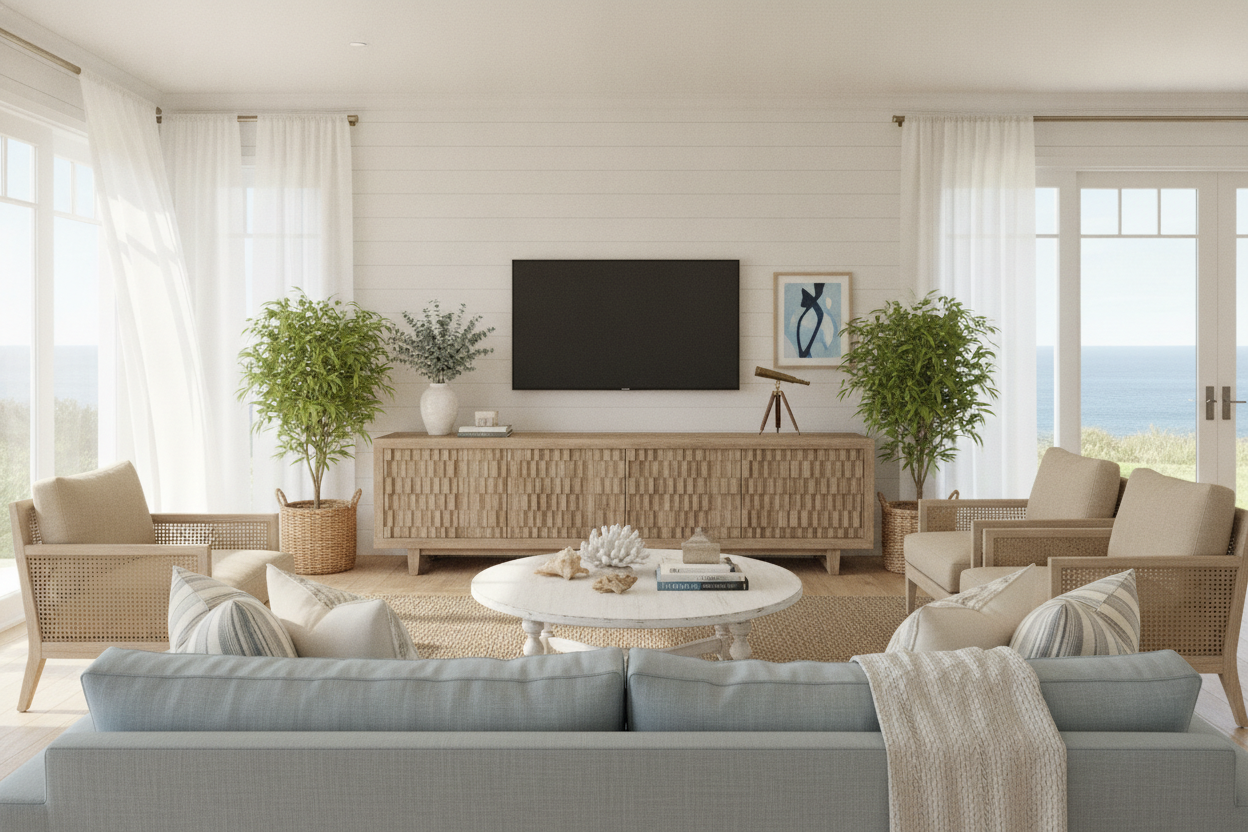
Televisions are cold. They are big, black, glass-and-plastic rectangles that suck the life out of a room when they are turned off. A wood shelf for under tv is the easiest way to inject some organic warmth back into the space. The grain pattern breaks up the sterile look of the electronics.
I have seen enough peeling laminate to last a lifetime. Cheap MDF shelves look fine from ten feet away, but up close, the 'photographed wood' texture is depressing. Investing in wooden floating shelves under tv means you get real character—knots, variations, and a matte finish that doesn't reflect the glare of the screen. I actually saw a massive difference when I swapped my old setup for a floating wooden TV shelf; the room suddenly felt like a curated home rather than a college dorm.
Depth Realities for Your Devices
Before you click 'buy' on that sleek 6-inch deep ledge, measure your gear. A modern floating shelf under tv needs to be functional. Most soundbars require at least 4-5 inches of depth, but once you factor in the cables sticking out the back, you are looking at 8 inches minimum.
If you are a gamer, a PlayStation 5 or Xbox Series X is not going to live happily on a skinny ledge. You need a depth of 12 inches to keep those monsters from hanging precariously off the edge. If your equipment is too heavy or bulky for a wall-mount, you might be better off looking at adjustable shelf storage that sits on the floor but offers a similar open-concept look.
Hiding the Cords (Because Floating Doesn't Mean Wireless)
The 'floating' dream usually dies the moment you plug in the HDMI cables. Nothing ruins floating shelves under tv on wall faster than a tangled waterfall of black wires. You have two real options here: go behind the wall or hide them in plain sight.
If you are a renter, get a paintable cable raceway. It’s a plastic channel that sticks to the wall. Paint it the exact same color as your drywall, and it virtually disappears. If you own the place, buy a recessed brush plate kit. It lets you run the cables through the wall cavity safely. Just make sure you aren't running power cables behind the drywall unless they are specifically rated for it.
Styling Without Creating a Clutter Magnet
An under tv wood shelf should not be a graveyard for mail and spare change. Because it sits right in your line of sight while you watch movies, any clutter on that shelf will eventually drive you crazy. Keep it simple.
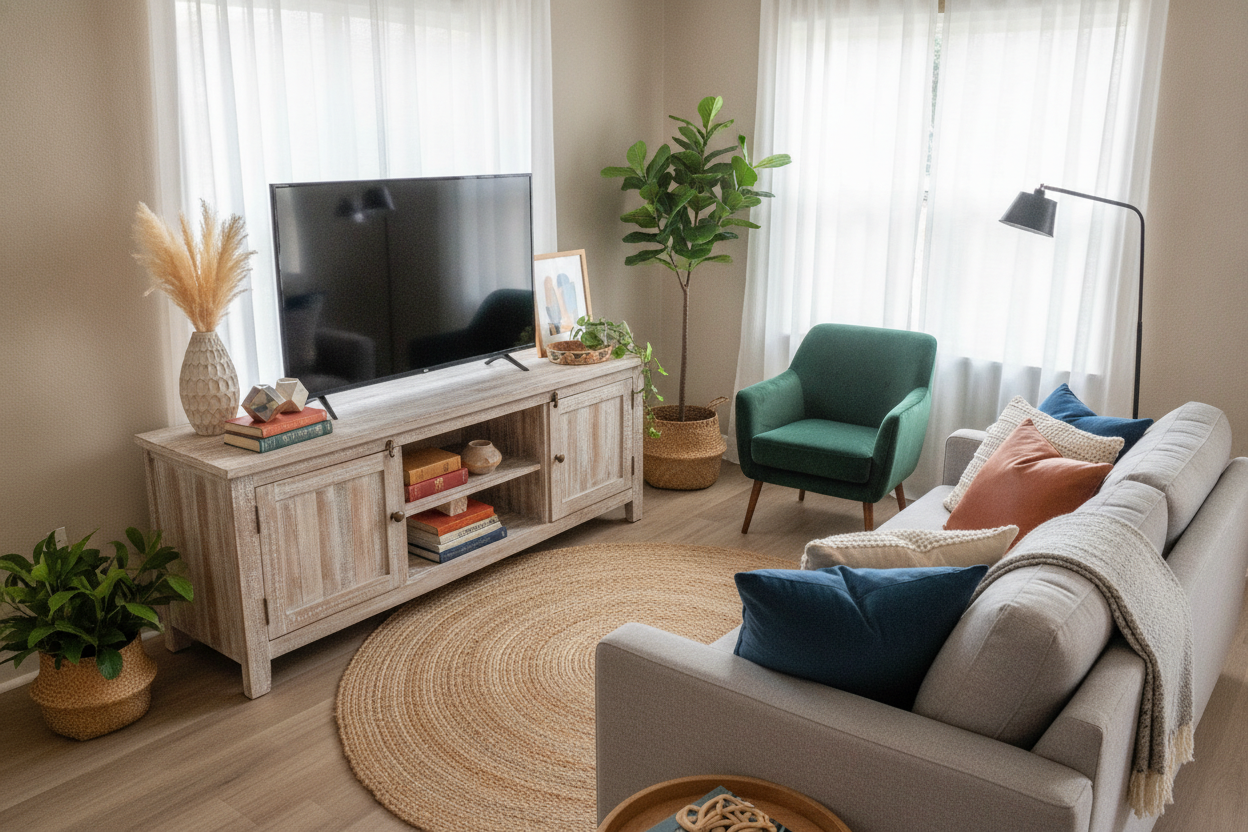
Follow the rule of thirds. Put a stack of two books on one end, a small ceramic bowl in the middle, and maybe a trailing plant like a Pothos on the other. The plant is a pro move—the leaves soften the hard edges of the TV. Avoid anything reflective or shiny, as it will catch the light from the screen and distract you during dark scenes.
Personal Experience: The Stud Finder Lesson
I once tried to mount a heavy floating wood shelf under tv using 'heavy-duty' toggle bolts because I was too lazy to find the studs. It stayed up for three weeks. Then, in the middle of a movie, I heard a sickening 'pop.' One side of the shelf sagged two inches, nearly dumping my soundbar. I learned the hard way: if you are putting anything heavier than a picture frame on a floating shelf, you must hit at least two studs. No exceptions.
FAQ
How high should I hang the shelf?
Usually, 4 to 6 inches below the bottom of the TV is the sweet spot. It's enough space to allow for airflow and cleaning, but close enough that they feel like one cohesive unit.
Can I put a wood floating shelf under tv if I have a soundbar?
Yes, but make sure the shelf is deep enough so the soundbar doesn't overhang. Also, ensure the soundbar's upward-firing speakers (if it has them) aren't blocked by the TV itself.
Are floating shelves for wall mounted tv sturdy enough for a receiver?
Only if you use professional-grade steel brackets and bolt them directly into the studs. A standard AV receiver can weigh 20-30 lbs, which is a lot of leverage for a floating bracket.

Leave a comment
This site is protected by hCaptcha and the hCaptcha Privacy Policy and Terms of Service apply.