










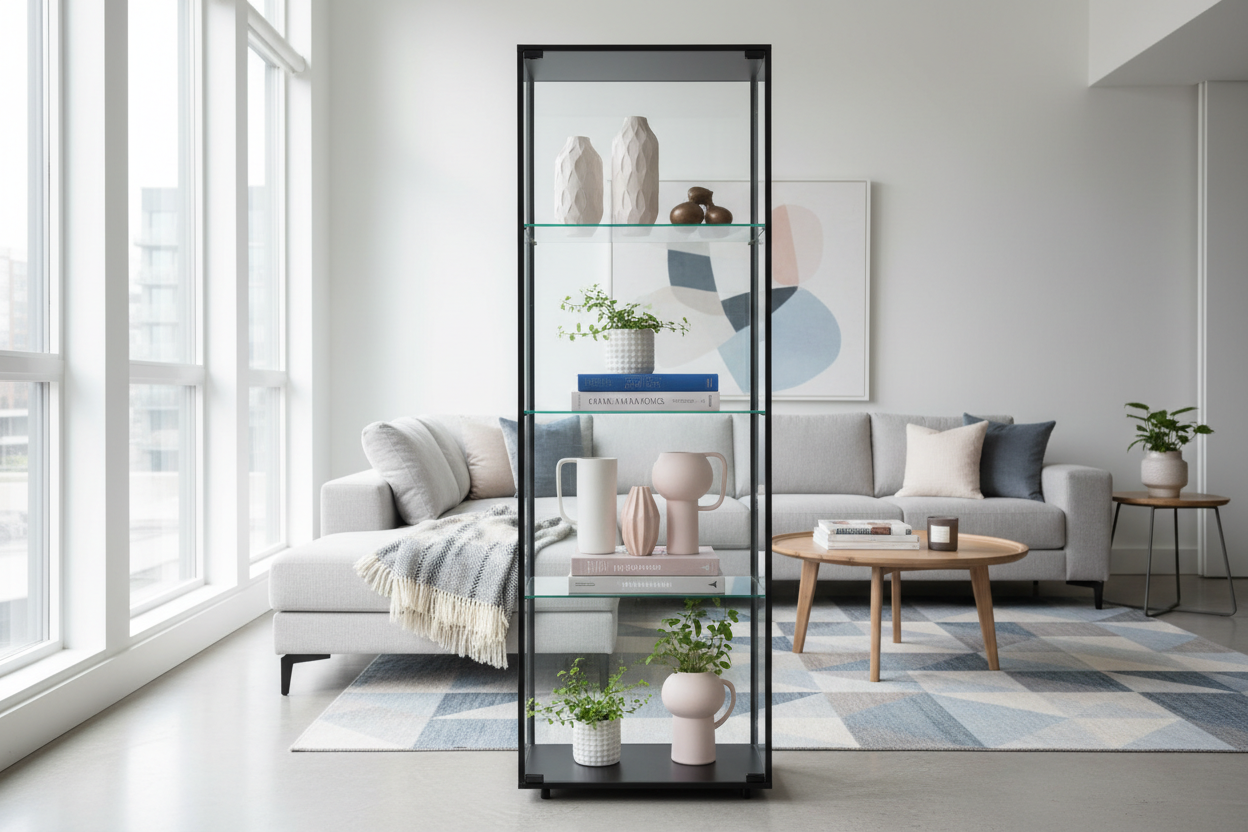
Finding the balance between practical storage and aesthetic appeal is often the hardest part of interior design. You want to hide the clutter but showcase the treasures. This is exactly where a glass door cabinet for living room spaces shines. Unlike solid shelving units that can feel heavy and imposing, glass cabinets offer a sense of lightness and transparency. They protect your cherished items from dust and stray elbows while turning your collection into a focal point rather than an afterthought.
Choosing the right cabinet isn't just about dimensions; it is about understanding how light and reflection interact with your existing furniture. Whether you are looking to display vintage vinyl, heirloom china, or a curated selection of books, the transparency of glass allows the room to breathe. It creates depth, making smaller living areas feel larger because the eye can travel through the piece rather than stopping abruptly at a solid wood door.
My Experience with the "Clutter vs. Display" Battle
A few years ago, I inherited a chaotic collection of vintage cameras and travel souvenirs. My initial solution was a standard open bookshelf. Within weeks, everything was covered in a layer of dust, and the visual noise was overwhelming. The room felt messy even when it was clean. I eventually swapped the open shelving for a mid-century modern cabinet with sliding glass doors. The difference was immediate. The glass provided a frame for the collection, elevating it from "stuff on a shelf" to a deliberate exhibit. Plus, the maintenance dropped to almost zero since the dust was locked out. If you have pets or small children, the barrier also provides a necessary layer of safety for fragile items without hiding them away in a dark drawer.
Selecting the Right Style for Your Architecture
Glass door cabinets living room designs come in a staggering variety of architectural styles. Picking one that clashes with your home's bones is a common mistake. If you live in a modern apartment with clean lines, look for metal frames—black iron or brushed brass—with minimal ornamentation. The focus here should be on the glass itself, perhaps utilizing large, uninterrupted panes that offer a museum-like quality.
For homes with a more traditional or farmhouse aesthetic, wood-framed cabinets with mullions (the wooden grids across the glass) work best. These add texture and warmth. The wood frames ground the piece, making it feel like a permanent fixture rather than a temporary addition. If you prefer the industrial look, consider fluted or reeded glass. This textured glass distorts the view slightly, which is fantastic if you want to store items that are colorful but perhaps not perfectly organized. It creates a silhouette effect that is incredibly stylish and forgiving.
Safety and Material Quality
Never overlook the type of glass used in the construction. This is the most critical technical aspect of your purchase. Always look for tempered glass. Unlike standard annealed glass, which shatters into jagged, dangerous shards when broken, tempered glass crumbles into small, granular chunks. This is non-negotiable if the cabinet is in a high-traffic area.
Check the hardware as well. The hinges should be robust enough to support the weight of the door without sagging over time. Soft-close mechanisms are a wonderful feature to look for, as they prevent the doors from slamming shut, which reduces vibration and protects both the glass and the contents inside.
The Art of Interior Styling
Owning a beautiful cabinet is only half the battle; filling it is where the real design work happens. A common pitfall is overstuffing the shelves. Negative space is your friend. When you crowd every inch of shelf space, the eye has nowhere to rest, and the cabinet becomes a visual black hole.
Create Visual Weight
Place your heaviest and largest items on the bottom shelves. This anchors the piece visually and prevents it from looking top-heavy. Large art books, pottery, or storage baskets work well here. As you move upward, the items should get lighter and more delicate. This mimics the architectural logic of buildings and feels naturally pleasing to the eye.
The Rule of Three
Group items in odd numbers. A vignette of three vases at varying heights is infinitely more dynamic than two identical ones sitting side by side. Layering is also effective; lean a small framed print against the back of the cabinet and place a small sculpture in front of it. This adds depth and utilizes the full volume of the cabinet, not just the front edge.
Lighting Your Collection
A dark cabinet can swallow your display, especially in the evening. Many modern glass door cabinets for living room setups come with integrated LED lighting, but if yours doesn't, it is easy to retrofit. Battery-operated puck lights or LED strips can be mounted to the underside of the shelves. If you have glass shelves, the light will filter down through the entire unit. If you have wood shelves, you will need a light source for each level.
Choose a warm light (around 2700K to 3000K) to create a cozy atmosphere. Cool, blue-toned light can make your living room feel like a sterile retail refrigerator. The goal is to highlight the objects warmly, adding to the ambient lighting of the room rather than overpowering it.
Placement Strategy
Where you put the cabinet dictates its function. Flanking a fireplace with two matching glass cabinets creates a classic, symmetrical look that adds grandeur to the room. If you have a smaller space, a single tall, narrow cabinet in a corner can draw the eye upward, making the ceiling feel higher.
Avoid placing glass furniture in direct path of sunlight if you plan to display photos or artwork, as UV rays will fade them over time. Furthermore, direct sunlight can create glaring reflections on the glass, making it hard to see what is inside. An interior wall, perpendicular to windows, usually offers the best viewing experience.
FAQ
How do I keep the glass clean without streaking?
Use a microfiber cloth and a mixture of vinegar and water (50/50 mix) rather than soapy cleaners, which leave residue. Wipe in a circular motion and then finish with a dry cloth to buff out any remaining moisture instantly.
Can I use a glass cabinet in a small living room?
Yes, glass cabinets are actually ideal for small spaces because they don't block visual lines. Look for a "tallboy" style that uses vertical space rather than floor space, and choose clear glass sides to maximize light flow.
Is it safe to put heavy books on glass shelves?
It depends on the thickness and rating of the glass. Standard tempered glass shelves can usually hold 15-20 pounds, but heavy book collections are better suited for cabinets with wooden shelves and glass doors, or metal-reinforced shelving.

Leave a comment
This site is protected by hCaptcha and the hCaptcha Privacy Policy and Terms of Service apply.