










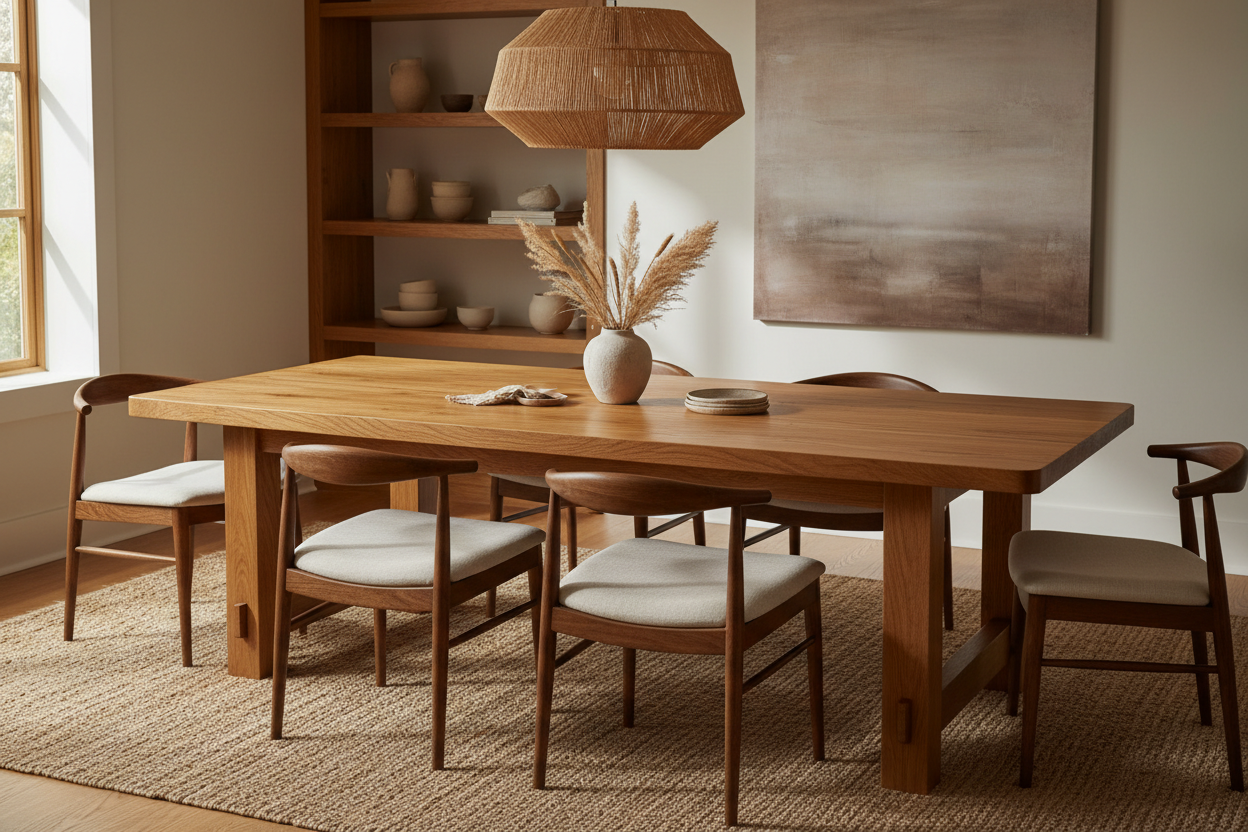
There is a distinct, satisfying sound a heavy ceramic plate makes when it settles onto a solid wood dining table and chairs. It is a dull, grounded thud rather than a hollow clatter. That density is often the first thing people notice when shopping for high-quality furniture, but the appeal goes far beyond just weight. Investing in natural materials is about longevity. Unlike MDF or veneer composites that chip and peel over time, solid timber furniture is capable of lasting for generations, often looking better with age as the wood develops a patina.
Choosing the right set involves navigating a confusing market of terminology and varying wood species. You might see terms like "hardwood solids" or "engineered wood," but if you are looking for an all wood dining set, you need to look for specific indicators of quality. The goal is to find a piece that handles the chaos of daily life—homework sessions, spilled wine, and hot dishes—without losing its structural integrity.
Understanding Wood Species and Hardness
Not all lumber performs the same way in a dining environment. The durability of solid wood dining tables and chairs depends largely on the Janka hardness rating of the timber used. This scale measures the resistance of a sample of wood to denting and wear.
Pine, for example, is a popular choice for farmhouse-style solid wood kitchen sets because it is affordable and has a rustic, knotty appearance. However, it is a softwood. If your family includes energetic toddlers or pets, a pine table will accumulate dents and scratches very quickly. For many, this adds character, but for others, it looks worn out too soon.
On the other end of the spectrum, Maple, Oak, and Walnut are hardwoods. An oak solid wood table and chair combination is incredibly resistant to deep scratches. Walnut is softer than oak but is prized for its rich, dark color and grain patterns. When browsing, ask specifically about the wood species. "Fruitwood" or "Rubberwood" are common budget-friendly hardwoods that offer decent durability, though they lack the prestige and grain depth of American Black Walnut or White Oak.
Sizing for Your Space and Lifestyle
Buying furniture is as much about spatial awareness as it is about aesthetics. A common mistake is buying a table that physically fits in the room but leaves no space for people to actually pull out a chair. You generally need at least 36 inches of clearance between the edge of the table and the nearest wall or piece of furniture.
For apartments or smaller breakfast nooks, a solid wood dining set for 4 is usually the sweet spot. Round pedestal tables work exceptionally well in these tighter configurations because they eliminate corners, making it easier to squeeze in an extra guest when necessary. If you host holidays but usually dine alone or with a partner, look for a table with self-storing leaves. The mechanics of extendable tables have improved significantly, allowing you to transform a compact 4-seater into a banquet table without needing a closet to store the extra panels.
The Kitchen vs. The Dining Room
The location of the furniture dictates the finish you should look for. Solid wood kitchen table and chairs are subjected to higher humidity, grease from cooking, and frequent cleaning with damp cloths. For a kitchen environment, a polyurethane or varnish finish is superior to oil or wax. These film-forming finishes create a barrier that prevents spaghetti sauce or coffee from penetrating the grain.
I learned this lesson the hard way a few years ago. I bought a beautiful, raw-finish teak table for my eat-in kitchen. It looked stunning for exactly two weeks. Then, a drop of olive oil sat unnoticed during a dinner party. It soaked right in, leaving a permanent dark spot. If you are looking for solid wood kitchen table & chairs intended for daily abuse, verify the finish is sealed and waterproof. Formal dining rooms can get away with delicate oil finishes that require periodic re-oiling, but the kitchen requires armor.
Signs of Quality Craftsmanship
When you are inspecting real wood dining table and chairs, look underneath. The underside of the table tells you more than the top. You want to see how the legs are attached. The best tables use heavy corner blocks that are glued and screwed into place. If you see staples or wobbly legs held on by a single bolt without reinforcement, walk away.
Check the chairs for joinery. Mortise and tenon joints (where a projecting piece of wood fits into a hole in another piece) are the gold standard for stability. Chairs take a massive amount of structural stress—people lean back in them, drag them across the floor, and shift their weight. An all wood dining set with poor joinery will start to squeak and wobble within a year.
The Investment Perspective
Sticker shock is real when shopping for authentic timber. However, the cost-per-use of solid wood kitchen sets is remarkably low when you factor in their lifespan. A veneer table might last five to seven years before the laminate starts peeling at the edges or water damage swells the particleboard core. Once that happens, the table is essentially trash; you cannot sand down veneer more than once, if at all.
Conversely, a solid maple or cherry table can be refinished multiple times. If your child takes a sharpie to the surface or a hot pizza box leaves a white ring, the table isn't ruined. It just needs a weekend of sanding and resealing to look brand new. This repairability makes solid wood dining tables and chairs a sustainable choice, keeping furniture out of landfills.
Style Consistency
Mixing and matching is trendy, but buying a complete set ensures the finish and grain match perfectly. If you decide to buy a solid wood table and chair separately, try to match the wood species even if the stain colors are different. Mixing grain patterns (like the heavy grain of oak with the subtle grain of maple) can sometimes look disjointed. If you do mix, ensure the undertones (warm red/orange vs. cool ash/gray) complement each other.
Frequently Asked Questions
How do I stop my solid wood table from cracking?
Wood moves with humidity changes. Keep your home's humidity levels relatively consistent (around 40-45%) and avoid placing the table directly over heating vents or in direct sunlight, which can dry out the timber and cause splits.
Can I use Clorox wipes on a solid wood table?
Generally, no. Harsh chemicals and bleach can strip the finish and damage the wood fibers over time. A damp cloth with a mild dish soap solution, followed immediately by a dry cloth, is the safest cleaning method for daily maintenance.
Is soft wood like pine bad for a dining table?
Not necessarily, but it depends on your expectations. Pine is softer and will acquire dents, scratches, and a "lived-in" look much faster than oak or maple. If you prefer a pristine, glass-like surface, avoid pine; if you like rustic charm, it is an excellent, affordable choice.

Leave a comment
This site is protected by hCaptcha and the hCaptcha Privacy Policy and Terms of Service apply.