










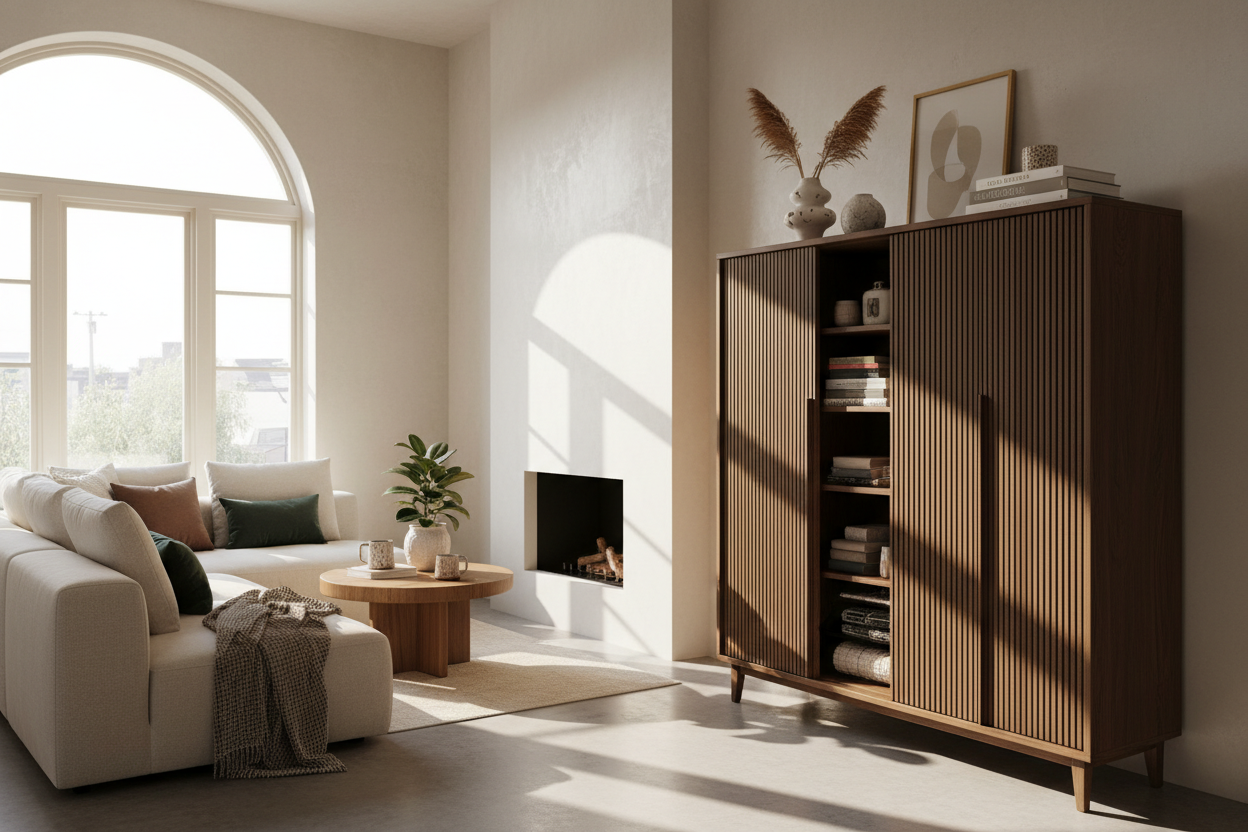
I remember staring at my 100-square-foot living room, wondering why I ever thought a 72-inch credenza was a good idea. It took up half the wall, made the narrow walkway feel like an obstacle course, and the top was just a graveyard for junk mail and half-empty coffee mugs. If you're currently tripping over furniture in a cramped apartment, it's time to stop thinking wide and start thinking about an accent cabinet tall enough to actually do some heavy lifting.
Most of us default to horizontal storage because we think it makes a room feel 'open.' In reality, it just eats your floor space and leaves the top four feet of your wall totally empty. Swapping to vertical storage was the only way I managed to fit a home office and a dining area into the same zip code without feeling like I was living in a storage unit.
- Vertical storage uses 'dead' wall space instead of precious floor real estate.
- Closed cabinets hide visual clutter that makes small rooms feel smaller.
- Drawers are superior to shelves for small, loose items like chargers and stationery.
- Tall pieces draw the eye up, making low ceilings feel slightly less oppressive.
The Problem With Wide, Space-Hogging Sideboards
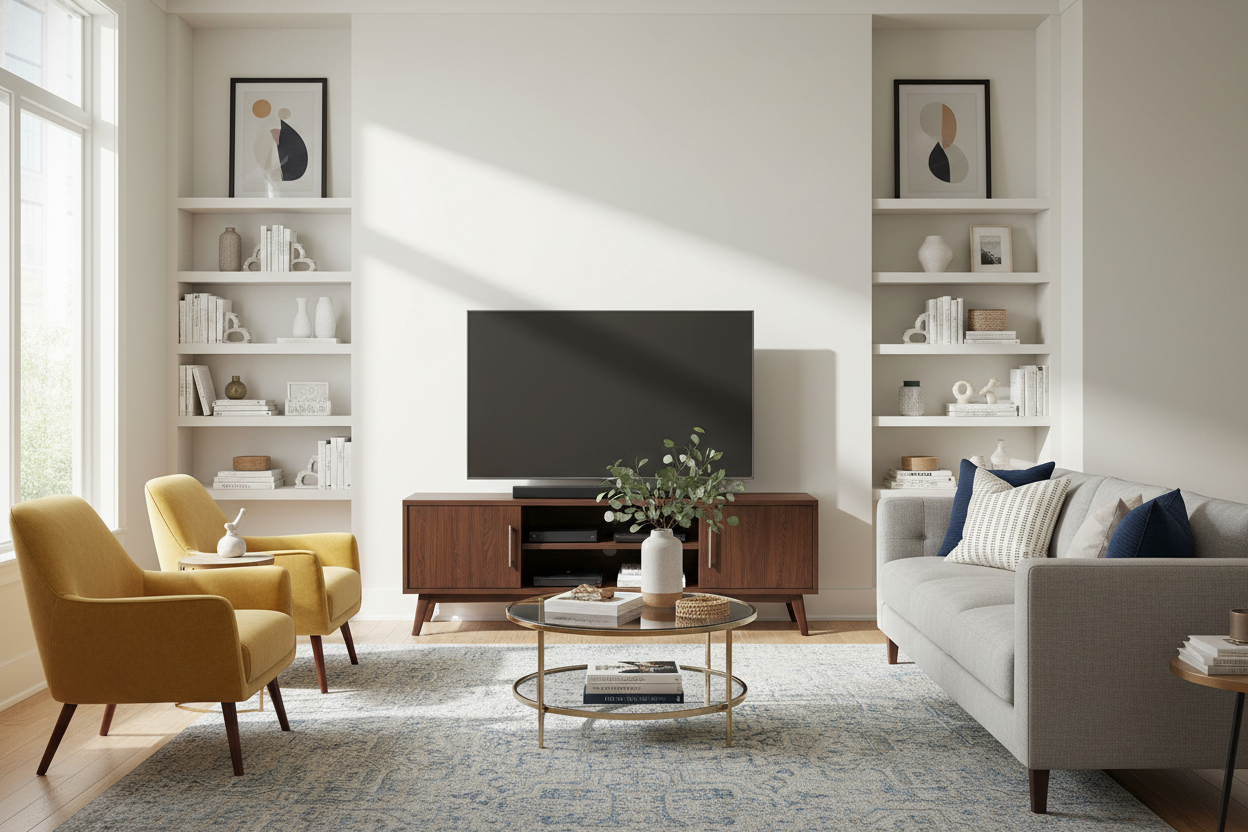
We've been conditioned to love a long, low sideboard. They look great in massive mid-century modern staged homes, but in a real-world narrow hallway or a tiny dining nook, they're a disaster. They force you to shimmy past them, and because they're at waist height, they become the landing pad for every piece of mail, spare key, and random receipt you own. It's the ultimate trap for anyone prone to 'doom piles.'
I spent years curing doom piles with a small accent cabinet after realizing my wide console was basically a $600 junk drawer with legs. When you have a wide surface, you fill it. When you have a narrow, tall surface, you’re forced to be intentional about what stays out and what gets tucked away. A wide sideboard might hold a lot, but it demands a footprint that most urban apartments simply can't spare without sacrificing a comfortable flow of traffic.
Going Vertical: Why an Accent Cabinet Tall Design Actually Saves Space
Spatial psychology is a trip. When everything in your room is low to the ground, the room feels bottom-heavy and cramped. By introducing tall accent cabinets, you shift the visual weight. You're utilizing the cubic square footage—the space between your waist and the ceiling—that usually goes to waste. It’s the difference between stacking your boxes and spreading them across the floor.
Take something like a tall shutter door square accent cabinet. It has a footprint of maybe 18 by 18 inches, but it gives you five or six shelves of storage. To get that much storage out of a standard dresser, you'd need five feet of wall space. It’s simple math: if you can’t go out, go up. I’ve found that pieces standing 60 to 72 inches tall provide the sweet spot of massive storage without making the room feel like a library annex.
The Unsung Hero: The Tall Accent Chest With Drawers
I’m going to be blunt: open shelving is a trap for people who don't have a full-time housekeeper. Unless you are a minimalist monk, your stuff is probably ugly. A tall accent chest with drawers is the ultimate 'cheat code' because it swallows up the mismatched linens, the board games with the ripped boxes, and the tangled mess of HDMI cables you might need 'one day.'
Drawers provide much better organization than deep cabinet shelves where things inevitably get lost in the back. I use a chest with six drawers in my entryway, and it’s the only reason my guests don't see the mountain of winter scarves and dog leashes that live there year-round. Plus, a tall accent dresser allows you to categorize your life by height—daily essentials at eye level, seasonal junk at the bottom.
How to Style a Tall Accent Dresser Without It Looking Like a Monolith
The biggest fear people have with a towering piece of furniture is that it will look like a giant monolith looming over the room. It can feel heavy if you just shove it in a corner and leave it alone. The trick is to 'soften' the edges. I like to place a tall, trailing plant like a Pothos on the very top shelf. Let the vines hang down the side to break up the hard vertical lines.
You also need to balance the wall. Unlike a wide embossed accent cabinet, which usually needs a massive piece of art or a mirror above it to fill the void, a tall piece handles the wall height for you. I usually hang a small, framed print beside the cabinet at eye level rather than above it. This anchors the piece to the rest of the room’s furniture and prevents it from looking like a lonely skyscraper.
Glass vs. Solid Doors: Which Vertical Storage is Right for You?
This comes down to how much of a mess you are. If you have a beautiful collection of vintage ceramics or a color-coordinated library, a black cabinet with glass doors is stunning. It adds depth because you can see 'into' the wall, which can actually make a small room feel slightly larger. It’s a great way to show off the good stuff while keeping it dust-free.
However, if you're looking for a place to hide the printer, the extra toilet paper, and the kids' craft supplies, stick to solid doors. My rule of thumb? If you haven't touched the items in three months, they shouldn't be behind glass. Solid doors offer a 'clean' visual break that calms the eyes in a busy room. I personally use solid doors for 90% of my vertical storage because I value the 'out of sight, out of mind' lifestyle.
FAQ
Will a tall cabinet make my low ceilings look even lower?
Actually, the opposite. Tall, narrow furniture creates vertical lines that draw the eye upward, tricking the brain into thinking the walls are taller than they are. Just avoid anything that stops 2 inches from the ceiling—leave at least a foot of breathing room so it doesn't look cramped.
Are tall cabinets top-heavy or dangerous?
Yes, they can be. Always, always use the anti-tip kit. I don't care if you don't have kids or pets; a heavy drawer pulled all the way out can shift the center of gravity. It takes five minutes to screw it into a stud, and it's much cheaper than a trip to the ER or a broken floor.
Can I use a tall accent cabinet in a bathroom?
Absolutely, as long as the material can handle humidity. Avoid cheap MDF which swells like a sponge. Look for solid wood or metal. It’s the best way to store towels and toiletries when you don't have a built-in linen closet.

Leave a comment
This site is protected by hCaptcha and the hCaptcha Privacy Policy and Terms of Service apply.