










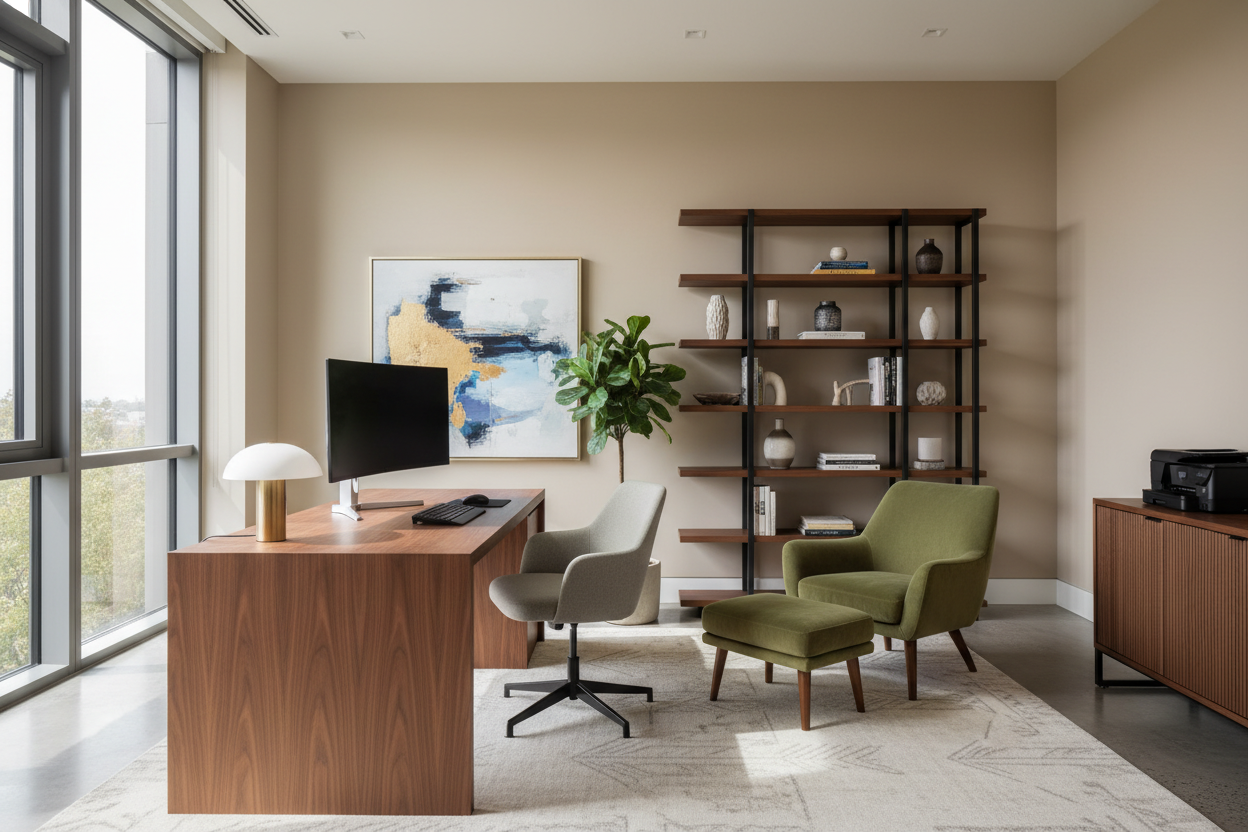
Many remote workers end up with an office that feels like an afterthought—a laptop shoved onto a dining table or a cramped corner filled with tangled cords and uninspiring gray filing cabinets. When your workspace lacks intention, it drains your focus and clashes with the rest of your home's aesthetic. Implementing thoughtful work from home decoration ideas isn't just about making a room look pretty; it's about creating a functional environment that supports your daily routine.
You don't have to choose between a sterile corporate cubicle and a chaotic living room. By the end of this guide, you will know exactly how to balance ergonomic necessities with high-end residential style, ensuring your workspace feels both productive and deeply personal.
Quick Decision Guide
- Position your desk to command the room (facing the door) rather than staring blankly at a blank wall.
- Layer task lighting with ambient fixtures to reduce eye strain and avoid harsh overhead glare.
- Prioritize closed storage to hide visual clutter like cables, printers, and loose paperwork.
- Incorporate organic elements, such as natural wood tones or low-maintenance plants, to soften commercial-looking tech.
- Leave at least 36 inches of clearance behind your desk to allow your chair to roll and swivel comfortably.
Space Planning: Designing Around the Desk
The Command Position
The biggest mistake I see in residential office layouts is shoving the desk against the wall. While this might seem like a space-saver, it creates a claustrophobic working environment. Instead, float the desk in the room facing the entrance. This 'command position' not only makes the room feel larger but also provides a professional backdrop for video calls. If you must face a wall due to square footage constraints, use negative space effectively by adding floating shelves or a large piece of textured art to give your eyes a place to rest.
Zoning Open-Concept Spaces
Not everyone has a dedicated spare bedroom. When applying work from home decor ideas to a shared space like a living room or primary bedroom, zoning is critical. Use a low-pile area rug to anchor the desk and visually separate it from the lounge area. A slatted wood room divider or an open-backed bookcase can establish a physical boundary without blocking natural light.
Blending Office Function with Home Aesthetics
Choosing the Right Materials
Commercial office furniture relies heavily on cold metals and black melamine. To make your workspace feel like a natural extension of your home, introduce residential materials. Solid walnut or white oak veneers bring warmth and texture. If you have heavily heavily grained wood floors, consider a matte painted desk to avoid clashing wood undertones. For seating, look for upholstered chairs in performance fabrics like boucle or tight-weave linen, which offer durability without looking institutional.
Managing Visual Weight
Proportion and visual weight dictate how comfortable a room feels. If you select a heavy, solid wood executive desk, pair it with a visually light chair—perhaps one with an open metal frame or a slim silhouette. Conversely, if your desk is a minimalist glass or thin metal design, anchor the setup with a more substantial, fully upholstered chair. This tension keeps the room balanced.
Ergonomics That Don't Look Institutional
A beautiful chair is useless if it ruins your posture. Fortunately, manufacturers are finally bridging the gap between aesthetics and ergonomics. When shopping for seating, prioritize adjustable seat depth and lumbar support. Many modern designs hide their tilt mechanisms within sleek frames. Pay attention to desk height as well; the standard 30-inch height works for many, but if you are shorter, you may need a keyboard tray or a slightly lower desk to keep your arms at a comfortable 90-degree angle.
Designer's Honest Take: Lessons from My Own Projects
In my early years designing residential offices, I prioritized aesthetics over wire management. I once installed a stunning floating glass desk in a client's mid-century modern study. It looked incredible on installation day. But a week later, the reality of dual monitors, a laptop charger, and a desk lamp turned that transparent focal point into a chaotic web of black cords.
I learned the hard way that you have to plan for the ugly tech. Now, I always specify desks with integrated cable troughs or design custom millwork that hides the necessary evils of remote work. A beautiful matte walnut finish loses all its charm if it's covered in tangled wires. Always buy more closed storage than you think you need.
Frequently Asked Questions
How do I hide cords on a freestanding desk?
Use under-desk cable management trays to hold power strips and excess wire length. Bundle cords running down to the outlet with neoprene sleeves or zip ties, and route them down the back of a desk leg so they remain out of sight from the doorway.
What size desk do I need for a dual-monitor setup?
For two standard monitors, you need a desk that is at least 60 inches wide and 24 to 30 inches deep. Anything shallower than 24 inches will put the screens too close to your eyes, leading to fatigue and poor neck posture.
Are aesthetic desk chairs actually comfortable?
They can be, but you have to check the specifications. Avoid rigid, unpadded dining chairs for full-time work. Look for 'executive' or 'task' chairs that feature high-density foam, a swivel base, and adjustable height, even if they are wrapped in velvet or leather.

Leave a comment
This site is protected by hCaptcha and the hCaptcha Privacy Policy and Terms of Service apply.