










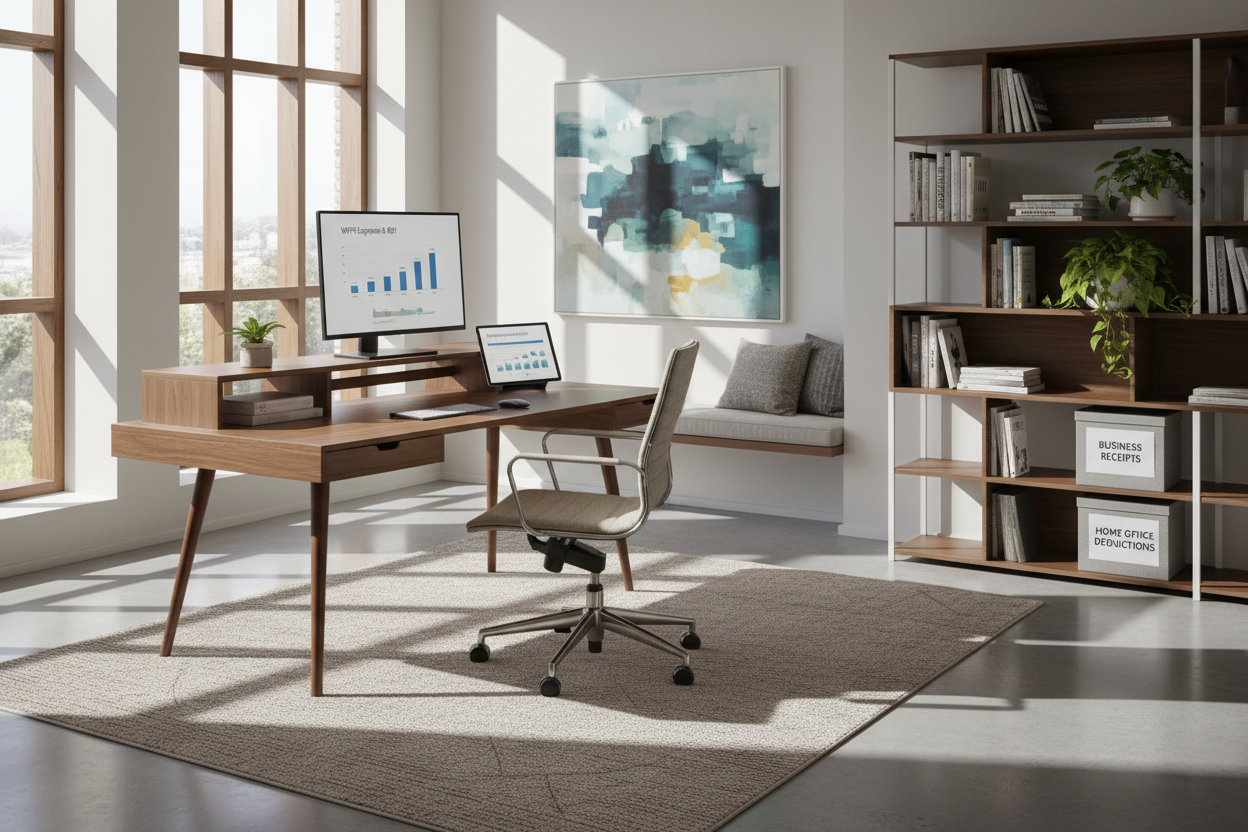
The shift to remote work has fundamentally altered how we view our domestic environments. We are no longer just living in our homes; we are operating businesses and professional careers from them. This creates a unique design dilemma: how do you create a space that is aesthetically pleasing enough to live in, yet functional enough to justify the financial outlay? Many of my clients hesitate to invest in quality office furniture because they view it solely as a cost. However, properly managed working at home expenses are not just sunk costs—they are investments in your productivity and, for the self-employed, potential tax advantages.
Quick Decision Guide: Validating Your Office Spend
- Exclusivity is Key: From both a design and tax perspective, the space must be used regularly and exclusively for business. A laptop on the kitchen island rarely qualifies as a dedicated office.
- Durability Over Discounts: Commercial-grade fabrics and solid woods outlast residential 'fast furniture,' offering better long-term ROI.
- Ergonomics as an Asset: An ergonomic chair is a health necessity, not a luxury. It is often the most justifiable business expense.
- Structural vs. Decor: Hardwiring internet and installing proper lighting are functional upgrades; purely decorative items (like art) are harder to justify as business necessities unless they form a video background.
Defining the Dedicated Workspace
When clients ask, "Can I deduct home office if I work from home?" or "Is working from home tax deductible?", the answer often lies in the physical layout of the room. To claim a home office, the space generally needs to be a distinct area. As a designer, I advocate for this separation regardless of tax laws because it establishes a psychological boundary between rest and labor.
If you are self-employed, creating a dedicated room allows you to calculate the square footage percentage of your home used for business. This metric is crucial when you look at how to write-off business expenses working from home, such as a portion of your mortgage interest or rent.
Furniture Selection: Asset vs. Accessory
Navigating work from home business expenses requires distinguishing between what looks good and what performs. When sourcing for a home office, we look for commercial viability wrapped in residential warmth.
The Chair: The Centerpiece of Productivity
If you work from home, can you deduct home office furniture? Generally, yes, if it is essential for your business. The chair is your primary tool. Avoid the trendy, velvet bucket chairs often seen on social media. They lack the lumbar support required for an 8-hour shift. Instead, look for high-performance task chairs with adjustable tension and breathable mesh or top-grain leather. These pieces hold their value and function as legitimate employment home office equipment.
The Desk: Surface Area and Materiality
When considering how to deduct work from home expenses, the desk is a capital asset. I always steer clients toward solid wood or high-pressure laminate over particle board. A solid walnut desk, for example, offers tactile warmth and visual weight. It anchors the room. If you are wondering how to write off work from home expenses, keep in mind that a desk used 100% for business is a direct expense, whereas a dining table used occasionally for work is not.
Utilities and Infrastructure
A common question I receive during renovations is, "Can you write off electricity if you work from home?" From a design standpoint, we often upgrade electrical panels to handle multiple monitors, servers, and high-intensity task lighting. If you qualify for the home office deduction (usually freelancers and business owners), a portion of these utility bills becomes relevant. We design lighting plans that layer ambient and task lighting, ensuring the space is video-call ready—a vital part of the modern work from tax deductions conversation.
The W-2 vs. Self-Employed Distinction
It is vital to address the elephant in the room: the home office tax deduction for remote employee status. Since the tax law changes (and specifically regarding work from home tax deductions covid era shifts), W-2 employees generally cannot deduct working at home tax write offs on their federal return. However, self-employed individuals and contractors absolutely can. If you fall into the latter category, every piece of furniture, the paint on the walls, and the rug on the floor should be tracked. If you are an employee, your focus should be on negotiating a stipend with your employer to cover these costs.
My Personal Take on Working at Home Expenses
I learned the hard way that "budget" office furniture is the most expensive thing you can buy. Early in my career, I bought a visually stunning, mid-century modern replica desk made of veneer over MDF. It looked fantastic in photos.
Within six months, the edge banding started peeling where my wrists rested while typing. The veneer chipped the first time I clamped a monitor arm to it. It looked unprofessional and scrappy. When I finally invested in a solid white oak desk and a proper Herman Miller chair, the difference wasn't just aesthetic; my focus improved because I wasn't constantly adjusting a wobbling leg or nursing back pain. When I advise clients on claiming work at home expenses, I tell them: save the receipt, but more importantly, buy the piece that won't end up in a landfill in two years. That is the true write-off.
Conclusion
Curating a home office is about balancing the ledger between financial investment and quality of life. Whether you are figuring out deduct working from home expenses or simply trying to create a sanctuary for productivity, prioritize quality materials and ergonomic design. Your workspace is a tool; build it to last.
Frequently Asked Questions
I work from home, can I deduct home office expenses if I am a full-time employee?
Currently, federal tax laws generally do not allow W-2 employees to claim the home office deduction. This benefit is primarily reserved for self-employed individuals and independent contractors. Always consult a tax professional for your specific situation.
Can you claim home office if you work from home only part-time?
If you are self-employed, you may be able to claim the deduction if the space is used "regularly and exclusively" for business. If the space doubles as a guest room or playroom, it typically does not qualify.
How do I document tax write offs for working at home?
Keep impeccable records. Save receipts for all furniture and technology purchases. Additionally, photograph your workspace to prove the "exclusive use" of the area should you ever be audited.



Leave a comment
This site is protected by hCaptcha and the hCaptcha Privacy Policy and Terms of Service apply.