










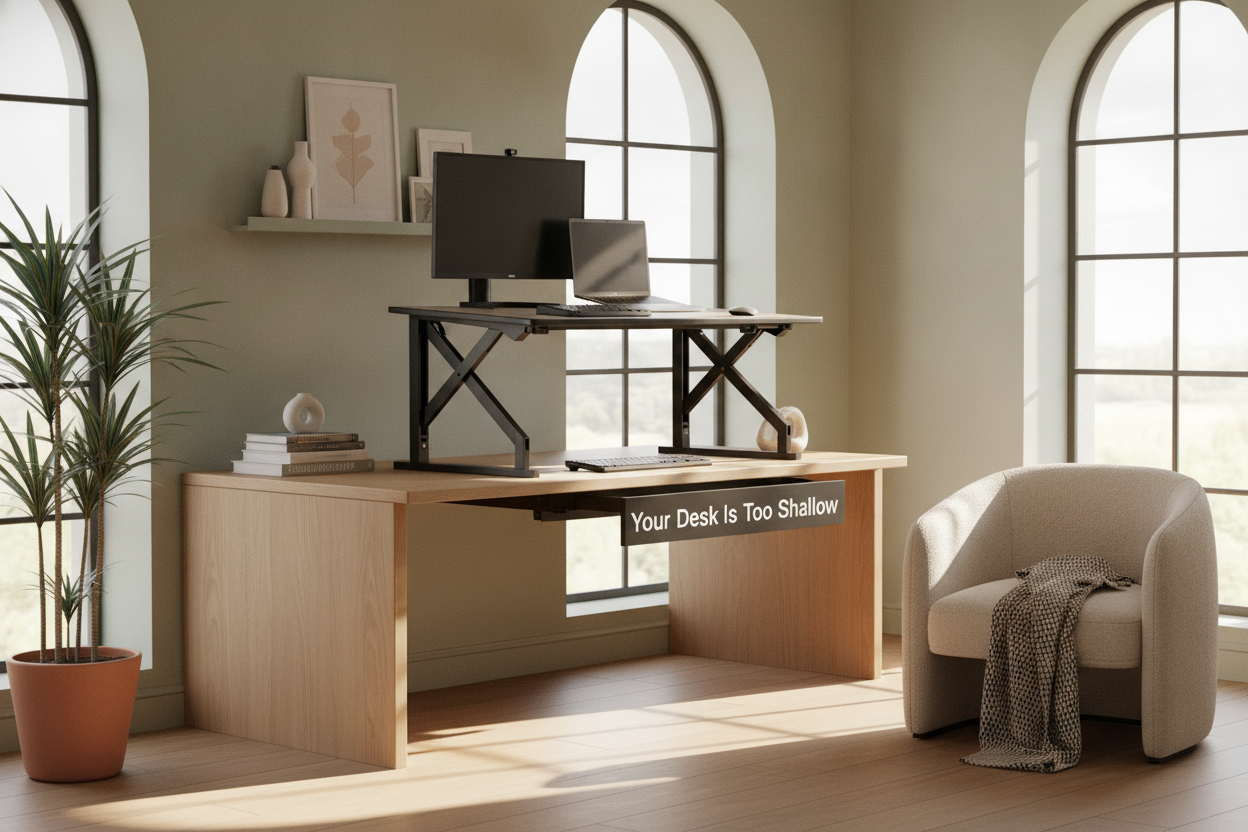
I remember the day my massive sit-stand converter arrived. I was so tired of hunching over my laptop like a gargoyle that I didn't even read the dimensions. I just wanted to stand. I bought a heavy-duty desk riser for standing thinking I was finally prioritizing my health. Then I unboxed it. It was like trying to park a suburban SUV in a compact parking spot.
Quick Takeaways
- Most converters require at least 24 inches of desk depth to sit flush.
- Keyboard tray overhang creates a tipping hazard and a bouncy typing experience.
- A riser desk standing desk setup often eats up 80% of your usable surface area.
- If your desk is under 22 inches deep, a full desk replacement is usually a better investment.
The Day I Lost My Entire Desktop
I spent nearly $300 on a high-end sit and stand desk riser. I had visions of myself effortlessly gliding between sitting and standing, feeling energized and productive. The reality? I spent forty minutes clearing off my coffee mug, my physical planner, and my favorite pens just to make room for the steel base. My desk didn't feel like a workspace anymore; it felt like a mechanical storage unit.
The sheer footprint of a sit to stand riser is staggering. Even when it is folded down, you lose the ability to use your desk for anything other than a computer. Want to sign a document? Too bad, there is a giant metal plate where your paper should be. The ergonomic gain felt like a huge trade-off for my daily workflow.
Why You Need to Measure Depth, Not Just Width
When people shop for an adjustable desk top riser, they usually check the width first. They want to make sure their dual-monitor setup fits on the top tier. But width is rarely the dealbreaker. Depth is what kills the dream. A standard writing computer desk is often only 20 to 22 inches deep, which is fine for a laptop but disastrous for a converter.
A sit to stand desktop riser needs room for the base to sit securely and for the lifting mechanism to arc upward. If your desk is too shallow, the riser ends up sitting so far forward that the monitors are six inches from your face. It is not just cramped; it is a recipe for eye strain and headaches. You need at least 30 inches of depth to actually feel comfortable.
The Dreaded 'Keyboard Tray Overhang'
If you force a large desktop sit to stand desk onto a shallow table, you will inevitably deal with the overhang. This is when the keyboard tray sticks out past the front edge of your desk. It looks messy, but the real problem is the physics. Every time you lean your wrists on that tray to type, you are testing the center of gravity of the entire unit.
I have seen monitors wobble dangerously because the base wasn't fully supported. It makes typing feel like you are working on a trampoline. If your current table is too small to safely hold an adjustable standing desk riser, stop trying to make it work. Upgrading to a full ergonomic sit stand up desk is a much safer, more stable way to get your standing hours in without the constant fear of a tip-over.
How to Reclaim Your Lost Workspace
If you already bought an ergo desk riser and feel like you are working in a phone booth, there are ways to fix it. First, get your monitors off the riser's platform. Using a monitor arm that clamps to the back of the riser can free up a surprising amount of 'real estate' for your phone or a notepad. It also lets you push the screens further back.
I eventually trashed my shoebox riser because I realized I missed my desk's original surface. If you are in the same boat, consider a side table for your analog tasks. It is annoying to have to turn 90 degrees to write a note, but it is better than trying to balance a notebook on a tiny keyboard tray. Keep your sit to stand riser for digital work and move everything else elsewhere.
When to Ditch the Converter and Buy a New Desk
There comes a point where a desk standing riser just doesn't make sense for your room. If you are working on a 20-inch deep console table or a narrow built-in, you are fighting a losing battle. The bulk of the sit to stand adjustable desk riser will make the room feel cluttered and your work feel frantic. It is a classic case of trying to fix a bad foundation with an expensive accessory.
Replacing your shallow desk with a proper sit stand desk with file cabinet might actually save you space in the long run. You get a deeper work surface and built-in storage, eliminating the need for the clunky riser altogether. Sometimes the best way to upgrade your office is to stop adding layers and start over with a piece of furniture that actually fits your needs.
FAQ
How deep should my desk be for a standing riser?
Ideally, you want at least 24 inches of depth. If your desk is 30 inches deep, you will have plenty of room for the riser and some extra space for a coffee mug or notebook.
Will a desk riser damage my existing desk?
Most have rubber feet, but they are heavy. On soft wood or cheap laminate, the weight of a sit to stand riser plus monitors can leave permanent indentations or scratches over time.
Can I use a riser on a glass desk?
I wouldn't recommend it. Most glass desks aren't rated for the concentrated weight of a 50-pound riser plus the force of you pushing down on it to adjust the height.



Leave a comment
This site is protected by hCaptcha and the hCaptcha Privacy Policy and Terms of Service apply.