










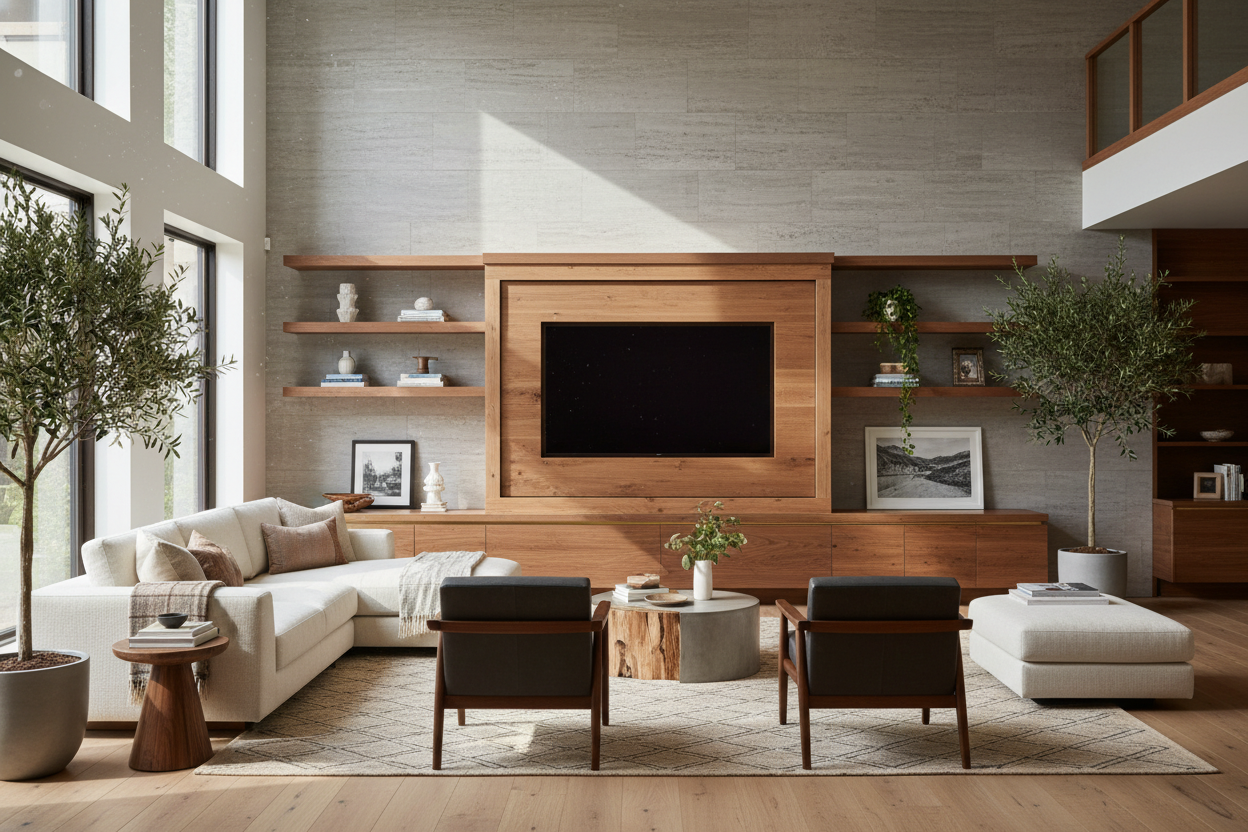
I spent three months sourcing the perfect vintage Persian rug and a velvet sofa that didn't feel like a brick, only to realize my living room still looked like a Best Buy waiting room. That 65-inch screen is a literal void. It is a shiny, plastic rectangle that eats light and kills the vibe of every candle or piece of art in the room.
I finally hit my breaking point when I noticed my eyes were being drawn to the reflection of the kitchen light in the screen even when it was off. I needed a solution that didn't involve just throwing a blanket over it. That is when I discovered the magic of a tv wooden box enclosure.
Quick Takeaways
- Standard TVs are aesthetic killers that create a 'black hole' in your design.
- A wooden enclosure makes tech feel like custom furniture rather than an appliance.
- Ventilation is the most critical factor to prevent your TV from overheating.
- You can choose between a simple frame or a deep box with sliding doors for total concealment.
The 'Black Void' Problem (And Why I Finally Snapped)
You know the feeling. You have curated the perfect shelfie, your plants are thriving, and your lighting is moody and warm. Then, there is the TV. It is a massive, cold, glass abyss. I realized I ditched my glossy media center because the high-shine finish only amplified the tech-heavy look I was trying to avoid.
The problem is that modern living rooms are designed around the screen, but the screen itself is rarely designed to be seen when it is off. It sucks the soul out of the room. I wanted my home to feel organic and tactile, not like a showroom for electronics. A timber enclosure was the only way to bridge that gap.
Wait, What Even Is a Wooden Box for TV Concealment?
When people talk about a wooden box for tv setups, they usually mean one of two things. The first is a shallow 'shadow box' frame. This fits around the perimeter of the screen, making it look like a piece of framed art. It is great for low-profile TVs that sit flush against the wall.
The second option—and my personal favorite—is a deeper cabinet box. This is a five-sided enclosure that the TV sits inside. Some people leave them open, while others add sliding 'barn door' panels or bi-fold wood slats. This completely hides the screen when you aren't binge-watching, turning the TV area into a textured wood feature wall.
My Non-Negotiable Rules for Hiding the Screen
Before you go slapping four pieces of oak together, you have to think about the hardware. Electronics hate heat. If you build a box that is too tight, you are essentially putting your TV in an oven. I always leave at least two inches of clearance on all sides and leave the top and bottom partially vented.
Unlike traditional tv stands that offer wide-open air circulation, a box traps heat. You also need to consider your remote. If you use a standard IR remote, the signal won't go through solid wood. I had to install a tiny $15 IR repeater so I could keep the doors closed while playing music. And please, for the love of design, drill a 2-inch hole in the bottom for cable management before you mount it.
The Surprising Benefits I Didn't Expect
The biggest win wasn't actually hiding the screen—it was hiding the cables. We all have that rat's nest of HDMI cords, power strips, and Apple TV boxes. A deep wooden box swallows all of that. I tucked everything behind the TV inside the enclosure, and for the first time in years, I didn't have a single visible wire.
It also unified the room. By using a warm walnut finish, the TV area finally talked to my coffee table and bookshelf. It stopped being a 'tech zone' and started being part of the furniture. The room felt quieter, if that makes sense. The visual noise of the plastic bezels was just... gone.
Should You Build One or Buy a Cabinet?
If you are handy with a miter saw, building a basic frame is a weekend project. But if you want something that looks polished and doesn't sag under its own weight, buying a professional unit is usually the smarter play. Real wood moves and breathes; if you don't know what you're doing, your DIY box will warp in six months.
I tell people to look for tv cabinet wooden stands that are built from solid timber or high-quality veneers. Avoid the cheap painted MDF stuff you find at big-box retailers. If you are going for the 'box' look, you want the grain to be the star. It is the difference between a piece of furniture that lasts a decade and something that ends up on the curb by next moving day.
FAQ
Will my TV overheat in a wooden box?
Only if you don't vent it. Leave a 2-inch gap around the edges and ensure there are holes at the top and bottom to allow hot air to escape via natural convection.
How do I use my remote if the TV is in a box?
If the box has doors, you will need an IR repeater kit. It is a tiny sensor that sits outside the box and relays the signal to your devices inside.
Can I mount a wooden box on any wall?
These boxes are heavy, especially if they are solid hardwood. You must secure the box (and the TV mount) directly into the wall studs. Do not trust drywall anchors for this.


Leave a comment
This site is protected by hCaptcha and the hCaptcha Privacy Policy and Terms of Service apply.