










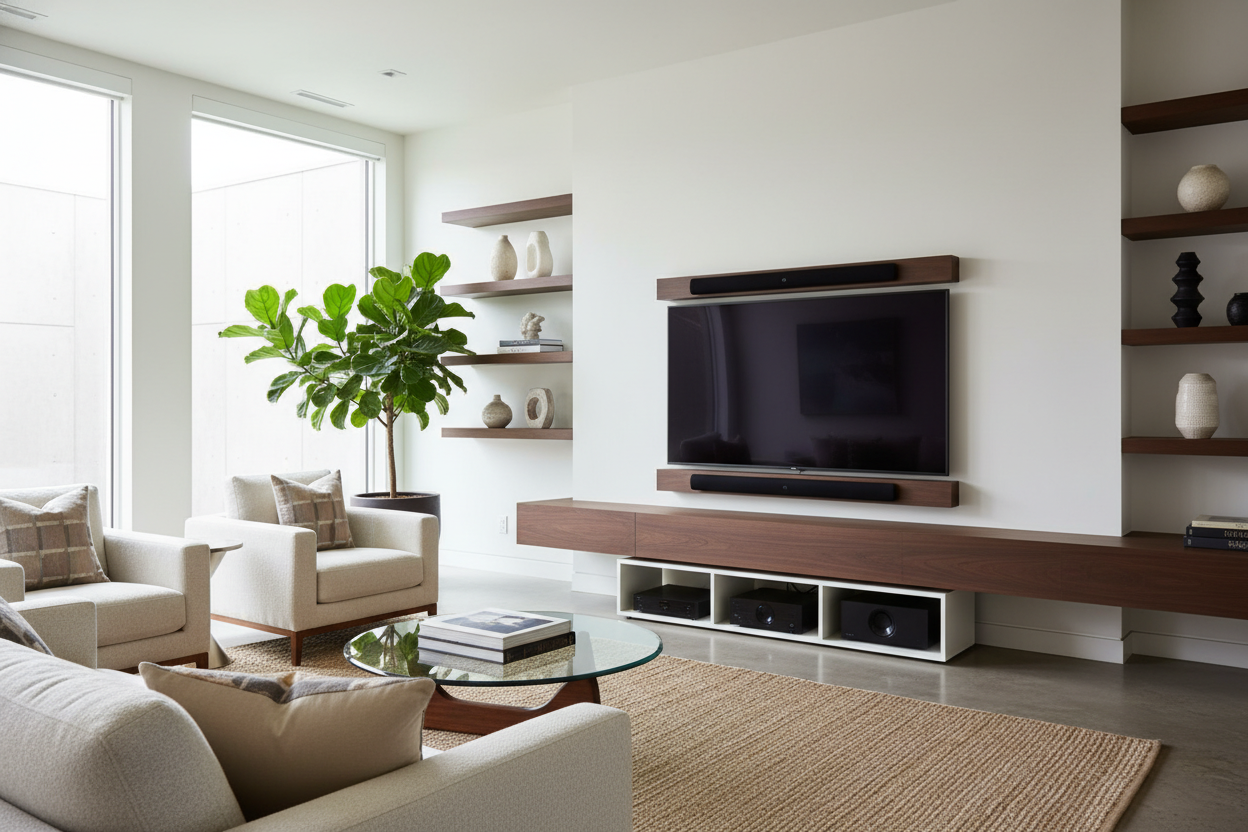
I spent three weeks staring at a Sonos Arc that covered the bottom half-inch of my LG OLED. Every time I tried to change the volume, I had to do this weird 'Lion King' arm raise just to get the remote signal over the speaker. It looked like a tech store exploded in my living room, and my partner was about ten minutes away from throwing the whole setup out the window. If you're tired of your audio gear looking like an afterthought, it's time to talk about a shelf for soundbar.
- Look for a console with at least 6 inches of depth to accommodate cable heads.
- Avoid glass shelves; they vibrate like crazy at high volumes.
- Ensure the bay is at least 4 inches wider than your speaker for airflow.
- Measure your IR sensor height before buying a stand.
The Awkward Dance of the 'Under-TV' Speaker
We've all done it. You buy a beautiful new media console, set up your TV, and then realize your soundbar is a chunky beast that doesn't quite fit anywhere. So, you plop it right in front of the screen. Suddenly, your $2,000 television looks like it’s wearing a neck brace. Not only does it look cluttered, but it almost always blocks the infrared sensor. Nothing kills a movie night vibe faster than having to stand up and point your remote at the ceiling just to turn down the volume.
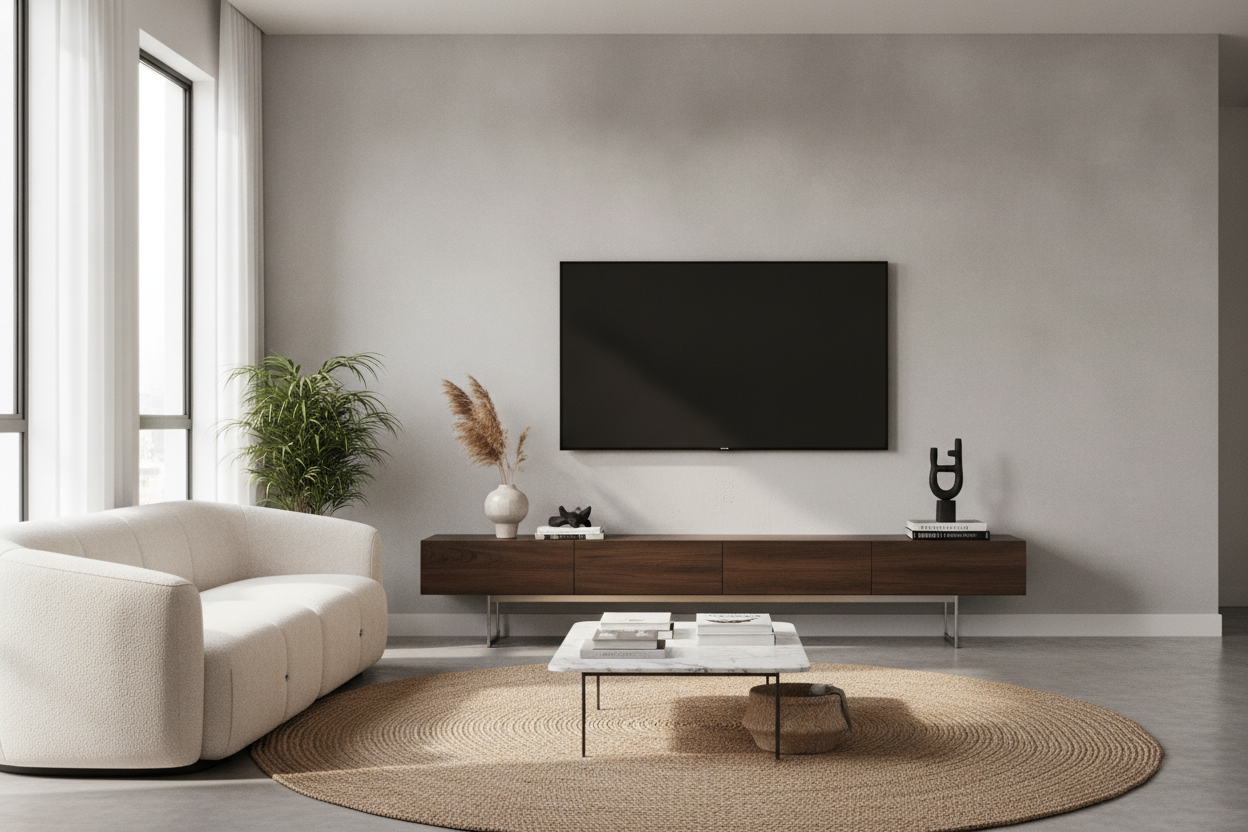
A soundbar on tv stand setup should look intentional, not like a temporary solution you forgot to fix. When your speaker is just sitting there, it collects dust in the crevices and makes the whole area look like a wire-heavy mess. A dedicated sound bar shelf gives the speaker its own home, keeping the lines of your furniture clean and your remote signal unobstructed.
Why Wall Mounting Isn't Always the Magic Fix
The standard advice is always 'just wall mount it.' But have you actually tried that? Unless you're a pro at fishing wires through drywall, you end up with a black cord dangling like a sad tail from your floating soundbar. Plus, if you ever want to rearrange your room, you're left with four massive holes that need patching and painting. It's a lot of commitment for a piece of tech that might be obsolete in five years.
I’m a much bigger fan of furniture that does the work for you. Choosing a TV stand with speaker shelf means the cords stay hidden behind the back panel, and the speaker sits at the perfect ear-level height. It’s the difference between a DIY project that looks like a mess and a sophisticated media console with soundbar shelf that actually belongs in a grown-up living room.
What Actually Makes a Good Audio Shelf?
Depth is the silent killer. Most people measure the width of their soundbar and call it a day. But you have to account for the cables sticking out the back. A 4-inch deep speaker often needs 6 or 7 inches of actual shelf depth because HDMI ARC cables don't like to bend at 90-degree angles. If your shelf is too shallow, your speaker will hang off the front edge like a diving board.
Height is the other factor. I always recommend adjustable shelf storage. Why? Because the soundbar you have today might not be the one you have in three years. If you upgrade to a beefier Atmos-enabled system, you’ll need that extra inch of clearance. A fixed shelf for sound bar under tv is a gamble I’m rarely willing to take with my own money.
Please Don't Suffocate Your Electronics
Soundbars are basically compact amplifiers. They get hot. If you jam your speaker into a tiny cubby with zero airflow, you're going to shorten its lifespan and potentially muffle the upward-firing drivers. Make sure there’s at least an inch or two of breathing room on all sides. A tv stand with soundbar space needs to be functional, not just a tight-fitting glove.
Media Consoles That Finally Get It Right
I’ve tested dozens of setups, and the best ones usually feature a wide, open center bay. You want something that can handle a 65 inch tv stand with soundbar shelf requirement without looking like a massive block of wood. The goal is to find a balance between hidden storage for your messy stuff—like routers and old DVDs—and an open area for your audio.
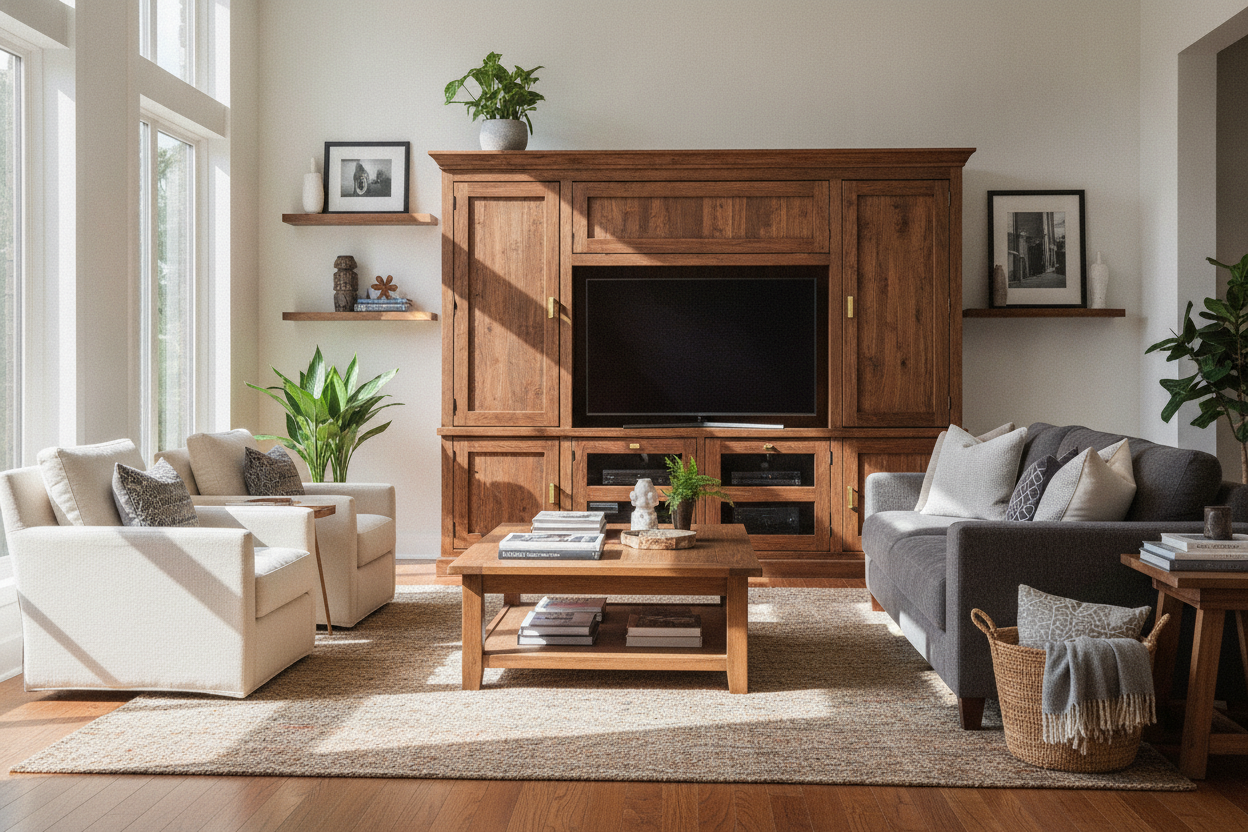
For example, a TV stand with adjustable center shelf is a great pick because it lets you drop the shelf low enough to fit a tall speaker while keeping the side cabinets closed for a clean look. It works perfectly for a tv stand for 75 inch tv with soundbar shelf setup where the scale of the furniture needs to match the massive screen above it. I personally use a similar solid wood tv stand with soundbar shelf at home, and it’s the only way I’ve found to keep my living room from looking like a tech clearance aisle.
I once bought a gorgeous mid-century modern tv stand with soundbar shelf that looked perfect in the photos. When it arrived, the shelf was actually a drawer with a flip-down front. It looked great closed, but the sound was terrible because the wood blocked the side-firing tweeters. I ended up having to saw out the back panel just to get the wires to fit. Learn from my mistake: check the dimensions twice, buy the shelf once.
Can I put a soundbar in a cabinet?
Only if the cabinet has an open front or an acoustically transparent mesh. Putting a speaker behind solid wood or glass will make your $500 soundbar sound like a $10 radio.
How high should a floating shelf for soundbar be?
Ideally, it should be about 2 to 4 inches below the bottom of your TV. This is close enough to keep the audio connected to the picture but far enough to avoid blocking the screen.
What if my soundbar has upward-firing speakers?
If you have a Dolby Atmos soundbar, you cannot put it inside a shelf cubby. It needs a clear line of sight to the ceiling, so a tv top shelf for soundbar or a stand where the speaker sits on the very top surface is your only real option.

Leave a comment
This site is protected by hCaptcha and the hCaptcha Privacy Policy and Terms of Service apply.