










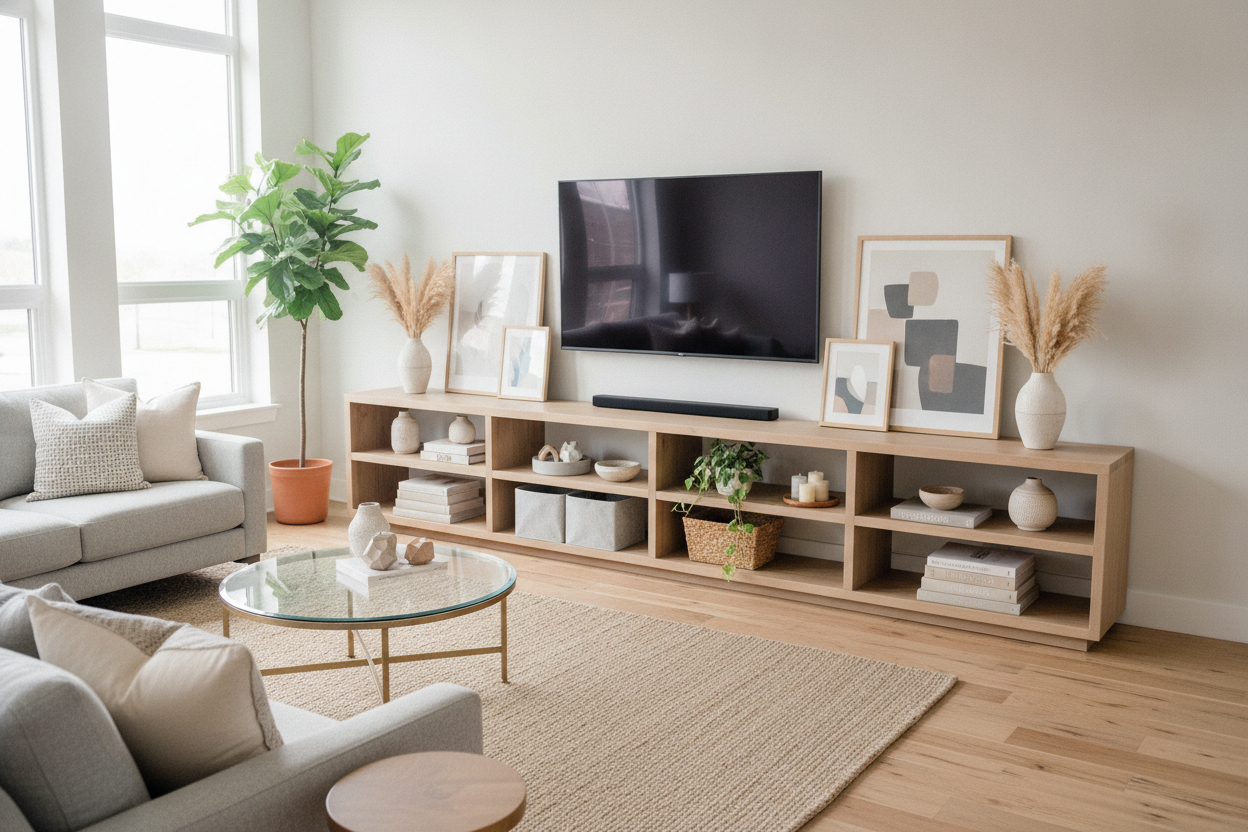
We’ve all been there. You finally pull the trigger on a tv stand 4 shelves wide, thinking you’ve solved your storage woes once and for all. Then you spend three hours staring at a pile of tangled HDMI cables, dusty paperbacks, and a router that looks like a plastic spider, wondering why your living room looks like a clearance bin at a thrift store. I’ve assembled more flat-pack furniture than I care to admit, and the four-shelf layout is the hardest to get right because it’s so easy to overcomplicate.
The trick isn’t buying more stuff; it’s about editing what you have. I once spent an entire Saturday morning moving a single ceramic bowl between three different shelves just to realize the bowl wasn't the problem—the lack of 'air' was. If you’re struggling to make your media console look like something out of a high-end catalog instead of a dorm room, these three rules will save your sanity and your floor space.
Quick Takeaways
- Use the Grid Method to alternate visual weight across the four quadrants.
- Hide tech in 'breathable' baskets to avoid the cord-spaghetti look.
- Leave 30% of each shelf empty to give the eye a place to rest.
- Scale your decor to the height of the shelves—avoid tiny trinkets that look like clutter.
The 'Grid Method' for Open Shelving
When you have a tv stand with 4 shelves, you’re essentially looking at a 2x2 grid. The biggest mistake people make is treating each shelf as its own island. If you put all your heavy books on the bottom left and all your light, airy vases on the top right, the whole unit is going to look like it’s tipping over visually. It’s about balance, not symmetry. I learned this the hard way after my first 'adult' apartment looked like a leaning tower of textbooks.
I like to use the 'X' pattern. If you place a heavy, textured basket in the top-left shelf, place another item with similar visual weight—like a stack of horizontal coffee table books—in the bottom-right shelf. This diagonal balance keeps the eye moving across the unit rather than getting stuck in one heavy corner. When you are shopping for tv stands, pay attention to the proportions of these quadrants. If the shelves are too narrow or too tall, the grid feels cramped before you even start styling.
For the remaining two shelves (top-right and bottom-left), go for height and 'negative space.' A single, tall sculptural object or a leaning piece of art works wonders here. Don't feel the need to fill every square inch. I used to think I needed to display every souvenir I ever bought, but a four-shelf unit thrives on curation. Think of it as a gallery, not a warehouse. If you have a collection of small items, group them on a tray. A tray acts as a single visual unit, turning three small 'clutter' pieces into one 'intentional' piece. This is the secret to making a budget-friendly stand look like a custom built-in that costs three times as much.
What to Do With the Ugly Tech (Routers and Cords)
Let’s be honest: routers are the enemy of good design. They’re plastic, they have blinking lights, and they always have three different cords sticking out of the back. If you’re working with open shelving, you can’t just shove them behind the TV and hope for the best. You need a strategy that doesn't involve blocking your Wi-Fi signal or melting your hardware. I once tucked a router into a tight wooden box and nearly started a small fire—don't be me.
Woven baskets are your best friend here. Look for seagrass or hyacinth baskets that fit the shelf dimensions with about an inch of clearance on the sides. You can thread the cords through the weave in the back of the basket. It hides the mess while allowing the router to 'breathe' so it doesn't overheat. If you’re dealing with a massive gaming console or a receiver that’s too big for a basket, consider if open shelving is actually the right choice for you. Sometimes, a mid century modern tv stand with slatted doors is a better move. The slats allow remote signals to pass through and provide airflow, but they hide the blinking blue lights that keep you up at night.
For the cords running down the wall, don't just let them dangle. Use adhesive cord clips or a paintable cord cover. I’ve seen beautiful $2,000 setups ruined by a single black power strip trailing across a white baseboard. It takes ten minutes to fix, but it makes a massive difference in how 'finished' the room feels. If you have a shelf dedicated to tech, keep it on the bottom. It’s less visible and keeps the weight of the unit grounded, which is visually more satisfying.
Why Every Shelf Needs a 'Breathing Room' Gap
The fastest way to make a piece of furniture look cheap is to overstuff it. We’ve all seen those shelves where books are crammed in so tight you need a crowbar to get one out. It feels claustrophobic. High-end interior design relies on negative space—the areas where nothing is happening. On a four-shelf unit, you want about 20 to 30 percent of the surface area to be empty. It feels counterintuitive when you're short on storage, but trust me on this.
This is why horizontal length is so important. A white extra long barn door tv stand gives you enough runway to spread things out. On a longer shelf, you can have a stack of books on one side and literally nothing on the other three or four inches. That 'nothing' is what makes the 'something' look expensive. It tells the viewer that you have so much space you don't even need to use it all. It creates a sense of luxury and calm.
If you find yourself struggling to leave gaps, you probably have too much stuff on the stand. Take everything off and start over. Start with your largest items first—usually the baskets or the big books—and then add only what’s necessary. If a shelf feels 'off,' try removing one thing instead of adding one. It’s a hard habit to break, but 'breathing room' is the difference between a curated collection and a storage unit. I've found that leaving the space closest to the outer edges empty makes the unit feel wider and the room feel larger.
Knowing When a TV Stand With 4 Shelves Is Right for You
Before you commit to styling, ask yourself if four shelves are actually enough for your life. If you have a massive collection of physical media, three gaming consoles, and a high-end soundbar, you’re going to be fighting physics. A standard four-shelf unit is best for people who have a 'minimalist-ish' tech setup and want to display a few personality pieces without the furniture dominating the entire wall.
If you find that your shelves are overflowing no matter how much you edit, it might be time to scale up. Sometimes a standard console just isn't the right tool for the job. Upgrading to a full rustic entertainment center with shelves that go vertical can give you the storage you need without the clutter. It’s better to have a larger piece of furniture that is 70% full than a smaller piece that is 110% full. Measure your wall, count your devices, and be honest about your hoarding tendencies before you settle on a four-shelf layout. I eventually moved to a larger unit because my vinyl collection was literally bowing the shelves of my old stand—don't wait for the wood to snap to admit you need more space.
FAQ
How do I hide cords on an open-back TV stand?
Use adhesive cable clips along the back of the legs or the underside of the shelves. If the stand is against a wall, a cord management box on the floor can house the power strip and all the excess slack so nothing touches the carpet.
Can I put a soundbar on one of the shelves?
Technically yes, but check the height. If the shelf is too enclosed, the sound will reflect off the wood and sound 'boxy' or muffled. It’s usually better to keep the soundbar on the top surface directly in front of the TV for the best audio clarity.
Should I organize books by color?
Only if you want it to look like a staged home. For a more lived-in, authentic feel, mix the colors but vary the orientation—some vertical, some horizontal stacks. It looks more like a real library and less like you're trying too hard to match your throw pillows.
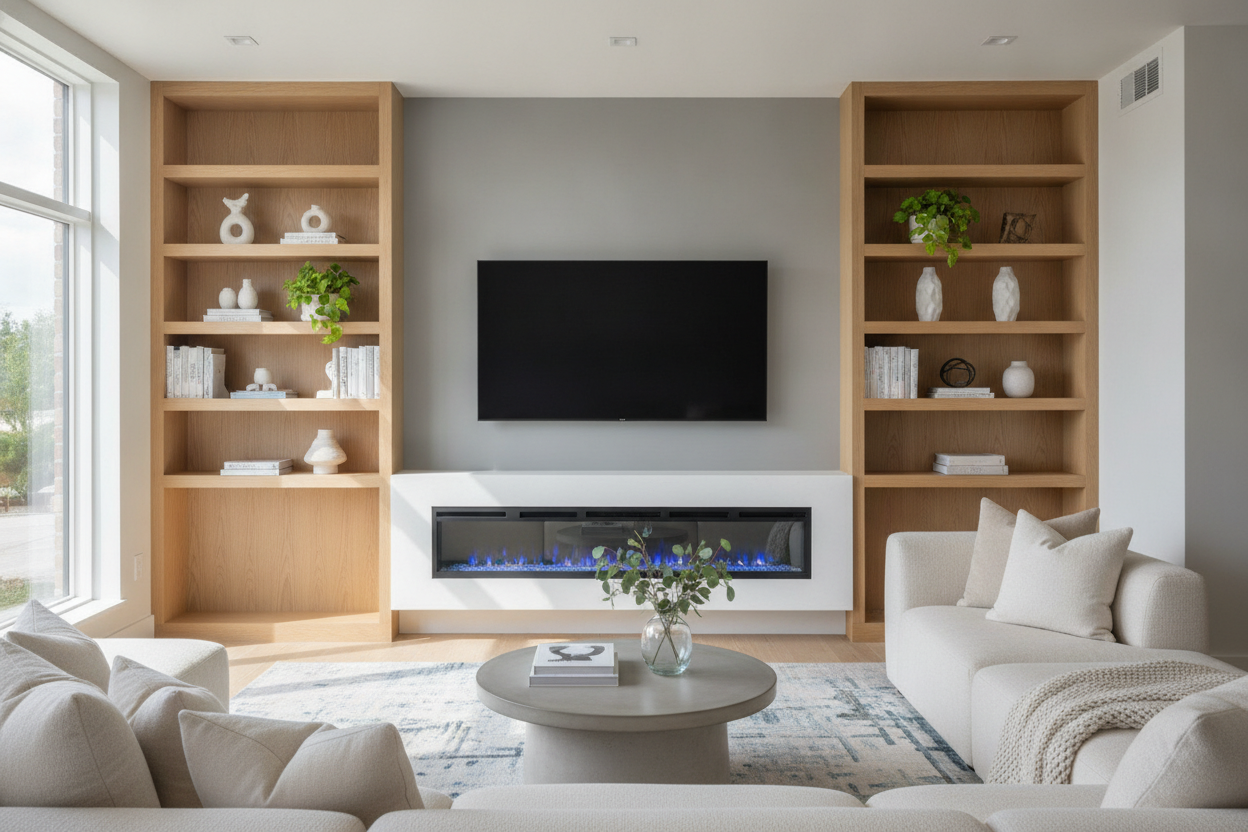
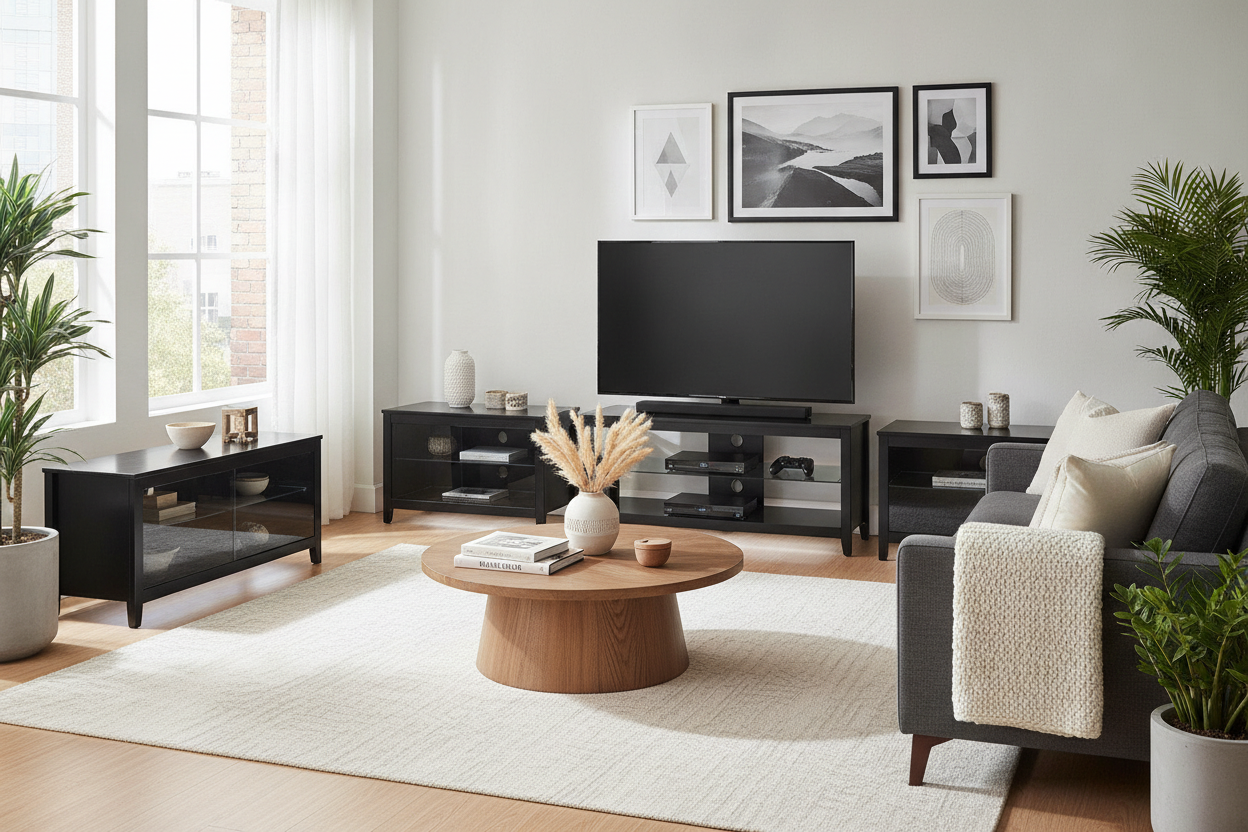

Dejar un comentario
Este sitio está protegido por hCaptcha y se aplican la Política de privacidad de hCaptcha y los Términos del servicio.