










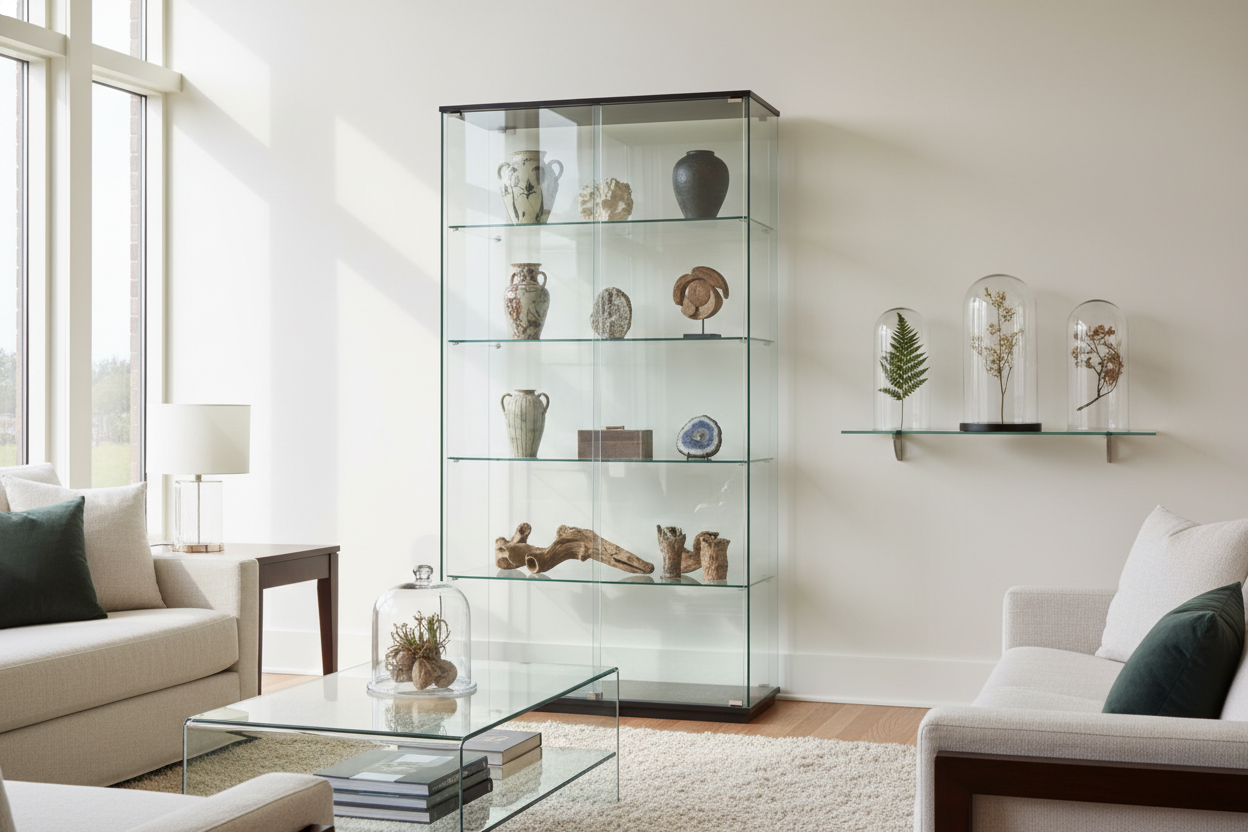
I once spent four hours meticulously arranging my vintage camera collection on a new glass shelf, only to realize my living room suddenly looked like a high-end pawn shop. It is a common heartbreak. You buy glass for display because you want your favorite things to feel light and airy, but instead, the whole setup feels cold, rigid, and strangely commercial.
As a former visual merchandiser, I have seen this go wrong a thousand times. The problem isn't your stuff; it is the way glass strips away the 'home' feeling and replaces it with 'inventory.' Glass is a brutalist material when it is naked. It shows every fingerprint, every dust bunny, and every awkward gap between your objects.
If you are struggling to make your transparent shelving look lived-in rather than just 'for sale,' you need to break the retail spell. Here is how to use glass surfaces without turning your home into a sterile boutique.
Quick Takeaways
- Never line items up in a straight row; it creates a 'shelf edge' retail vibe.
- Mix in organic materials like wood or linen to kill the 'cold' glass feeling.
- Use 'rule of thirds' grouping to create natural visual breaks.
- Avoid cool-toned LED puck lights which make glass look like a jewelry kiosk.
The 'Retail Trap' (And Why We All Fall For It)
The biggest mistake people make with glass is the 'Grid of Doom.' In a store, products are lined up in straight, predictable rows so customers can scan prices quickly. When you do this at home, your brain subconsciously labels your possessions as 'merchandise.' It feels temporary, not personal.
Because glass is transparent, it doesn't provide a backstop for your eyes. Everything floats. When you line things up in a rigid grid on a floating surface, the lack of a solid frame makes the arrangement look incredibly sparse and accidental. You aren't just displaying an object; you are displaying the air around it, and if that air isn't managed, it looks like a clearance aisle.
Rule 1: Anchor the Clear with the Cozy
Glass is cold. To make it work in a living room, you have to fight that temperature with texture. I never put glass next to metal without adding something 'soft' in between. If you have a glass shelf, don't just put a glass vase on it. Put a stack of linen-bound books or a chunky ceramic bowl there first.
If you are still in the shopping phase, I always suggest looking for pieces that do the heavy lifting for you. You can explore bookcases and display cabinets that use heavy oak or walnut frames to 'hug' the glass. That wood provides a visual anchor that keeps the transparent shelves from feeling like they are drifting away into the room.
Rule 2: Stop Overthinking the Negative Space
In a wooden cabinet, negative space (the empty air) feels like a design choice. On a glass shelf, negative space can just look like you forgot to buy enough stuff. The trick is to group items in 'islands' rather than spreading them out evenly. Three items of varying heights tucked into a corner look much better than three items spaced exactly six inches apart across the whole shelf.
The physical structure of your furniture matters here, too. When choosing the perfect glass door cabinet, look at the thickness of the shelving and the width of the stiles. Thicker glass (at least 8mm or 10mm) catches the light on the edges and creates its own 'frame,' which means you don't need to crowd the shelf to make it look full.
Rule 3: Ditch the Harsh Spotlight
Retail stores love 5000K cool-white LEDs because they make diamonds sparkle and plastic look clean. In your home, those same lights will make your glass shelves look like a pharmacy display. Glass reflects light differently than wood; it bounces it around, often creating harsh glares that hide the very objects you are trying to show off.
Skip the built-in puck lights if they are too blue. Instead, rely on warm, ambient room lighting—think 2700K lamps placed at eye level. If you must have internal cabinet lighting, use dimmable warm strips hidden behind the front frame so the light washes over the objects rather than blinding you with reflections off the glass surface.
When You Should Actually Cheat (With Frosted Options)
Let's be real: not everything we own is 'display worthy.' I have a collection of mismatched board games and half-empty candle jars that I refuse to throw away but don't want to stare at. This is where 100% transparency fails you. In high-traffic corners or smaller dining rooms, 'all-glass' can quickly turn into 'all-clutter.'
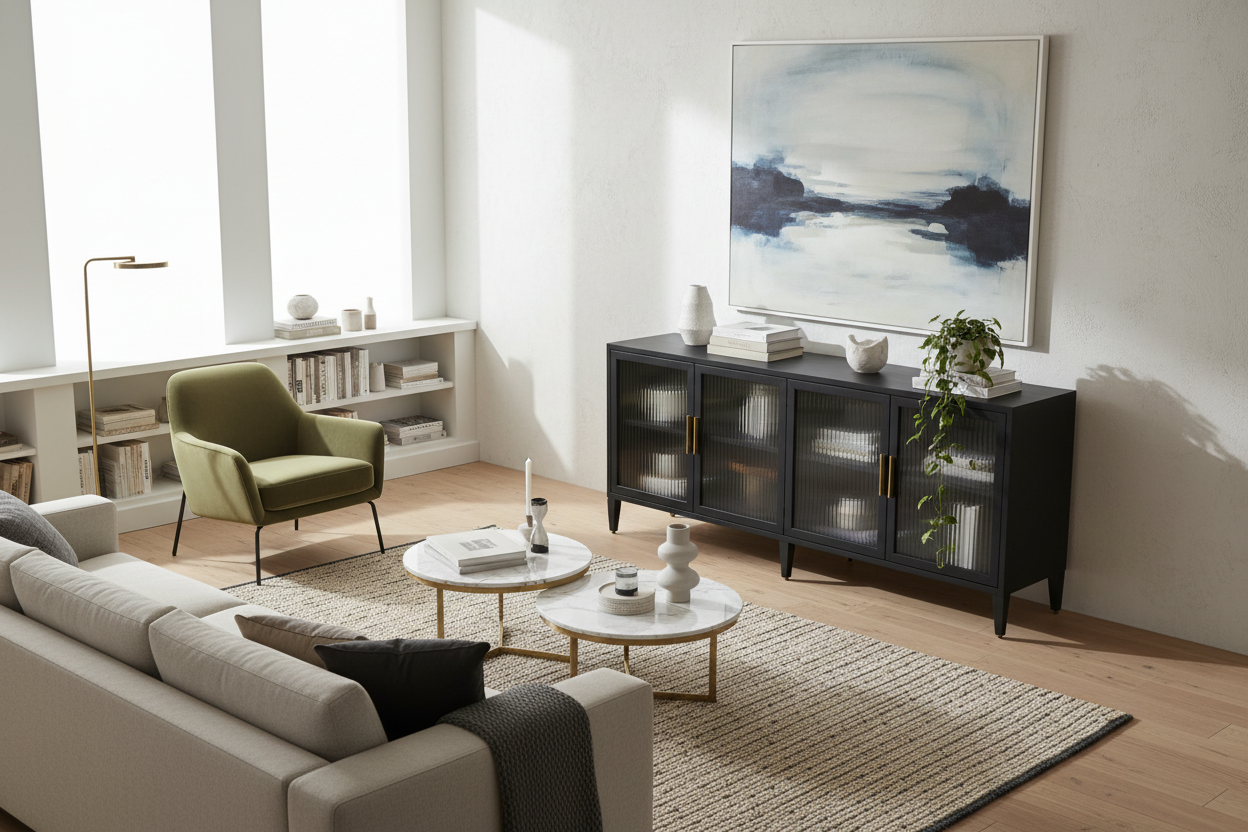
Sometimes the best move is to go semi-opaque. A piece like an elegant corner china cabinet with frosted or fluted glass is a total sanity-saver. You get the lightness and depth of glass, but it acts like a soft-focus filter for the chaos inside. It’s the ultimate design 'cheat' for people who want the look of glass without the pressure of perfect curation.
My Personal Lesson in Glass Maintenance
I once bought a gorgeous, all-glass Italian coffee table. It was a minimalist dream—until I actually lived with it. I learned the hard way that glass doesn't just display your decor; it displays your life. Every coffee ring, every bit of cat hair, and every smudge from a pizza box was magnified. I ended up keeping a microfiber cloth in the couch cushions. My advice? If you aren't prepared to Windex your furniture twice a week, stick to glass-front cabinets where the dust can't get in as easily. Your sanity will thank you.
Frequently Asked Questions
How do I stop my glass shelves from looking cluttered?
Use the '70/30' rule. Leave about 30% of the shelf empty, but concentrate the remaining 70% in tight, intentional groups. Use trays or books to create 'sub-levels' so everything isn't sitting on the same horizontal plane.
Is tempered glass worth the extra money?
Absolutely. If a standard glass shelf breaks, it shards into dangerous daggers. Tempered glass breaks into small, relatively harmless pebbles. For anything holding weight—like books or heavy ceramics—tempered is non-negotiable.
What is the best way to clean glass for display?
Skip the paper towels; they leave lint. Use a dedicated glass microfiber cloth and a 50/50 mix of water and white vinegar. It’s cheaper than name-brand cleaners and doesn't leave that weird blue film behind.

Dejar un comentario
Este sitio está protegido por hCaptcha y se aplican la Política de privacidad de hCaptcha y los Términos del servicio.