










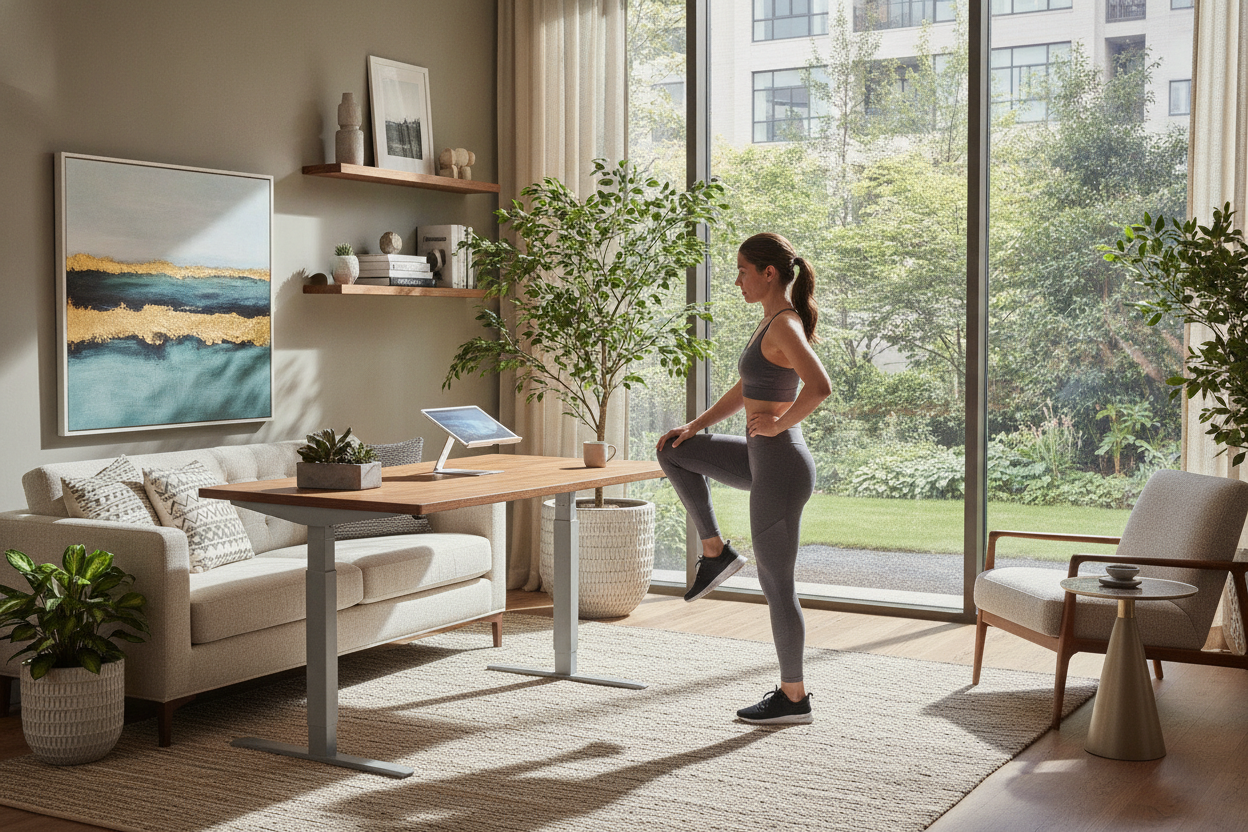
Core Engagement Fundamentals at a Height-Adjustable Desk
Integrating core activation into a daily office routine offers an active alternative to static standing. When working at an adjustable standing desk with electric lift, dynamic movement relies on establishing a stable base. Proper posture begins from the ground up: feet positioned roughly shoulder-width apart, knees soft rather than locked, and pelvis balanced in a neutral alignment.
Gentle abdominal bracing involves lightly drawing the navel inward toward the spine without holding your breath or tensing the shoulders. This subtle isometric engagement provides trunk support while allowing you to continue typing, reading, or speaking on calls. By maintaining an upright posture and relaxed upper body, standing desk exercises for abs can seamlessly fit into focused work blocks without causing fatigue or distraction.
Practical Standing Desk Ab Exercises and Movement Routines
Active movement sequences should feel controlled, discreet, and easy to perform in business or casual work attire. Performing standing desk ab exercises in brief intervals helps counteract the stiffness that often comes with prolonged stationary postures.
Low-Impact Lower Ab and Hip Flexor Activations
Lower abdominal work at a standing workstation centers on pelvic stability and controlled leg elevation:
- Standing March: Stand tall with light fingertip contact on your desk surface for balance. Slowly lift one knee toward hip height, engaging the lower abdominals, pause briefly, and lower down with control before alternating legs.
- Heel-to-Toe Weight Transfers: Shift body weight slowly from heels to balls of the feet while keeping the midsection firm, promoting ankle mobility and lower-body stability.
- Posterior Pelvic Tilts: With soft knees, tuck the tailbone slightly forward to engage the lower abs, hold for a few seconds, and return to neutral alignment.
Oblique and Rotational Movement Sequences
Rotational and lateral movements mobilize the spine while targeting the side core muscles:
- Standing Side Bends: Stand with feet grounded, place one hand on the desk or hip, and gently slide the opposite hand down the outer thigh to create a controlled side bend. Return upright using the lateral abdominals.
- Gentle Standing Torso Twists: Keeping the hips facing forward, slowly rotate the shoulders and torso to one side, pause, and return to center. Focus on rotating from the rib cage rather than twisting the lower back.
- Cross-Body Knee Lifts: Raise the right knee toward the left hip while keeping the torso upright, engaging the oblique wall with each lift before switching sides.
Isometric Desk-Supported Core Holds
Isometric exercises allow you to build core engagement without rapid movement, making them ideal during virtual presentations or focused reading:
- Standing Abdominal Draw-Ins: Inhale deeply through the nose, exhale fully through the mouth, and draw the abdominal wall inward, holding tension for five to ten seconds while breathing rhythmically.
- Incline Desk Plank: Place both palms flat on the front edge of a sturdy desktop, step feet back into a gentle incline plank, and hold a straight line from crown to heels while bracing the midsection.
Workstation Spatial Clearance and Ergonomic Positioning
Executing ab exercises standing at desk configurations requires careful attention to the surrounding floor plan. Proper spatial planning ensures movement without knocking over equipment or tripping over accessories. When designing a standing desk setup, prioritize a clear movement zone around your workstation.
Maintain an unobstructed perimeter of at least two to three feet behind and beside your standing position. Keep cords organized along the desk legs or within wire trays so your feet do not catch during balance shifts or marching exercises. If you use an anti-fatigue mat, select one with beveled edges to prevent catching shoe soles, or slide the mat aside when performing exercises that require firm, flat footing.
Desk Stability and Frame Support for Active Workdays
Performing physical routines adjacent to a workstation requires a solid, wobble-free foundation. A robust height-adjustable standing desk featuring heavy-gauge steel leg columns, wide base feet, and dual-motor lifting mechanisms ensures surface rigidity. Lightweight or single-post frames can vibrate or tilt when supporting body weight during inclined planks or hand-supported stretches.
Ensure your desktop material is durable and evenly supported across its frame. Placing heavier items, such as multi-monitor arms or desktop towers, toward the rear center of the surface helps maintain optimal balance, keeping the workstation secure during dynamic daytime movement routines.
Workflow Integration and Habit Scheduling
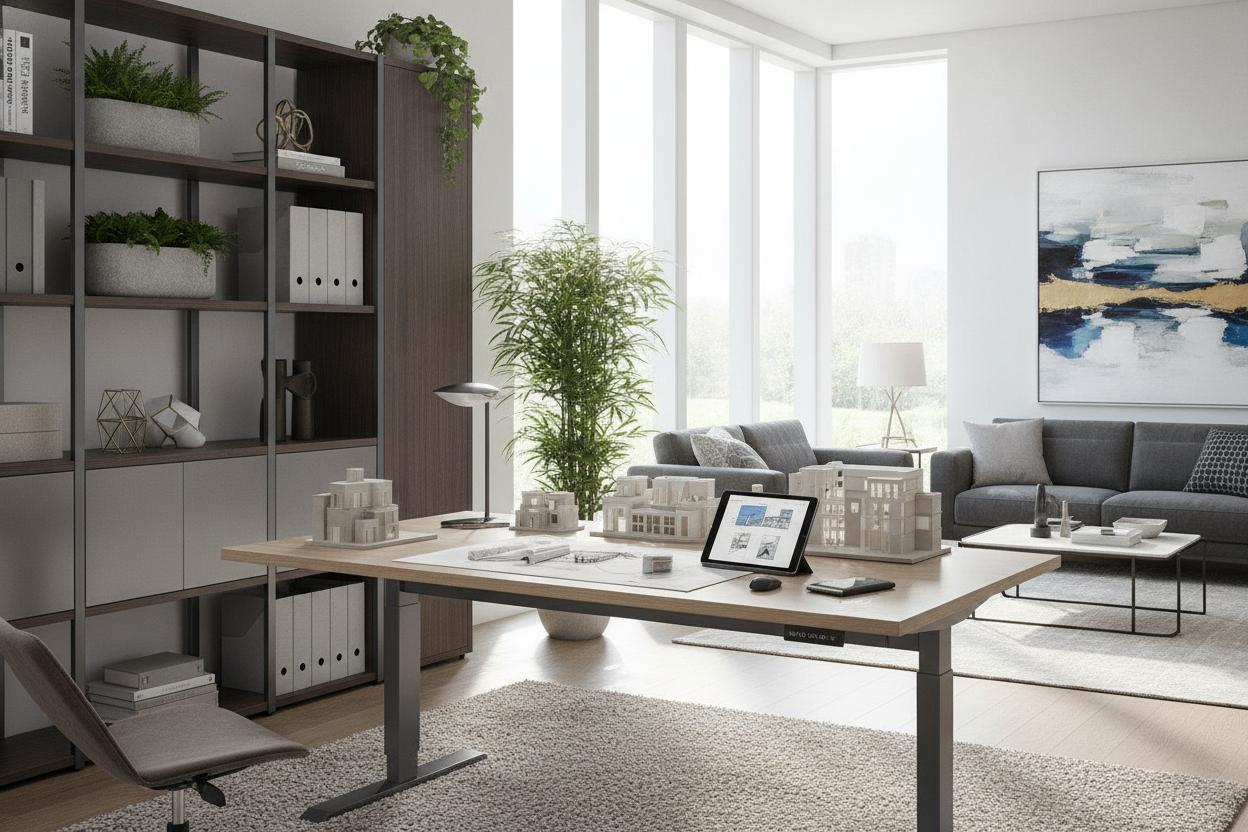
Consistency is key when incorporating physical activity into a busy desk routine. Exploring varied standing desk layout ideas can help you create an environment where active micro-breaks feel natural rather than disruptive.
Consider pairing specific core exercises with recurring work habits:
- Perform isometric draw-ins during routine webinars or audio calls.
- Complete a quick set of standing marches when switching between task blocks.
- Engage in side bends and torso twists after raising your desk surface to standing height.
By treating short movement intervals as natural components of your daily ergonomic routine, you maintain an active work environment that supports sustained engagement and everyday workstation comfort.

Dejar un comentario
Este sitio está protegido por hCaptcha y se aplican la Política de privacidad de hCaptcha y los Términos del servicio.