










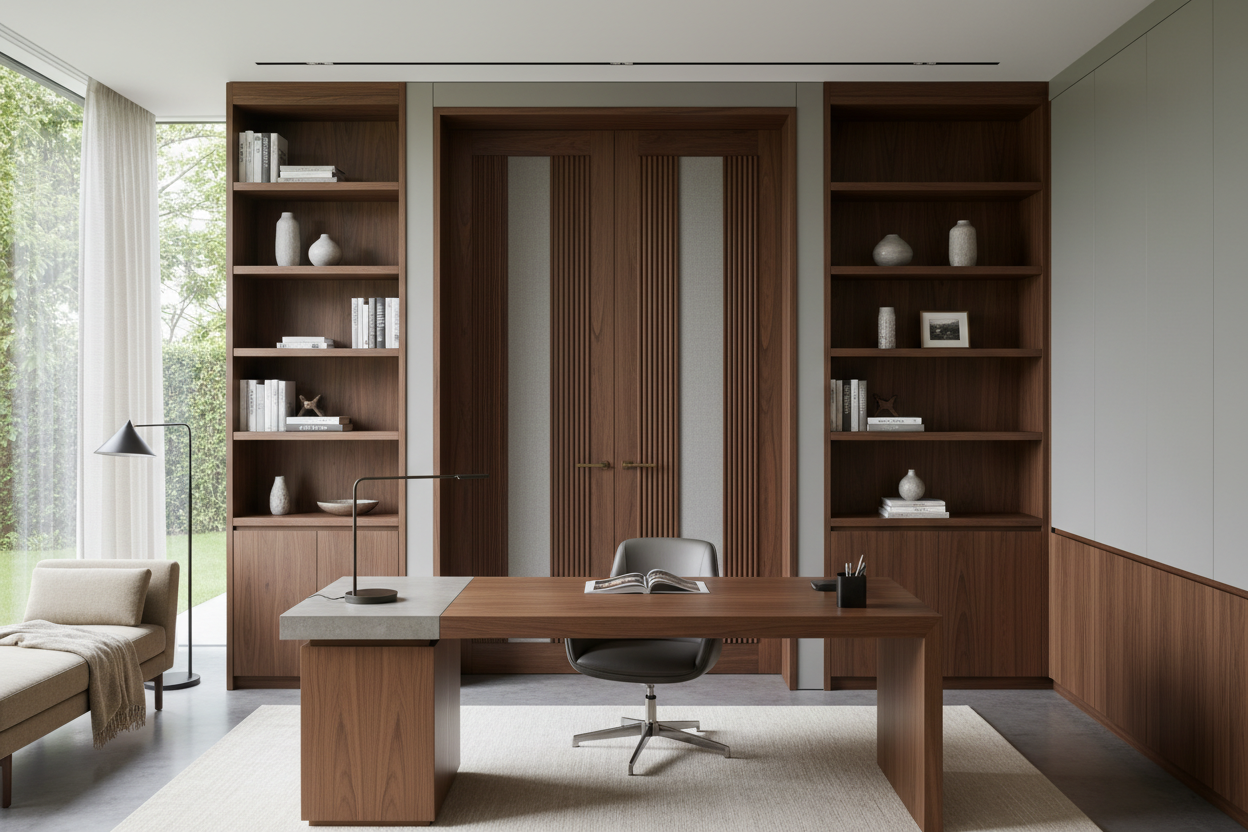
The open-concept floor plan was the darling of interior architecture for decades, but the rise of remote work has exposed its one glaring fatal flaw: the lack of acoustic separation. If you are trying to conduct a Zoom call while the dishwasher runs or the dog barks, you already know the struggle. This is where custom home office doors transition from a luxury design element to a functional necessity.
Standard hollow-core slabs from a big-box store often fail to provide the sound dampening or the visual gravity required for a dedicated workspace. As a designer, I see this element as the critical threshold between your domestic life and your professional focus. Let’s explore how to specify the right joinery to elevate both your productivity and your home's value.
Key Features to Look For
Before commissioning a millworker, consider these primary factors to ensure your investment performs as well as it looks:
- STC Rating (Sound Transmission Class): Look for solid core constructions with an STC of 30 or higher for genuine noise reduction.
- Operation Mechanism: Assess floor space; choose pocket or barn tracks for tight quarters, or heavy-duty ball-bearing hinges for traditional swings.
- Glazing Options: Decide if you need light transmission (fluted or reeded glass) or total visual privacy (solid wood).
- Hardware Integration: Ensure the rail or hinge system is rated for the specific weight of the custom slab.
Selecting Materials for Acoustics and Aesthetics
When designing custom office doors, the material selection dictates the longevity and the acoustic performance of the entryway. In luxury interiors, we move away from composite fillers and look toward density.
Solid Wood vs. Metal and Glass
Solid wood—whether White Oak, Walnut, or Mahogany—provides excellent natural sound dampening due to its mass. It adds architectural weight and warmth, grounding the room. However, if your office lacks natural light, a solid door can make the space feel cavernous. In these instances, steel-framed doors with glass inserts are the superior choice. They offer a modern, industrial silhouette while allowing light to share the space. To maintain privacy, I often recommend acid-etched or reeded glass, which obscures the view of your messy desk from the hallway without blocking the sun.
Space Planning and Mechanisms
The operation of the door is just as important as the finish. In many post-war homes or urban apartments, the swing radius of a standard door eats up valuable floor space that could be used for a credenza or accent chair.
The Sliding vs. Swinging Debate
For smaller footprints, sliding systems are invaluable. However, a common misconception is that barn doors are good for sound. They aren't. Because they float off the wall, sound leaks around the edges. If acoustic isolation is your priority, a traditional swinging door with a drop-seal threshold is the only way to truly block noise. If space saving is the priority, a pocket door is the elegant solution, though it requires opening up the drywall to install the cassette.
Visual Balance and Flow
Your office door is a double-sided design element. It must harmonize with the office interior while simultaneously complementing the hallway or living area it faces. We call this "visual continuity." You don't want a door that looks like a spaceship entrance in a Colonial hallway. Custom joinery allows us to veneer the exterior side to match the home's existing trim, while painting or staining the interior side to match the moodier, focused palette of the office.
Lessons from My Own Projects
I want to share a specific mistake from a project I managed about four years ago to save you the headache. We designed these stunning, 8-foot solid Walnut double doors for a client's study. They were incredibly heavy, roughly 130 pounds each. We focused so much on the wood grain and the stain that we standard-specified the hinges.
Three months later, the client called. The doors were dragging on their new hardwood floors. The standard hinges had slowly yielded under the weight, causing the doors to sag just a few millimeters—enough to ruin the floor finish. We had to re-hang them using heavy-duty, ball-bearing architectural hinges. The lesson? When buying custom home office doors, never value the wood more than the hardware holding it up. Always over-spec your hinges.
Conclusion
Investing in bespoke doors is about reclaiming your focus. It creates a physical and psychological boundary that signals to your brain—and your family—that work is in session. By prioritizing core density, proper hardware, and sympathetic aesthetics, you create a workspace that feels permanent and professional.
Frequently Asked Questions
Do glass doors compromise sound privacy?
Standard single-pane glass does little for sound. However, if you use laminated glass or double-glazed units within your custom frame, you can achieve sound reduction comparable to a solid wood door.
How long does it take to fabricate custom office doors?
Unlike stock items, custom joinery typically requires a lead time of 8 to 12 weeks, depending on the wood species availability and the complexity of the millwork.
Can I retrofit a heavy custom door onto an existing frame?
Rarely. Solid custom doors are significantly heavier than standard hollow doors. You will almost always need to reinforce the framing studs and replace the jambs to support the increased load without warping.

Dejar un comentario
Este sitio está protegido por hCaptcha y se aplican la Política de privacidad de hCaptcha y los Términos del servicio.