










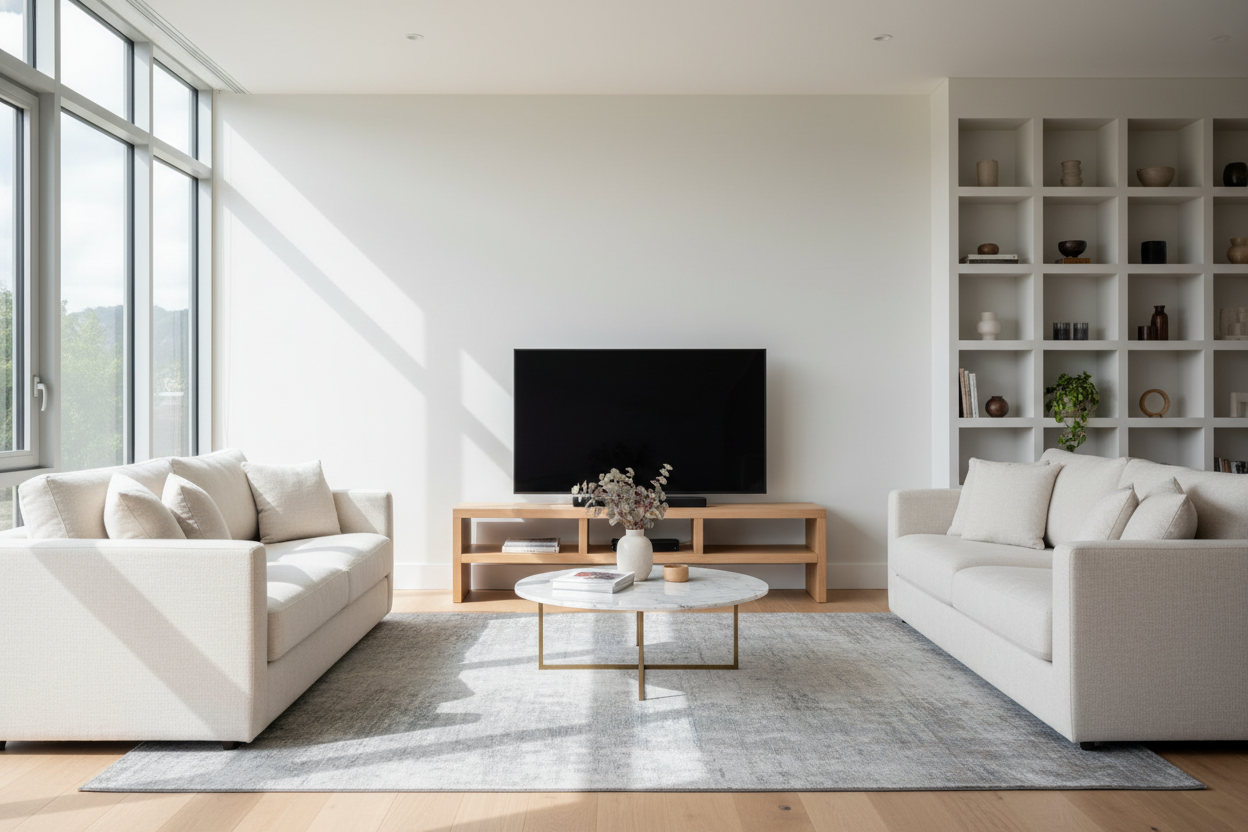
I spent three years staring at a massive, espresso-stained media tower that I bought in a panic during a move. It had six glass shelves, four drawers I never opened, and enough 'architectural detail' to make a Victorian cathedral look modest. It made my 12x15 living room feel like a storage unit rather than a home. Switching to simple tv stands wasn't just a design choice; it was a mental health intervention for my apartment. Staring at 47 browser tabs of consoles at 1 AM is a special kind of hell, but I finally realized that the more 'features' a stand has, the more it usually sucks to live with.
Quick Takeaways
- Bulky consoles create visual noise that makes small rooms feel smaller.
- Minimalism requires closed storage to hide ugly cables and tech.
- Low-profile designs (18-22 inches high) keep the TV at the correct eye level.
- Solid wood finishes prevent the 'doctor's office' sterile vibe.
The Heavy Furniture Trap: How Bulky Consoles Ruin Room Flow
Most of us treat the TV area like a shrine. We buy these massive, multi-tiered units that promise 'storage' but actually just collect dust and old HDMI cables. When a piece of furniture is that heavy, it dictates everything. You can't move the sofa because the console only fits on one wall. It creates a 'black hole' effect where your eye is immediately drawn to a pile of electronics rather than the room itself. I've seen it a hundred times: a beautiful room ruined by a 200-pound beast of particle board that makes the ceiling feel three feet lower.
The suffocating feeling of a crowded room often comes down to 'visual weight.' If your TV stand has thick pillars, glass doors, and four different levels of shelving, it’s screaming for attention. A simpler approach allows the floor to feel open and the walls to feel wide. You want your furniture to support your life, not dominate your floor plan.
What Actually Counts as a Minimalist Setup?
Minimalism isn't just an empty room; it's about intentionality. When you're hunting for sleek, straightforward media consoles, look for pieces that prioritize horizontal lines over vertical height. You want doors, not cubbies. Open shelving is a lie told by people who don't have dust or messy remotes. Effective simple television stand designs focus on hiding the mess while keeping the profile slim—ideally no deeper than 16 inches so it doesn't eat into your walking path.
Negative space is your best friend here. A stand with legs—rather than a solid base that goes all the way to the floor—allows you to see the floor underneath, which trick the brain into thinking the room is larger. Avoid decorative molding or ornate hardware. The goal is a piece that almost disappears when the TV is off.
Why 'Less is More' Instantly Looks More Expensive
There is a psychological relief in visual breathing room. A low-profile, simple tv stand design allows the wall behind it to exist. When you stop overthinking your media wall and ditch the complicated gallery wall surrounding the screen, the room feels twice as large. It’s a trick that makes your basic sofa or thrifted art look like a deliberate choice rather than a compromise because they aren't fighting a giant entertainment center for attention.
When you reduce the number of things the eye has to process, the things that remain look more important. This is why high-end galleries have white walls and minimal furniture. By choosing a stand with clean lines, you're telling your guests (and yourself) that you aren't hiding clutter—you're curating a space.
The Warmth Factor: Keeping It Cozy, Not Cold
The biggest mistake people make with minimalism is going full 'surgical suite.' If you pick a high-gloss white plastic stand, it’s going to feel cold and uninviting. This is where tv stand designs wooden simple finishes come in. A solid walnut or white oak unit brings organic texture to a space filled with glass screens and plastic remotes. The wood grain acts as a natural softener for all that tech.
I always recommend avoiding 'espresso' or 'grey wash' finishes. They tend to look dated quickly and hide the natural beauty of the wood. Instead, look for clear stains that highlight the grain. A piece made from kiln-dried hardwood might cost more than the flimsy 1.5 lb/ft³ density fiberboard stuff, but it won't sag in the middle after six months of holding up a 65-inch screen.
My 3 Rules for Styling Without Adding Clutter
Styling a minimalist piece is actually harder than styling a cluttered one because every object counts. First, cord management is non-negotiable. If I see a 'waterfall' of black wires, the vibe is dead. Use velcro ties and internal routing holes to keep things clean. Second, apply the rule of thirds. Instead of centering the TV, maybe nudge it slightly and put a single, substantial ceramic vase on the other side. Simple tv stands designs work best when they aren't treated like a trophy shelf.
Third, keep the top clear of 'knick-knacks.' If you want to style it for a high-end look, use odd numbers and varying heights. A stack of two oversized coffee table books and one piece of pottery is plenty. Give each object space to breathe. Your TV stand should be a stage for your screen, not a catch-all for your mail and keys.
Personal Experience: The Sagging Smile
I once bought a $150 'modern' unit from a big-box store. Within six months, the 55-inch TV caused the top shelf to bow like a sad smile. It was made of cheap pressboard that couldn't handle the weight, and the 'veneer' started peeling the first time I used a damp cloth to dust it. I eventually upgraded to a solid wood frame with mitered joints. It's been through three moves and still looks brand new. Learn from my mistake: buy for the long haul, even if it means saving up for an extra month.
Frequently Asked Questions
How tall should a TV stand be?
Your stand should be about 18 to 22 inches high. The goal is to have the middle of your TV screen at eye level when you are sitting on your sofa. If you have to look 'up,' it's too high.
Can I put a large TV on a small stand?
No. The TV should never overhang the sides of the stand. Not only is it a tipping hazard, but it looks top-heavy and awkward. Always leave at least 2-3 inches of 'buffer' space on either side of the screen.
What's the best wood for a TV stand?
Walnut and White Oak are the gold standards for durability and grain pattern. If you're on a budget, look for high-grade birch plywood with a real wood veneer rather than particle board with a plastic 'photo' of wood on top.

Dejar un comentario
Este sitio está protegido por hCaptcha y se aplican la Política de privacidad de hCaptcha y los Términos del servicio.