










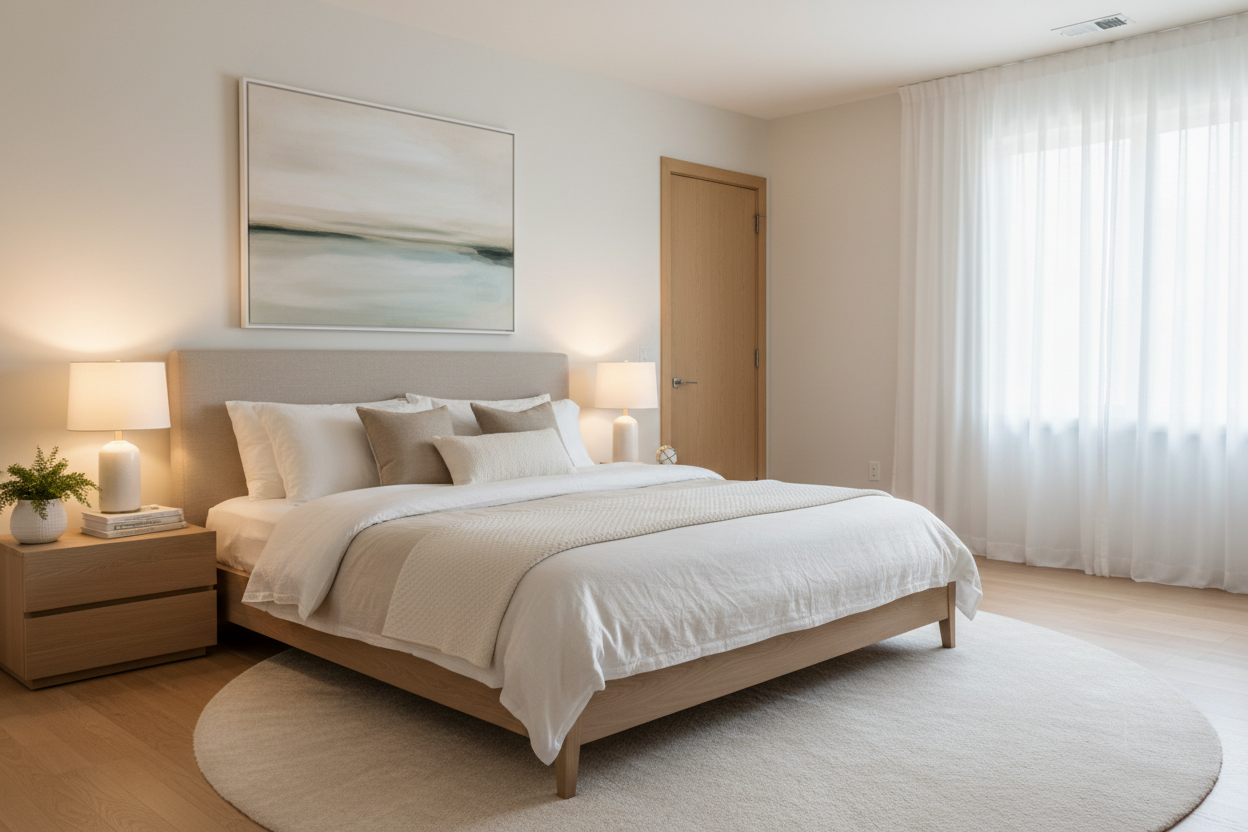
Your bed is where you spend approximately one-third of your life in a completely vulnerable state, making its placement one of the most critical feng shui decisions you'll ever make. While you sleep, your conscious defenses are down and your subconscious mind remains highly receptive to environmental influences. The position of your bed directly affects not only your sleep quality but also your health, relationships, career success, and overall sense of security and wellbeing.
This comprehensive guide focuses specifically on the art and science of bed placement, exploring every nuance of positioning your bed for optimal feng shui. Whether you're setting up a new bedroom or troubleshooting sleep issues in your current space, understanding these principles will help you create the foundation for truly restorative rest and the life success that flows from it.
Understanding Why Bed Placement Matters
Before exploring specific placement rules, it's important to understand the deeper reasons why bed position has such profound effects on your life.
Vulnerability During Sleep
When you sleep, you enter a state of profound vulnerability. Your conscious awareness dims, your physical defenses relax, and your body engages in critical restoration processes. During these hours, your subconscious mind remains active, constantly monitoring your environment for potential threats even while you're unconscious.
If your bed is positioned in a way that creates subconscious anxiety—such as having your back to the door or sleeping under oppressive elements—your nervous system never fully relaxes. You may not consciously realize you feel unsafe, but your body knows, and it keeps part of your awareness on guard duty instead of fully surrendering to deep, restorative sleep.
The Commanding Position Principle
The commanding position is feng shui's most fundamental bed placement principle. This concept, rooted in both ancient wisdom and modern psychology, states that you should be able to see the bedroom door from your bed without being directly in line with it. This positioning allows you to see anyone entering while maintaining safe distance from the rushing energy that flows through doorways.
Think of ancient royalty or military commanders—they always positioned themselves where they could see approaching people while maintaining protective distance. This wasn't paranoia; it was practical wisdom about human psychology and spatial awareness. The same principle applies to your bed, even in safe modern homes, because your subconscious mind still operates on these ancient survival patterns.
Energy Flow and Chi Circulation
Chi, the vital life force energy central to feng shui, flows through your bedroom and around your bed throughout the night. When chi can circulate smoothly around your sleeping body, it nourishes and refreshes you. When chi becomes blocked, stagnant, or rushes too aggressively, it disturbs rather than supports your rest.
Bed placement directly determines how chi interacts with your sleeping body. A well-positioned bed allows chi to flow around it in a gentle, meandering pattern that supports deep sleep and restoration. Poor bed placement creates either blocked, stagnant chi or rushing, aggressive chi—both of which undermine sleep quality and overall vitality.
Relationship to Life Success
In feng shui philosophy, your bed connects specifically to your personal wellbeing, intimate relationships, and the energy supporting your life's foundation. How you position and care for your bed directly influences these areas. A bed that supports you well creates a foundation for success in all life areas, while a poorly positioned or neglected bed can contribute to struggles that seem unrelated to sleep.
The Commanding Position: Step-by-Step Placement
Let's explore exactly how to achieve the commanding position for your bed, including the specific considerations that affect optimal placement.
Step 1: Identify Your Bedroom Door
Stand in your bedroom doorway—the main entrance you use to enter from the hallway, not closet doors or bathroom doors. This is the doorway that matters most for commanding position purposes. If your bedroom has multiple entrances, the one from the main living area of your home takes priority.
Step 2: Locate the Commanding Position Zone
The commanding position zone is typically the area diagonally opposite from the door, or along the wall furthest from the entrance. From the doorway, imagine drawing diagonal lines to the far corners of the room—the commanding position lies somewhere along these lines or the far wall between them.
More specifically, the ideal commanding position:
- Places you where you can see the door clearly while lying in bed
- Keeps you out of direct alignment with the door (not in the "coffin position")
- Positions you as far from the door as the room allows
- Gives you a diagonal or angled view of the entrance rather than a head-on view
Step 3: Consider Wall Backing
Within the commanding position zone, identify locations where your headboard can rest against a solid wall. Wall backing provides both literal and symbolic support, creating feelings of security and stability. Never position your bed:
- Floating in the middle of the room without wall backing
- With the headboard under a window
- Against a wall shared with a bathroom (especially near the toilet)
- Against a wall shared with a kitchen
- Against a wall containing major plumbing or electrical panels
Step 4: Test the View
Once you've identified a potential position, lie on your bed in the sleeping position and verify:
- You can see the door clearly without turning your head more than 45 degrees
- You're not directly in line with the door
- The view feels comfortable and secure, not exposed or vulnerable
- You don't feel "on display" to anyone entering
Step 5: Evaluate Practical Considerations
Ensure your commanding position placement also meets practical needs:
- Adequate clearance on at least one side for bed access (preferably both sides)
- Appropriate distance from windows for temperature control
- Access to electrical outlets for lamps and charging
- Clearance for bedroom furniture like nightstands and dressers
- Comfortable relationship to climate control vents
What to Do When the Commanding Position Isn't Possible
Real-world bedrooms often present obstacles that make the true commanding position difficult or impossible to achieve. Here are solutions for common challenges.
Challenge: Windows Occupy the Commanding Position Wall
If large windows occupy the wall where your bed should ideally be placed, you have several options:
Option 1 - Substantial Window Treatments: Install heavy, solid window treatments—plantation shutters, blackout roman shades, or thick curtains—that you close every night before sleeping. These create a symbolic solid wall behind you while you sleep, partially mitigating the window's opening energy.
Option 2 - Headboard as Barrier: Use a very substantial, tall headboard that creates a visual and energetic barrier between you and the window. Upholstered headboards in solid colors or wood headboards at least 4-5 feet tall can provide significant buffering.
Option 3 - Secondary Position: Choose the second-best wall position that provides solid backing, even if it compromises the door view slightly. Wall backing often outweighs perfect door visibility in importance hierarchy.
Option 4 - Mirror Solution: If you must use a windowed wall and none of the above solutions feel adequate, position your bed there but place a mirror where you can see the door's reflection from bed, providing visual awareness even without direct sightlines.
Challenge: Room Layout Forces Your Back to the Door
If architectural realities—room shape, door placement, windows, closets—make it impossible to see the door from any bed position with wall backing:
Mirror Remedy: This is the classic feng shui remedy for impossible commanding positions. Place a mirror on the wall you're facing or on a dresser where it reflects the door, allowing you to see the entrance in the mirror's reflection while lying in bed. The mirror should be positioned and angled specifically so you can see the door clearly, not just randomly placed.
Reflective Surfaces: If a formal mirror feels awkward, use other reflective surfaces—a glass-covered picture frame, a polished metallic decorative object, or even your phone screen strategically positioned—that allows you to glimpse the door's reflection.
Protective Furniture: Place a substantial piece of furniture—a dresser, bookshelf, or decorative screen—between your bed and the door to create symbolic protection, even though it doesn't solve the visibility issue.
Psychological Adjustment: Sometimes acknowledging the limitation and consciously making peace with it helps. Tell yourself clearly: "I understand my bed position isn't ideal, but I've done what I can with this space, and I choose to feel safe here." This conscious choice can help your subconscious relax.
Challenge: Bed Must Be in Direct Line with the Door
The "coffin position"—bed directly aligned with the door so chi rushes straight at you—should be avoided whenever possible. If unavoidable:
Foot-of-Bed Barrier: Place something substantial at the foot of your bed to deflect and slow the rushing chi. This might be a footboard (if your bed doesn't have one), a trunk or bench, or even a large plant.
Hang a Crystal: Suspend a faceted crystal ball in the pathway between the door and bed to disperse and scatter the rushing energy before it reaches you.
Screen or Curtain: If space allows, position a decorative screen or hang a curtain that visually and energetically separates the door area from the sleeping area, breaking the direct energy line.
Challenge: Small Bedroom with Limited Options
In very small bedrooms where you can barely fit the bed:
Prioritize Wall Backing Over Door View: If you must choose, solid wall backing usually takes priority over perfect door visibility. A bed against a solid wall with your back to the door is better than a bed facing the door but floating without backing or under a window.
Use Maximum Available Space Efficiently: Even in tiny rooms, pulling the bed just a few inches from side walls can make significant energetic difference by allowing some chi circulation around all sides.
Keep It Minimal: In small spaces, less furniture creates better chi flow. Choose essential pieces only, and keep them appropriately scaled to avoid overwhelming the limited space.
Bed Placement Relative to Bedroom Features
Beyond the commanding position and wall backing, your bed's relationship to other bedroom features significantly affects sleep quality and feng shui.
Bed and Window Relationships
Windows behind the bed (worst case): This creates energetic vulnerability—the opening behind you allows chi to escape and creates subconscious insecurity. Remedies discussed above apply here.
Windows beside the bed: Side windows are generally acceptable and can provide pleasant natural light and fresh air. However:
- Maintain at least 12-18 inches between the bed and window frame if possible
- Ensure windows seal properly without drafts that disturb sleep
- Use window treatments to control early morning light
- Position the bed so prevailing winds don't blow directly on sleeping occupants
Windows facing the foot of bed: This arrangement works well, providing natural light and views without compromising security or wall backing.
Bed and Door Relationships
Distance from door: Position your bed as far from the bedroom door as space allows. Greater distance from the entrance provides:
- More buffer zone for entering chi to disperse and calm
- Greater sense of privacy and retreat
- Less exposure to hallway noise and light
- Stronger sense of occupying a sanctuary rather than sitting in a waiting room
Aim for at least 6-8 feet between your bed and the door if your room allows this distance.
Bed aligned with multiple doors: If your bedroom has multiple doorways—main entrance, bathroom door, closet door—and your bed aligns with more than one, prioritize positioning for the main entrance visibility. Keep secondary doors closed when sleeping to simplify energy flow.
Bed and Ceiling Features
Exposed beams: Never position your bed directly under exposed structural beams. Beams create "cutting chi" that presses down on sleeping occupants, potentially causing health issues in body parts aligned with the beam. If you cannot avoid sleeping under a beam:
- Hang two bamboo flutes from the beam at 45-degree angles
- Paint the beam the same color as the ceiling to minimize visual impact
- Drape fabric to create a canopy effect that buffers the beam's energy
- Move the bed even slightly so you're not centered under the beam
Slanted ceilings: Avoid positioning your bed under the lowest part of slanted or cathedral ceilings. The descending ceiling creates oppressive energy. Position the bed under the highest ceiling area available.
Ceiling fans: Do not sleep directly under ceiling fans. The constant circular motion creates unstable energy, the blades symbolically "cut" the space beneath them, and the downward energy flow can feel oppressive. Position your bed away from directly under ceiling fans, or if impossible, avoid running the fan while sleeping.
Heavy light fixtures and chandeliers: Avoid sleeping under heavy hanging fixtures that could theoretically fall. This creates subconscious anxiety even if the fixture is perfectly secure. Position the bed so heavy overhead objects hang over the foot area or beside rather than directly over your head and body.
Bed and Bathroom Relationships
Shared walls with bathrooms: Bathrooms contain draining water element that can undermine sleep and vitality. If possible, avoid positioning your headboard on a wall shared with a bathroom. If unavoidable:
- Ensure your headboard doesn't share the wall directly behind a toilet
- Place your headboard away from shower walls where possible
- Hang a substantial piece of artwork, a mirror, or a decorative tapestry on the bedroom side to create energetic separation
- Use a thick, substantial headboard that provides insulation
En-suite bathrooms visible from bed: If your bedroom has an attached bathroom visible from the bed, keep the bathroom door closed while sleeping. The toilet specifically should never be visible from bed—close the door or, if that's not possible, keep the toilet lid closed.
Bed and Storage Relationships
Under-bed storage: This is controversial in feng shui. Some practitioners accept minimal, organized under-bed storage for seasonal bedding or clothing. Others believe any storage under the bed blocks chi circulation and can contribute to health issues or stagnant life circumstances.
If you must use under-bed storage:
- Keep it minimal and organized in containers
- Store only soft, sleep-related items (bedding, linens, extra pillows)
- Never store emotionally charged items (old photos, inherited objects, items from past relationships)
- Avoid storing work materials, exercise equipment, or anything unrelated to rest
- Pull out and air/reorganize under-bed storage regularly
Ideally, raise beds on legs that allow chi to circulate freely underneath with no storage at all.
Closets near the bed: Closet doors near the bed should be kept closed while sleeping. Closets contain stored items with various energetic signatures, and open closet doors create an "opening" that can feel unsettling. Keep closets organized so their energy remains contained and positive even when closed.
Distance and Clearance Requirements
Specific measurements around your bed affect both practical functionality and chi flow.
Clearance on Both Sides
Ideally, leave equal clearance on both sides of your bed—typically 24-36 inches minimum for comfortable access. This symmetry:
- Supports relationship equality and balance
- Allows chi to circulate around both sides
- Provides both partners equal access and personal space
- Maintains visual balance in the room
For singles seeking partnership, creating space on both sides sends an energetic message of openness to relationship. Even if you sleep alone, avoid pushing your bed into a corner or against a wall where only one side is accessible.
Minimum clearances:
- Between bed and side walls: 24 inches minimum, 30-36 inches ideal
- Between bed and foot wall: 36-42 inches minimum for comfortable walking
- Between bed and dressers/furniture: 36-42 inches to allow drawers to open fully
Bed Height Considerations
Bed height affects both chi circulation and practical comfort:
Optimal height: Your mattress top should be approximately 20-26 inches from the floor (about knee height when standing). This allows:
- Chi to circulate freely underneath
- Easy getting in and out of bed
- Comfortable sitting on the bed edge
- Visual balance in the room
Too low: Platform beds or mattresses directly on the floor restrict chi circulation underneath and can make the bed feel heavy and stagnant. Very low beds also make it difficult to get up, particularly as you age.
Too high: Beds requiring a step stool to climb into can feel overwhelming and may be unsafe. Excessively high beds can also make the room feel unbalanced.
Exceptions: If health issues require specific bed heights for accessibility, prioritize function over feng shui ideals. Add elements like bed skirts or decorative boxes underneath to fill the space if beds must be unusually high.
Bed Orientation and Direction
Beyond position within the room, the direction your bed faces—meaning which direction your head points—carries significance in classical feng shui, though this is more complex and personal than basic placement principles.
Cardinal Direction Considerations
Traditional feng shui considers which compass direction your head points while sleeping:
North: Sleeping with your head pointing north is considered beneficial for restful sleep, health recovery, and stability. The magnetic north pole creates a calming influence.
South: Head pointing south can enhance energy, reputation, and success but may be too activating for some people, potentially causing restless sleep.
East: Sleeping with head to the east supports growth, health, ambition, and new beginnings. Good for young people and those in growth phases.
West: Head pointing west supports contentment, relaxation, and satisfaction. Beneficial for older people or those seeking more peaceful energy.
Personal Kua Number Directions
More advanced feng shui uses personal kua numbers (calculated from birth date and gender) to determine auspicious sleeping directions specific to each individual. Couples may have different favorable directions, requiring compromise.
Practical Reality Check
While directional facing has traditional significance, it's less critical than:
- Achieving the commanding position
- Having solid wall backing
- Maintaining good clearance and access
- Avoiding problematic ceiling features
- Creating proper door relationship
If you can incorporate favorable directions while maintaining these fundamentals, excellent. If forced to choose, prioritize the commanding position and wall backing over directional orientation.
Special Bed Placement Scenarios
Certain bedroom situations require special consideration for bed placement.
Master Bedrooms with Sitting Areas
Large master bedrooms with separate sitting areas should clearly distinguish sleeping zone from sitting zone:
- Use an area rug to define the bed zone
- Position seating away from directly facing the bed
- Avoid mirrors in the sitting area that reflect the bed
- Maintain the bed as the room's primary focus even with additional furniture
Bedrooms with Fireplaces
Bedroom fireplaces add fire element that can be too activating:
- Don't position the bed directly in front of an active fireplace
- Keep the bed far enough from the fireplace to avoid temperature extremes
- If the fireplace is decorative only, use the mantel for relationship-supporting decor
- Balance fire energy with water element representations elsewhere in the room
Loft Bedrooms and Mezzanines
Sleeping lofts present unique challenges:
- Ensure adequate ceiling height (at least 7 feet) above the mattress
- Position the bed as far from the loft edge as possible for security
- Use railings or furniture to create a sense of enclosure
- Avoid positioning where you can see down into other rooms while in bed
Attic Bedrooms with Slanted Ceilings
Attic spaces often have challenging ceiling angles:
- Position the bed under the highest ceiling section
- Avoid placing the bed where the ceiling slopes down over your head
- Use paint, fabric, or strategic lighting to visually "raise" low ceilings
- Ensure adequate ventilation and natural light to counter the potentially cave-like feeling
Basement Bedrooms
Below-grade bedrooms need extra attention:
- Position the bed to maximize any available natural light
- Use bright colors and excellent lighting to counter heaviness
- Add living plants to improve air quality and bring vitality
- Ensure proper ventilation and dehumidification
- Choose the wall with the most "grounded" feeling—usually exterior walls
Studio Apartments and One-Room Living
When your bedroom is also your living room:
- Use a room divider, curtain, or bookshelf to create visual separation between bed and living areas
- Position the bed in the most private, furthest corner from the entrance
- Avoid having the bed be the first thing visible when entering
- Use a daybed or Murphy bed that can be "closed" during daytime if possible
- Establish clear "bedroom mode" and "living room mode" rituals
Beds for Children and Teens
Children's beds have unique considerations beyond adult bed placement principles.
Young Children's Beds
For young children:
- Maintain commanding position awareness but prioritize proximity to parents' room
- Use lower beds appropriate to the child's size for safety
- Avoid bunk beds if possible, as upper bunks create oppressive energy for lower sleepers
- Keep the area under the bed clear for chi circulation and easy cleaning
- Avoid positioning where toys or stimulating elements are immediately visible from bed
Teenagers' Beds
Adolescents benefit from:
- Stronger privacy and separation from main household traffic
- Commanding position that supports growing independence
- Space on both sides if room size allows
- Their own input on arrangement (with guidance on feng shui principles)
- Clear boundaries between sleep and study zones
Shared Children's Rooms
When siblings share rooms:
- Give each child equal space and commanding position visibility if possible
- Avoid positioning where one child's bed dominates or has advantages over the other
- Use identical or equally valued beds and bedding to prevent hierarchy
- Maintain some individual space for each child's belongings
- Consider L-shaped or opposite-wall arrangements rather than bunk beds
Beds for Couples: Relationship Feng Shui
Bed placement for couples requires additional consideration to support partnership energy.
Equal Access and Space
Both partners must have equal bed access:
- Equal clearance on both sides (not one partner squeezed against a wall)
- Identical nightstands with equal surface area and storage
- Equal lighting control (lamps on both sides with similar brightness)
- Equal ability to get in and out without climbing over the partner
Inequality in bed access often mirrors relationship power imbalances. Creating physical equality supports emotional equality.
Avoiding the "Guest" Feeling
When one partner's belongings, style preferences, or needs dominate the bedroom, the other partner may feel like a guest rather than equal occupant. This shows up in bed placement when:
- One side has no nightstand or storage
- One partner must climb over the other to access their side
- The bed position primarily serves one person's preferences
- Decor reflects only one person's taste
Both partners should feel the bedroom (and specifically the bed area) belongs equally to them.
Two Singles Don't Make a King
Never push two twin or single beds together to create couple sleeping space. This literally creates a physical separation between partners—a crack running down the middle of the sleeping surface. This arrangement can manifest as emotional separation, communication difficulties, or lack of intimacy.
Use one unified mattress—full, queen, king, or California king depending on space and preference—that symbolizes union rather than separation.
Bed Placement After Breakup
After divorce or separation, rearranging your bed signals a new chapter:
- Move the bed to a different position than it occupied during the relationship
- Remove all items associated with the former partner
- Change bedding completely
- If seeking new relationship, maintain space on both sides
- If embracing single life, arrange for your optimal comfort and preference
Testing and Adjusting Your Bed Placement
Once you've positioned your bed according to feng shui principles, test and refine the placement based on your actual experience.
The One-Week Test
After repositioning your bed, commit to one full week before making further changes. Track:
- Sleep quality and how you feel upon waking
- Dreams—frequency, intensity, emotional tone
- Ease of falling asleep and staying asleep
- Energy levels throughout the day
- Sense of security and comfort in the bedroom
- Any changes in relationship dynamics (for couples)
What Good Placement Feels Like
When bed placement is optimal, you'll notice:
- Feeling immediately comfortable upon entering the bedroom
- Easily settling into sleep without restlessness
- Sleeping more deeply and waking refreshed
- Dreams that are vivid but not disturbing
- A sense of security and safety in bed
- The bedroom feeling like a true sanctuary
- Reduced anxiety or racing thoughts at bedtime
- Relationships feeling more harmonious (for couples)
Signs Placement Needs Adjustment
If you experience these symptoms, your bed placement may need refinement:
- Difficulty falling asleep or frequent waking
- Restless, anxious feeling in bed
- Nightmares or disturbing dreams
- Waking un-refreshed despite adequate sleep hours
- Reluctance to go to bed or avoidance of the bedroom
- Increased relationship tension (for couples)
- Feeling exposed, vulnerable, or "on display"
- Chronic neck, back, or shoulder tension
Making Micro-Adjustments
Sometimes small changes make significant differences:
- Angling the bed slightly rather than perfectly perpendicular to walls
- Moving the bed a few inches further from or closer to the window
- Adjusting the exact distance from the door
- Shifting to center better under or away from ceiling features
- Fine-tuning nightstand or furniture positions that affect the overall flow
Don't be afraid to experiment within feng shui guidelines to find what feels exactly right.
Common Bed Placement Mistakes
These frequently made errors undermine sleep quality and bedroom feng shui:
1. Coffin Position (Feet Pointing Directly at Door) This creates rushing chi aimed at sleepers and subconscious death associations. Always avoid direct alignment.
2. Bed Floating in Room Center Beds without wall backing create insecurity and lack of support, both literally and energetically.
3. Headboard Under Window The opening behind you compromises security and allows chi to escape. Always prioritize solid wall backing.
4. Bed Blocking the Door Beds positioned where they prevent the door from opening fully restrict chi entry and create practical frustration.
5. Bed Squeezed Against Wall on Both Sides This traps chi, creates inequality in relationships, and makes one partner feel trapped or less valued.
6. Bed Under Beam or Heavy Fixture Oppressive overhead elements create subconscious stress and can contribute to health issues over time.
7. Bed Against Bathroom Wall The draining water energy undermines sleep and vitality, particularly if the headboard backs onto a toilet.
8. Mirrors Reflecting the Bed Mirrors bouncing energy back at sleepers create restless, overstimulated environment unsuitable for rest.
9. Bed Too Close to Door Insufficient distance from the entrance keeps you in the path of entering chi and doesn't create adequate sanctuary feeling.
10. Ignoring Commanding Position Entirely Positioning the bed for purely aesthetic or practical reasons without considering visibility of the door and sense of security compromises the most fundamental feng shui principle.
Conclusion
Optimal bed placement is the foundation of bedroom feng shui and, by extension, the foundation for quality sleep that supports everything else in your life. While the commanding position serves as the primary guiding principle—positioning yourself to see the door without being directly aligned with it, backed by a solid wall—numerous other factors refine and perfect your sleeping space.
The bed placement decisions you make create the energetic container for your most vulnerable hours. When positioned well, your bed becomes a true sanctuary that supports deep rest, relationship harmony, and the vitality that flows into all areas of your life. When positioned poorly, even in a beautifully decorated bedroom, your bed can undermine sleep quality, create relationship challenges, and contribute to chronic stress and health issues.
Start with the non-negotiables: achieve the commanding position as closely as possible, secure solid wall backing, maintain adequate clearance on at least one side (preferably both), and avoid problematic overhead features. These fundamentals create strong foundation regardless of your room's specific challenges.
Then refine through attention to distances, heights, relationships to windows and doors, and the numerous small factors that compound into either excellent or problematic placement. Test your chosen position, pay attention to your actual sleep experience, and be willing to make adjustments based on what your body and intuition tell you.
Remember that perfect placement may not be possible given architectural realities, but significant improvement almost always is. Work within your constraints using the remedies and alternatives provided throughout this guide, and accept that 80% compliance with feng shui principles while maintaining practical functionality beats 100% theoretical perfection that's impossible in your actual space.
Your bed is where you regenerate, where your subconscious mind processes the day's experiences, where relationships deepen through vulnerability and intimacy, and where your body repairs and strengthens itself. Giving careful attention to its placement honors the profound importance of this piece of furniture and the transformative rest that happens there.
The hours you spend sleeping constitute roughly a third of your entire life. Optimizing the position where those hours unfold through thoughtful application of feng shui principles is one of the most valuable investments you can make in your health, relationships, and overall quality of life. Your improved sleep, enhanced sense of security, and the subtle but real shift toward greater wellbeing will be the proof that optimal bed placement truly matters.


Dejar un comentario
Este sitio está protegido por hCaptcha y se aplican la Política de privacidad de hCaptcha y los Términos del servicio.