










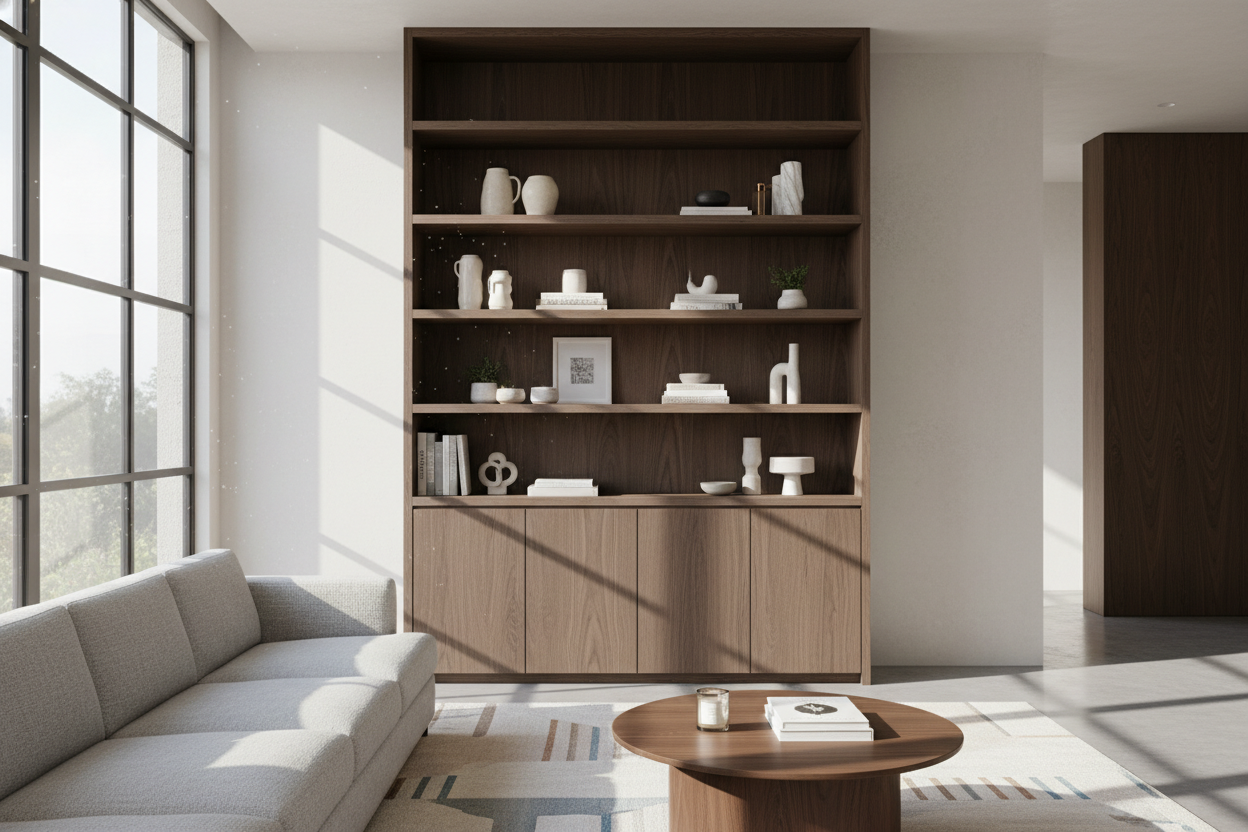
We have all stared at that one long, empty wall in a living or dining room and felt like something was missing. A standard sideboard often leaves too much awkward negative space above it, while a full wall of custom built-ins can easily blow a project budget. Enter the classic cabinet with shelves on top—a hardworking furniture piece that bridges the gap between closed storage and open display.
Whether you call it a hutch, a display cabinet, or a highboard, this silhouette is having a major resurgence in North American homes. It draws the eye upward, making standard eight-foot ceilings feel taller, while providing a practical mix of hidden utility and curated personality. In this guide, I will walk you through how to properly scale, style, and integrate this piece into your home without it feeling heavy or outdated.
Quick Decision Guide
- Measure your vertical clearance: Leave at least 12 to 18 inches between the top of the cabinet and your ceiling so the room does not feel cramped.
- Anchor it immediately: Any furniture piece over 30 inches tall with a heavy upper section must be secured to a wall stud using an anti-tip kit.
- Balance the storage ratio: If you have young kids or pets, opt for a piece where the bottom closed cabinet makes up at least half the total height to hide everyday clutter.
- Consider the backdrop: Pieces with a painted or beadboard back panel add texture, while open-backed frames allow your wall color or wallpaper to peek through.
Mastering Proportion and Placement
The biggest mistake I see homeowners make is ignoring the visual weight of a tall cabinet. Because a cabinet with upper shelving demands attention, it needs breathing room. If you wedge it between a bulky sofa and a chunky media console, the room will instantly feel lopsided.
Finding the Right Wall
Instead of crowding it, let the cabinet act as a focal point. In an open-concept living space, placing it on a transition wall—the space between the living and dining areas—helps define the zones. If you are placing it in a dining room, ensure you have a minimum of 36 inches of clearance between the front of the cabinet and your dining chairs when they are pulled out. Anything less, and your guests will feel trapped against the furniture.
The Art of the 'Shelfie'
Open shelving on top of a solid base is an invitation to display, but it requires restraint. If you pack every inch with books and decor, the piece becomes a looming, heavy block in the room.
Balancing Visual Weight
Start by placing your heaviest items—like large art books, woven baskets, or oversized ceramics—on the lowest open shelves. As you work your way up, the items should become visually lighter. Use negative space deliberately; an empty corner on a shelf is not a missed opportunity, it is a place for the eye to rest. Group items in odd numbers (threes and fives) and vary the heights to create a gentle, rolling visual rhythm across the shelves.
Lessons from My Own Projects
A few years ago, I specified a stunning, solid walnut cabinet with open upper shelves for a client's suburban family room. It looked incredible on installation day. But I learned a hard lesson about practicality: open shelving at the very top of a tall unit is a magnet for dust, and reaching it requires a step stool.
Furthermore, because the shelves were deep (almost 16 inches) and made of dark wood, the upper section absorbed all the ambient light in the room, making the decor look muddy. I ended up retrofitting the piece with hidden LED strip lighting under each shelf. Now, whenever I source a tall display piece, I actively look for built-in lighting or I opt for glass shelving to allow light to pass all the way through to the base. It makes a massive difference in how the piece feels in the room.
Frequently Asked Questions
What is a cabinet with shelves on top called?
Traditionally, it is called a hutch, especially when used in a dining room. In modern furniture terminology, you might also see it labeled as a display cabinet, a highboard, or a bookcase with base storage.
How do I keep the top shelves from looking cluttered?
Stick to a strict color palette of three complementary tones. Mix functional items (like attractive glassware or stacked books) with sculptural objects. If an item does not fit the color scheme or lacks a pleasing shape, hide it in the closed cabinet below.
Can I use this type of cabinet in a small apartment?
Absolutely. In tight spaces, utilizing vertical real estate is essential. Look for a piece with a narrow footprint—around 30 to 36 inches wide—and an open-frame top section. This provides the storage you need without blocking sightlines or overwhelming the room.

Dejar un comentario
Este sitio está protegido por hCaptcha y se aplican la Política de privacidad de hCaptcha y los Términos del servicio.