










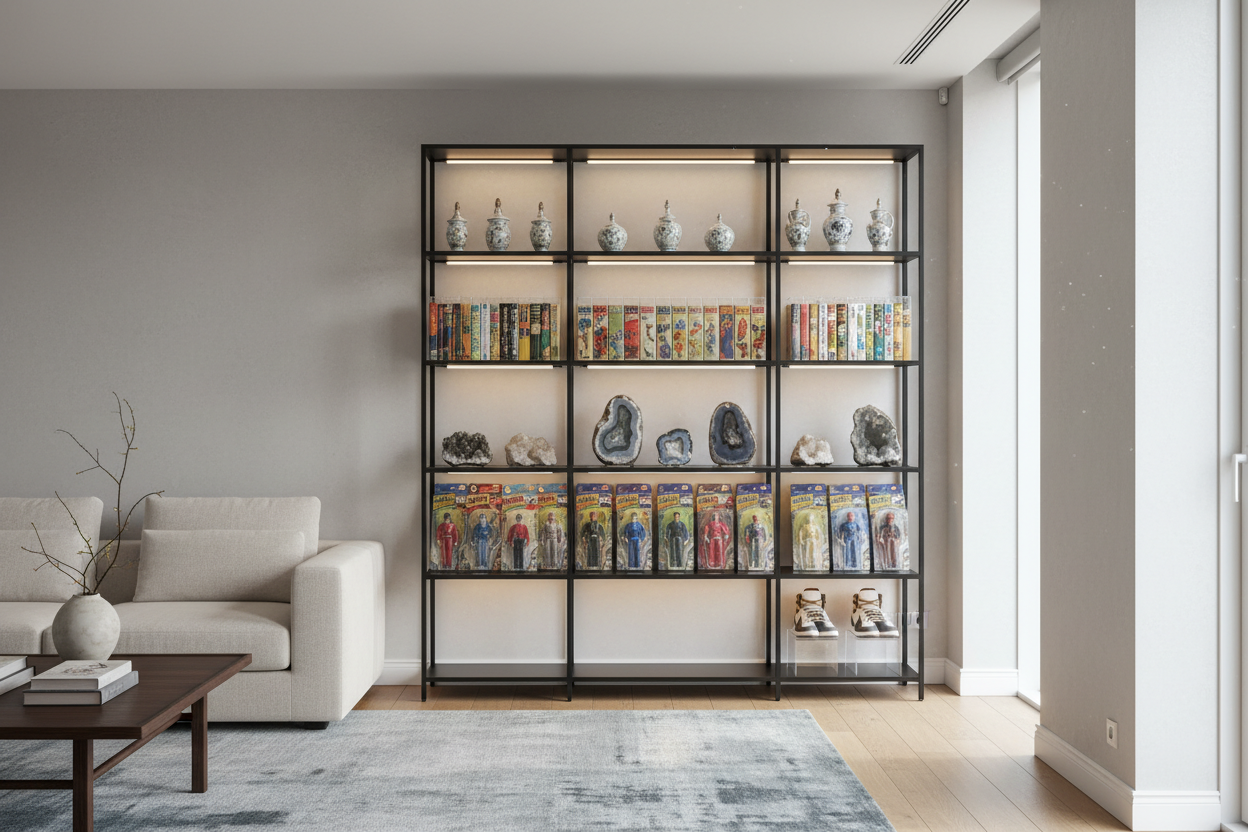
We all have those pieces that mean the world to us—vintage cameras, inherited porcelain, signed baseballs, or rare action figures. But there is a fine line between a curated exhibition and a cluttered shelf. When prized possessions are scattered across random bookcases, they lose their impact and accumulate an endless layer of dust. This is exactly where a well-chosen collectibles display cabinet proves its worth.
Finding the right housing for your treasures goes beyond simply buying a glass box. It requires balancing scale, lighting, and material to ensure the furniture highlights your collection rather than competing with it. By the end of this guide, you will know exactly how to select, size, and style a cabinet that gives your pieces the museum-quality presentation they deserve.
Quick Decision Guide
- Prioritize adjustable shelving: Your collection will evolve. Fixed shelves often lead to dead negative space or cramped displays.
- Check the lighting temperature: Built-in LED lighting should hover around 3000K to 4000K to show true colors without emitting damaging heat.
- Match the cabinet scale to the items: Tiny items get lost in massive, chunky wooden cabinets. Match the visual weight of the furniture to the delicacy of the objects.
- Consider dust sealing: Look for cabinets with felt-lined door edges or overlapping glass panels to minimize weekly maintenance.
Sizing Your Display for North American Homes
One of the most common mistakes I see in residential design is a mismatch in proportion. A standard suburban living room with eight-foot ceilings easily accommodates a tall, 72-inch curio cabinet, but placing that same piece in a narrow condo hallway will make the space feel instantly claustrophobic.
Floor Standing vs. Wall Mounted
If floor space is at a premium, look upward. Utilizing collectible wall display cases draws the eye vertically and keeps foot traffic areas clear. This is particularly effective in dining rooms or home offices. For floor-standing models, ensure you leave at least 36 inches of clearance in front of the doors so you can comfortably open them to clean or rotate your items.
Choosing the Right Materials and Build
The frame of your cabinet dictates its style, but the glass and hardware dictate its function. A high-quality display cabinet for collectables should feature tempered glass. Standard annealed glass is a safety hazard if shattered and often has a slight green tint that distorts the color of your items.
Protecting Your Investment
If you are housing UV-sensitive items like autographed sports gear or vintage comic books, you need UV-filtering glass. When selecting display cabinets for memorabilia, also pay attention to the shelving material. Solid wood shelves bow less under heavy items like bronze statues, while glass shelves allow light to filter all the way down to the bottom tier, which is ideal for a display cabinet for small collectables.
Lessons from My Own Projects
Early in my career, I sourced a stunning, custom-built matte black oak collectables display cabinet for a client's extensive collection of delicate blown glass. It looked incredible in the showroom. But once we loaded it into their living room and set up the pieces, it was a disaster. The heavy, dark wood frame completely swallowed the delicate glass art.
Worse, the cabinet came with older halogen puck lights. After leaving them on for an evening, the top shelf became alarmingly hot—a major risk for fragile items. I learned the hard way that the cabinet should always play a supporting role. We ended up swapping it for a frameless, all-glass museum-style case with cool-running LED strip lighting hidden in the metal extrusions. The lesson? Never let the furniture outshine the collection.
Frequently Asked Questions
What size cabinet do I need for my room?
Measure your available floor space and ceiling height, leaving at least a 6-inch gap between the top of the cabinet and the ceiling. If you have a deep collection, look for a cabinet depth of 14 to 18 inches, but ensure it doesn't block natural walkways.
How do I arrange items so they don't look cluttered?
Use the rule of thirds and vary the heights. Group items in odd numbers (threes or fives) and use acrylic risers to create elevation. Leave intentional negative space between groupings so the eye has room to rest.
How do I clean a glass display cabinet without streaks?
Avoid harsh ammonia-based cleaners, especially near wood frames. Use a 50/50 mix of distilled water and white vinegar applied with a clean microfiber cloth. Always spray the cloth, never the glass directly, to prevent liquid from seeping into the cabinet joints.

Dejar un comentario
Este sitio está protegido por hCaptcha y se aplican la Política de privacidad de hCaptcha y los Términos del servicio.