










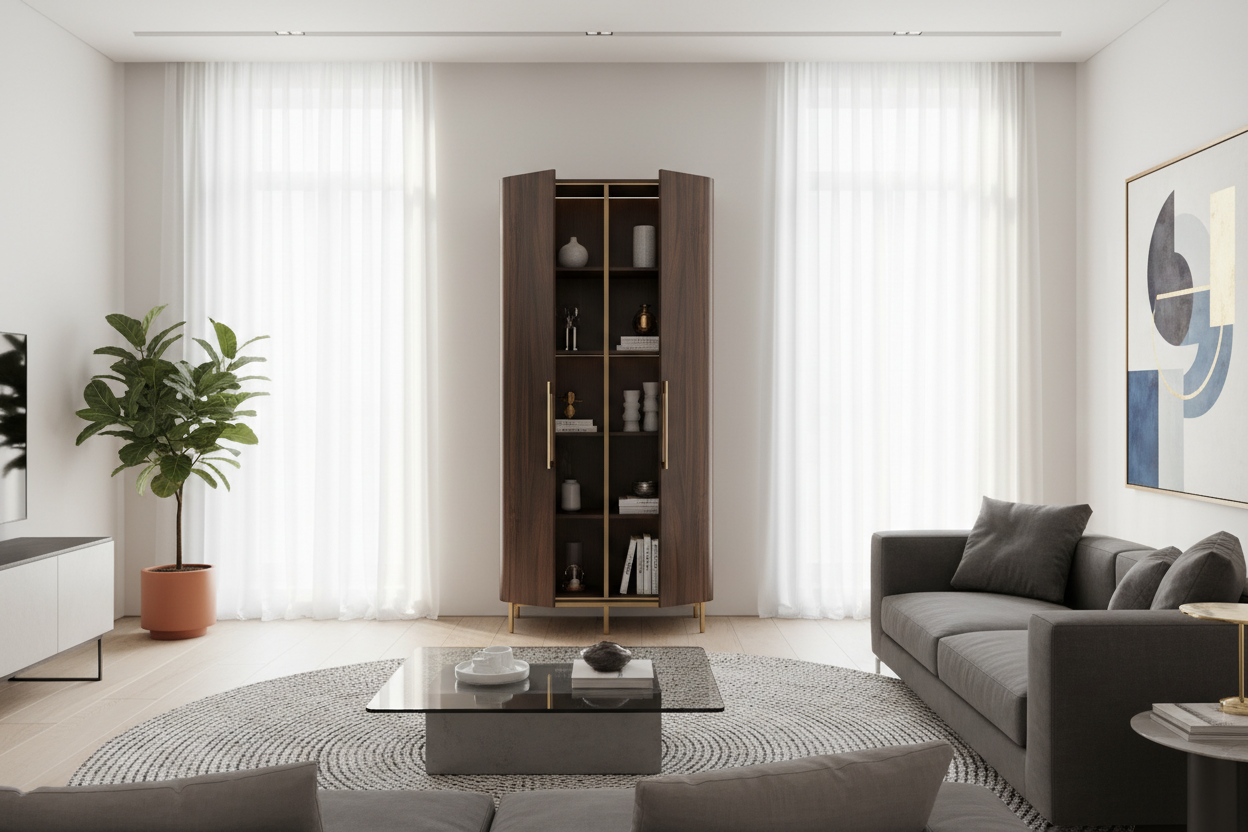
We have all stared at that one awkward, empty corner in the living room or dining area. It feels too bare for just a potted plant, but too tight for a bulky credenza. This is exactly where a well-proportioned contemporary tall cabinet steps in to save the layout. By drawing the eye upward, it maximizes vertical square footage while keeping the floor plan breathable.
Many homeowners struggle with flat-looking rooms because all their furniture sits at the exact same height. Adding verticality breaks up that monotonous horizontal line. In this guide, I will walk you through exactly how to choose, place, and style these vertical storage pieces so they look intentional and seamlessly integrate into your home.
Quick Decision Guide
- Measure your ceiling height: Leave at least 12 to 18 inches of negative space between the top of the cabinet and the ceiling to prevent the room from feeling cramped.
- Watch the depth: A standard modern tall cabinet ranges from 14 to 18 inches deep. Anything over 20 inches acts more like an armoire and can choke a narrow walkway.
- Mix materials: Choose designs with fluted glass, cane detailing, or open shelving sections to break up the visual mass of a solid block of wood.
- Safety first: Always use the included anti-tip hardware, especially on carpeted floors or in homes with children and pets.
Space Planning & Layout
Mastering Visual Weight
Vertical furniture commands attention. Whether you choose a classic built-in or a freestanding tall storage cabinet modern in its detailing, it immediately becomes a focal point. To balance this visual weight, position it opposite another substantial piece, like a sofa or a large window. If you place all your heavy furniture on one side of the room, the space will feel completely lopsided.
Clearance and Placement Rules
In typical North American open-concept homes, traffic flow is everything. If your cabinet has swinging doors, you need a minimum of 36 inches of clearance in front of it to comfortably open the doors and reach inside. For tighter spaces like hallways or dining room alcoves, look for a modern storage cabinet tall enough to hold your items but equipped with sliding doors to preserve your walkway.
Style & Coordination
Blending with Existing Decor
You do not need a purely minimalist home to make this work. A contemporary piece often features clean lines and unadorned hardware, which makes it an excellent grounding element in a transitional or mid-century room. Pair a stark, matte black metal cabinet with a warm, textural rug and a plush linen sofa to soften the hard architectural edges.
Curating the Interior
If you opt for glass doors, what you put inside matters just as much as the furniture itself. Avoid treating it like a junk drawer. Group items by color, mix stacked books with sculptural ceramics, and leave at least 30 percent of the shelf space empty. This negative space keeps the display looking curated rather than cluttered.
Designer's Honest Take
A few years ago, I sourced a stunning, matte walnut contemporary tall cabinet for a client's dining room in Chicago. It had sleek, push-to-open flat panel doors and looked incredible in the architectural renderings. The reality? Push-to-open mechanisms on matte finishes mean you are constantly wiping away oily fingerprints.
Furthermore, I learned the hard way that tall, rigid frames are incredibly unforgiving on uneven floors. We spent two hours shimming the base and tweaking the European hinges just to get the doors to align properly. It is a gorgeous piece, but if you have an older home with sloping floors, be prepared for a tedious installation process.
Frequently Asked Questions
How deep should a contemporary tall cabinet be?
For most living rooms and dining areas, a depth of 15 to 18 inches is ideal. This is deep enough to store dinnerware, books, or board games, but shallow enough that it will not encroach on your walking paths.
Can I use a modern tall cabinet in a hallway?
Absolutely, provided your hallway is wide enough. Standard hallways are 36 inches wide. If you add a cabinet, you must ensure you still have at least 32 inches of clear walking space to meet building codes. Look for slim profiles around 10 to 12 inches deep.
How do I keep a tall cabinet from tipping over?
Wall anchors are non-negotiable. Even if the cabinet feels heavy and stable when empty, opening the top doors or loading the upper shelves shifts the center of gravity forward. Secure it directly into a wall stud using a heavy-duty nylon strap or metal L-bracket.

Dejar un comentario
Este sitio está protegido por hCaptcha y se aplican la Política de privacidad de hCaptcha y los Términos del servicio.