










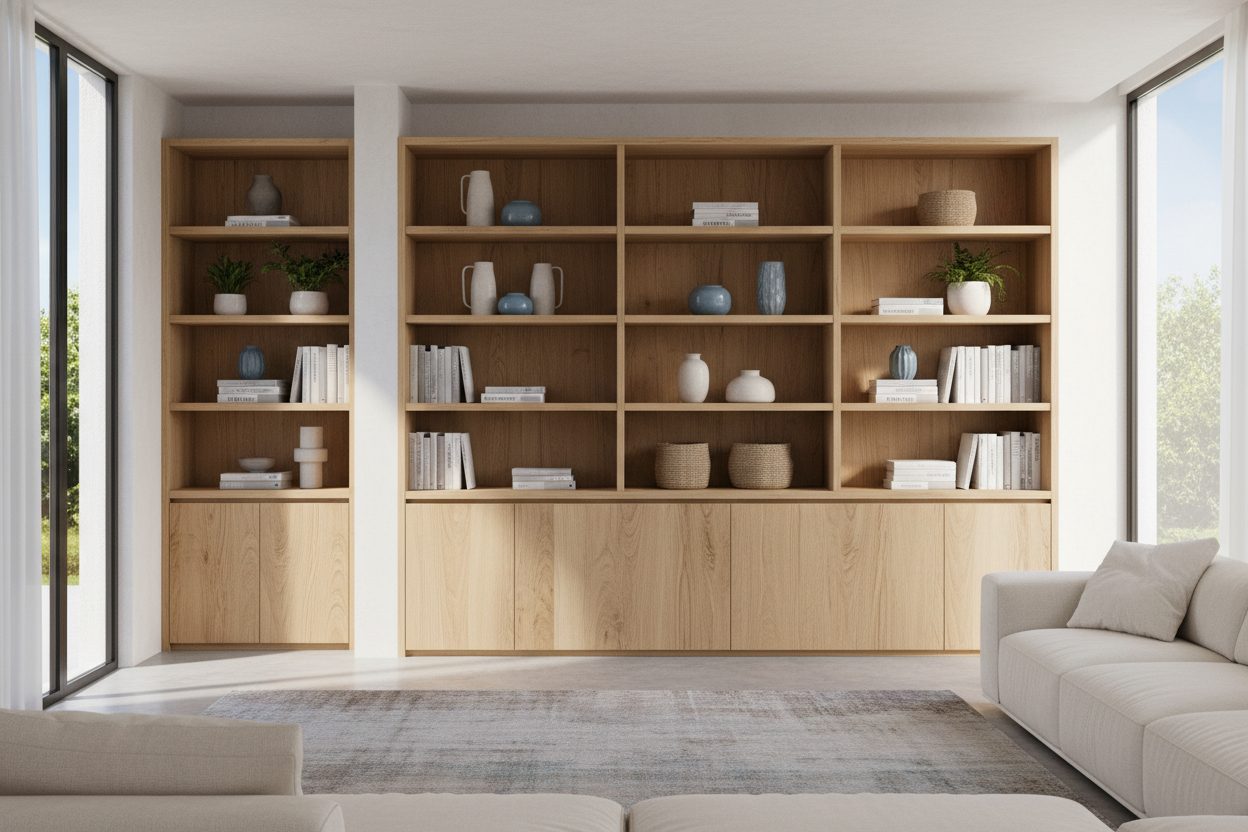
We all love the look of perfectly curated open shelving on social media. But in a real, lived-in North American home, open shelves often become a chaotic display of mismatched Tupperware, tangled charging cords, and half-read mail. If your living room or dining area is starting to feel visually overwhelming, a cupboard with shelves and doors is the most effective way to regain control of your space.
Concealed storage allows you to maintain a clean, intentional aesthetic without actually getting rid of the things you use daily. In this guide, I will walk you through how to choose the right proportions, which materials actually hold up to heavy use, and how to style these pieces so they do not look like generic office furniture.
Quick Decision Guide
- Measure your clearance: Always leave at least 36 inches of walking space in front of the unit so the doors can open fully without blocking traffic.
- Match the shelf count to your items: A 4 shelf storage unit with doors is ideal for bulky items like blankets or small appliances, while a 6 shelf cabinet with doors works better for books, glassware, and media.
- Check the weight capacity: Engineered wood shelves longer than 30 inches will bow under heavy loads unless they have a center support stile.
- Consider verticality: In tight rooms, utilize vertical negative space by choosing tall, narrow storage towers with doors instead of wide, low credenzas.
Space Planning: Getting the Proportions Right
The biggest mistake I see clients make is misjudging the scale of closed storage. A massive, dark wood cabinet can easily swallow a small room, making the ceiling feel lower than it actually is.
Small Rooms and Tight Corners
If you are outfitting a compact apartment or a narrow hallway, a small storage shelf with doors is your best bet. Look for pieces with a depth of 12 to 15 inches. This is deep enough to hold standard books, folded linens, or pantry overflow, but shallow enough that it will not disrupt your floor plan. To lighten the visual weight, opt for designs with tapered legs that show a bit of floor underneath.
Open-Concept Living and Dining
In larger suburban homes, you need furniture with enough presence to anchor the room. A large cabinet with shelves and doors can serve as a stunning focal point in a dining room, acting as a modern hutch. When placing a substantial piece, ensure you balance it with lighter elements nearby. If the cabinet is visually heavy, pair it with an airy, glass-topped dining table or delicate lighting fixtures.
Mastering the Interior Layout
What happens behind closed doors matters just as much as the exterior silhouette. The way a piece is configured dictates how useful it will actually be for your household.
Shelf Spacing and Customization
Always look for free standing shelving units with doors that offer adjustable interior shelving. Your storage needs will change over time. Being able to transition a unit from holding tall vases to organizing stacks of board games is crucial. If you are using the piece in a kitchen or dining context, a cabinet with shelves on doors (similar to a classic pantry layout) maximizes every square inch, giving you dedicated spots for spices, jars, and small bottles.
Designer's Honest Take: Lessons from My Own Projects
A few years ago, I sourced a beautiful, matte black large storage unit with doors for a client's open-concept dining area. It looked incredibly sleek and provided a massive amount of hidden storage for their entertaining gear. But I learned a hard lesson about material limitations.
The unit was made of standard MDF with a gorgeous veneer. Within six months, the client had loaded the middle shelves with heavy ceramic dinnerware and cast-iron serving dishes. Because the shelves spanned 36 inches without a center support, they began to visibly sag. We had to retrofit the interior with solid wood shelves painted to match. Now, whenever I specify cupboards with doors and shelves for heavy-duty use, I insist on solid wood construction, metal reinforcement, or shelves no wider than 28 inches.
Frequently Asked Questions
Are small storage shelves with doors effective in bathrooms?
Yes, they are excellent for bathrooms, provided the material can handle humidity. Avoid basic particleboard, which will swell. Opt for solid teak, powder-coated metal, or marine-grade plywood. A compact storage stand with doors keeps toiletries hidden and protects towels from moisture in the air.
How deep should a cupboard be for general household storage?
For living room storage (books, board games, media), a depth of 15 to 18 inches is standard and highly functional. If you are storing larger items like winter bedding, vacuum cleaners, or kitchen appliances, you will want a depth of 20 to 24 inches.
Can I mix different wood tones if I buy a new cabinet?
Absolutely. Matching all your wood furniture creates a flat, showroom-like feel. If your floors are warm oak, a walnut or painted cabinet adds lovely contrast. Just ensure the undertones (warm vs. cool) complement each other, and repeat the new wood tone at least once elsewhere in the room through a picture frame or accent chair.

Dejar un comentario
Este sitio está protegido por hCaptcha y se aplican la Política de privacidad de hCaptcha y los Términos del servicio.