










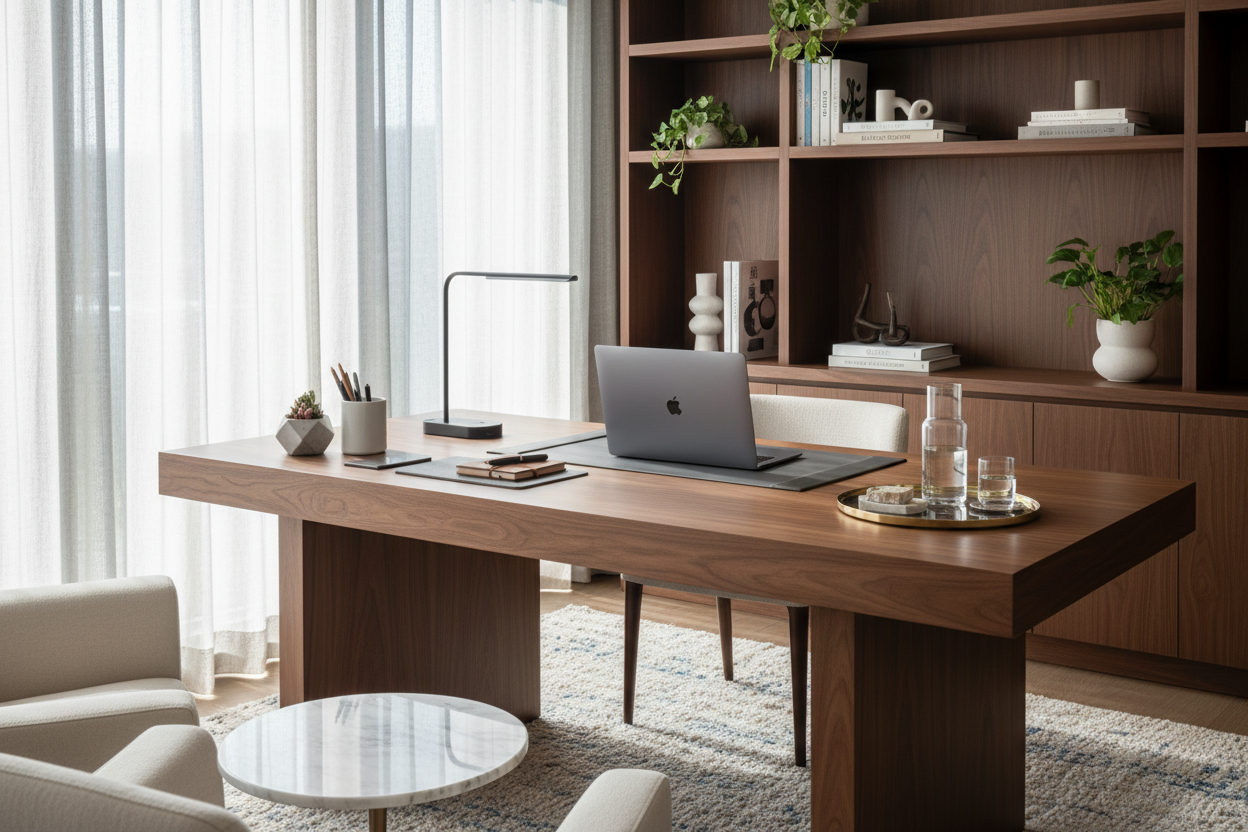
The workspace is often the most neglected area of the home, frequently oscillating between a sterile, corporate surface and a chaotic dumping ground for mail. As a designer, I see this struggle constantly. The challenge isn't just about making it look pretty; it is about psychological ergonomics. When clients ask me how to decorate desk spaces, I tell them we aren't just arranging objects; we are engineering a mindset. A well-curated desk balances visual inspiration with functional clarity, ensuring your environment serves your workflow rather than hindering it.
Key Principles of Desk Styling
- Visual Zoning: Establish specific areas for technology, writing, and reference materials to reduce cognitive load.
- Lighting Layers: Combine ambient overhead light with focused, adjustable task lighting to prevent eye strain.
- Material Warmth: Introduce organic textures (wood, leather, wool) to counteract the cold rigidity of monitors and keyboards.
- Vertical Utilization: Use wall shelves or risers to keep the primary work surface clear of non-essential items.
- Biophilic Elements: Incorporate living plants to improve air quality and soften hard architectural lines.
Establishing the Foundation: Layout and Materiality
Before buying accessories, evaluate the desk itself. If you are working with a laminate or glass surface, the tactile experience can feel cold and uninviting. I often recommend anchoring the space with a high-quality leather or felt desk pad. This not only defines the "active work zone" but also improves the acoustics of the room by dampening the sound of typing and placing items down.
Managing Visual Weight
When decorating desks, consider the silhouette of your technology. Large monitors act as heavy visual blocks. To counter this, avoid placing heavy, solid decor items right next to screens. Instead, opt for negative space or low-profile items. If your desk faces a wall, a large piece of art or a mood board hung slightly off-center can draw the eye up and away from the black rectangles of your screens.
Lighting: The Mood Setter
Poor lighting is the fastest way to ruin a design. Overhead lighting creates shadows that cause fatigue. When advising on how to decorate your desk, I prioritize a sculptural task lamp. Look for fixtures with adjustable arms and warm-temperature LED bulbs (2700K-3000K). The lamp serves a dual purpose: it provides essential illumination and acts as a vertical anchor that adds height to your vignette.
The Art of Functional Accessories
There is a fine line between styling and clutter. When figuring out how to decorate my desk without losing space, the answer lies in "containment." Loose items create visual noise.
- Trays and Dishes: Corral small items like clips, drives, and pens into a shallow ceramic bowl or a structured leather tray. This makes the items look intentional rather than scattered.
- The "Less is More" Pen Cup: Do not store every pen you own on the desktop. Keep three of your best writing instruments in a heavy-weighted cup and store the rest in a drawer.
- Book Stacking: Use a small stack of two or three hardcover books to elevate a plant or a small clock. This adds varying heights to the arrangement, preventing the "flat" look common in amateur styling.
My Personal Take on How to Decorate Desk Spaces
I learned a hard lesson about surface finishes during a project for a client who was a graphic designer. We selected a stunning, high-gloss lacquered parson's desk that looked incredible in the showroom. However, once we installed the lighting and monitors, the glare was unbearable. Every fingerprint showed, and the reflection of the screen on the desktop caused significant eye strain.
Since then, I have been adamant about texture. In my own home office, I use a matte walnut desk with a large, full-grain leather blotter. The leather has developed a patina over time that hides ink marks and coffee rings, turning "wear and tear" into character. I also realized that having a small, dedicated "landing pad" for my phone—specifically a wireless charger that stands upright—changed my focus. When the phone is upright, I can see urgent notifications without picking it up and getting sucked into scrolling. It’s a small decor choice that had a massive functional impact.
Conclusion
Your desk should be a reflection of your professional identity and your personal taste. By focusing on lighting, texture, and intentional organization, you can create a space that invites productivity rather than inducing stress. Start with the lighting, clear the clutter, and add one organic element today.
Frequently Asked Questions
How do I decorate a small desk without losing workspace?
Focus on verticality. Use a monitor riser with storage underneath or install wall-mounted shelving directly above the desk. Keep the surface strictly for your laptop and a notebook, moving decorative elements like plants or photos to the shelves above.
What is the best way to hide cables on a styled desk?
Cable management is crucial for a polished look. Use velcro ties to bundle cords behind the monitor stand. I recommend investing in a cable management box that sits on the floor or is mounted under the desk to hide the power strip. A simple sleeve matching your wall color can also disguise cords running down the leg.
How can I make a corporate-issued desk look more personal?
If you cannot replace the furniture, change the touchpoints. Add a high-quality desk mat to cover the generic laminate. Bring in a residential-style lamp instead of using standard office lighting, and use a ceramic planter or a framed art print to introduce your personal aesthetic.

Dejar un comentario
Este sitio está protegido por hCaptcha y se aplican la Política de privacidad de hCaptcha y los Términos del servicio.