










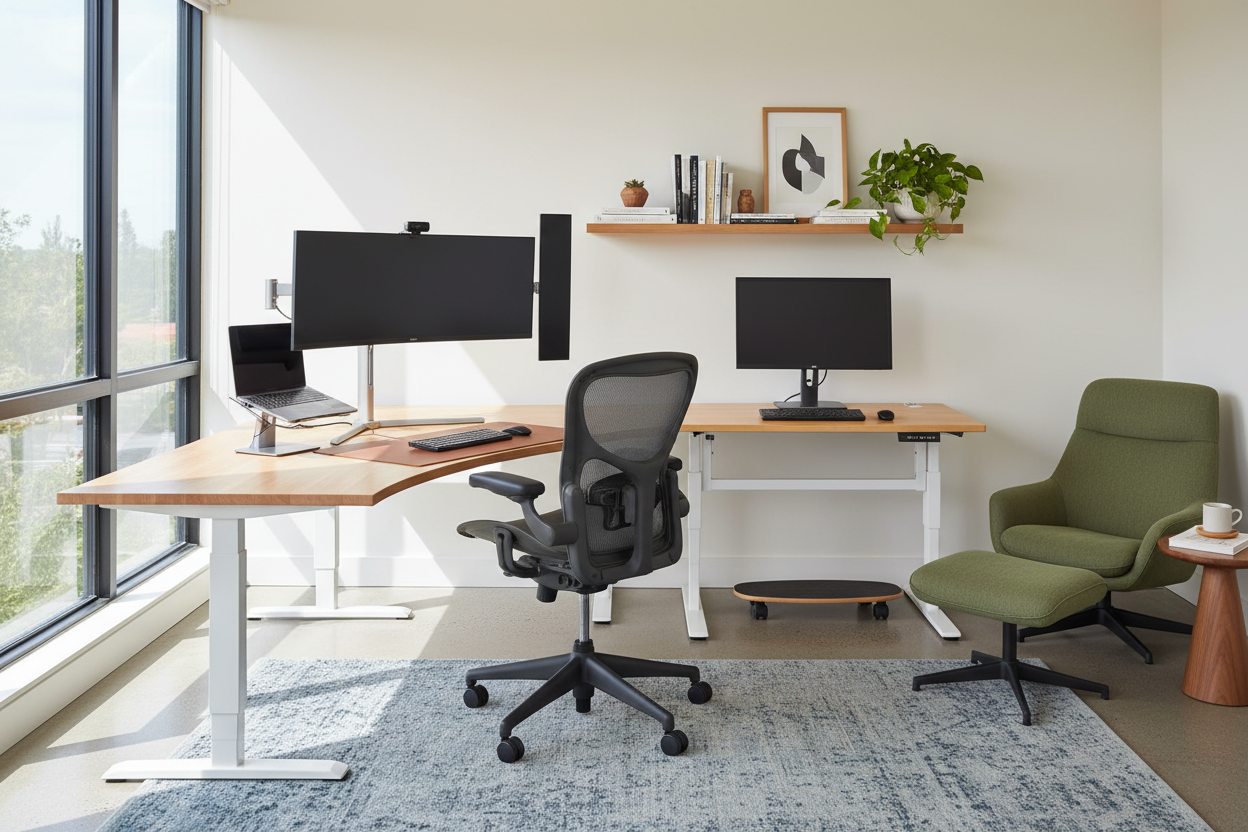
We have all encountered the same design dilemma: trying to carve out a productive work area that doesn't feel sterile or clinically corporate. Whether you are outfitting a dedicated room or a multi-functional corner, the wrong choices can leave a room feeling cluttered and uninspired. The secret lies in selecting office space furniture that bridges the gap between high-performance ergonomics and residential warmth. In this guide, I will walk you through the specifications I use to help clients create workspaces that command focus without sacrificing style.
Key Features to Look For
Before committing to a purchase, review this checklist to ensure your selection meets professional standards:
- Ergonomics & Adjustability: Look for seat depth adjustments and lumbar support, not just height lift.
- Material Durability: Prioritize high-pressure laminates (HPL) or sealed solid wood over standard particle board for surfaces.
- Scale & Proportion: Ensure at least 36 to 48 inches of clearance behind the desk for chair movement.
- Cable Management: Seek integrated grommets or hidden channels to maintain visual calm.
- Tactile Comfort: Upholstery should have a high double-rub count for longevity.
Defining the Material Palette
The materiality of your desk and storage units dictates the mood of the room. In my practice, I often steer clients toward natural textures to combat the inherent stress of a workday. Solid wood, particularly walnut or white oak, adds immediate warmth and gravitas. However, be mindful of maintenance; a coaster is non-negotiable with natural finishes.
For high-traffic zones, consider contract-grade veneers or matte-finish laminates. These materials resist scratches and heat rings far better than their residential counterparts. When sourcing furniture for office space layouts, mixing materials—such as pairing a timber desk with a sleek, powder-coated metal shelving unit—creates a curated, layered aesthetic rather than a "catalog matchy-matchy" look.
Space Planning and Layout Flow
A beautiful desk is useless if the flow of the room is obstructed. The placement of your furniture anchors the room's energy. I always advise placing the desk in the "command position"—facing the door, but not directly in line with it. This taps into primal psychology, increasing your sense of security and focus.
The Visual Weight of Storage
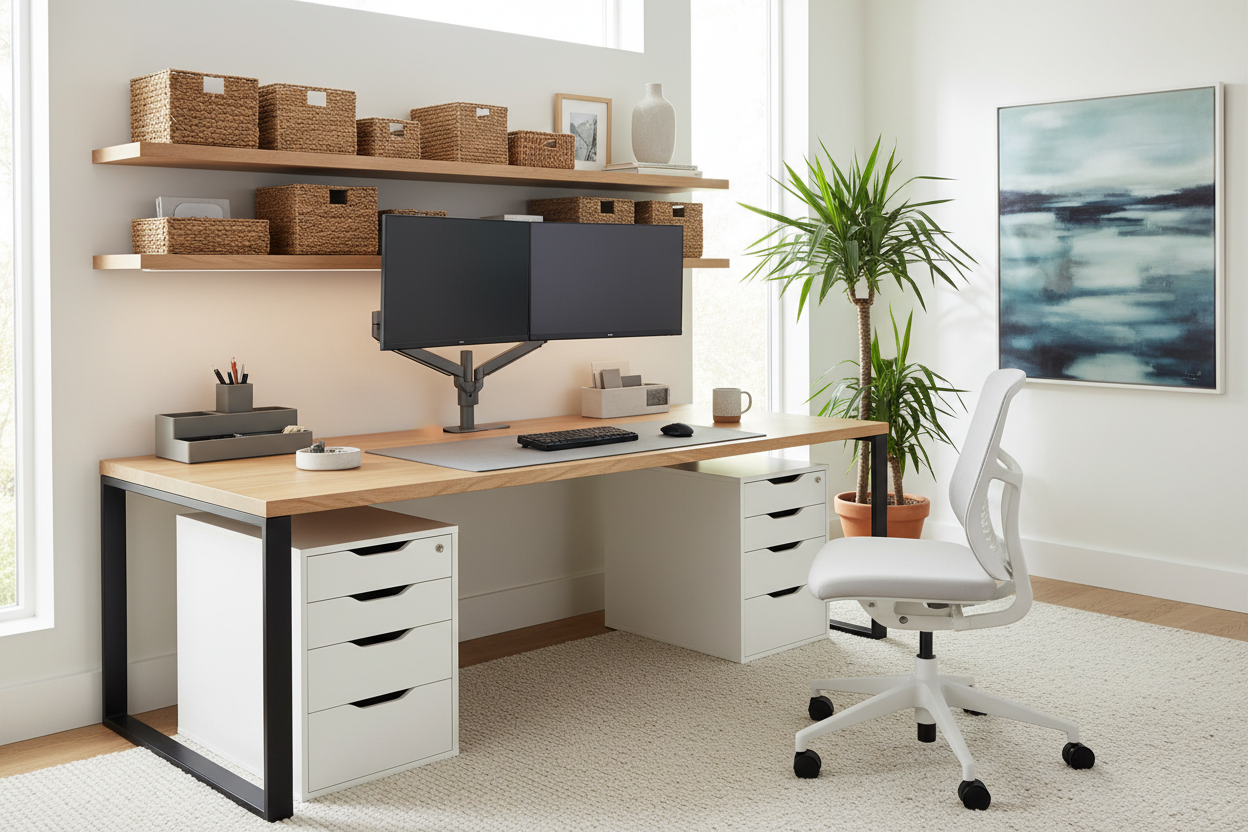
Storage is necessary, but it can easily dominate a room. To maintain a sophisticated silhouette, opt for low credenzas rather than tall, looming bookcases if the room is small. Low storage keeps the sightlines open, allowing light to travel freely and making the office feel expansive. If vertical storage is required, choose open shelving to display curated objects alongside files, breaking up the density of the cabinetry.
Ergonomics Meets Aesthetics
The chair is the most critical investment. Historically, you had to choose between a bulky, ugly ergonomic chair and a stylish but uncomfortable dining chair. Fortunately, design has evolved. Look for task chairs that hide their mechanisms. Many high-end manufacturers now offer synchro-tilt mechanisms concealed within upholstered shells. This provides the necessary spinal support while maintaining a soft, residential visual language that blends seamlessly with the rest of your home decor.
Lessons from My Own Projects
I want to share a specific mistake I made early in my career so you don’t have to repeat it. I once specified a stunning, architectural glass desk for a client who wanted a "light and airy" look. It looked incredible in the rendering and on installation day. However, two weeks later, the client called me in frustration.
The issue wasn't the look; it was the reality of daily use. First, optical mice don't track well on glass without a pad, which ruined the clean aesthetic. Second, glass is cold to the touch, making it uncomfortable on the wrists during long typing sessions. Finally, and most annoyingly, every single wire from the computer and lamp was visible through the desktop, creating a visual nest of chaos underneath. Now, I only recommend glass for writing tables, never for tech-heavy workstations. Always consider the "unsexy" logistics of wires and warmth before falling in love with a silhouette.
Conclusion
Your workspace is the engine room of your productivity, but it should also be a place where you enjoy spending time. By prioritizing tactile materials, proper scale, and hidden ergonomic support, you can build an environment that serves both your workflow and your well-being. Invest in pieces that will age gracefully along with your career.
Frequently Asked Questions
What is the ideal desk height for office space furniture?
The standard industry height for a fixed desk is between 29 and 30 inches. However, if you are shorter than 5'4" or taller than 6'2", an adjustable height desk is highly recommended to prevent shoulder strain.
How do I choose furniture for office space in a small bedroom?
Focus on verticality and transparency. A ladder desk or a wall-mounted floating desk frees up floor space, while an acrylic or ghost chair can reduce visual clutter, making the room feel larger.
Is a sit-stand desk worth the investment?
From a health perspective, absolutely. If the industrial look of a sit-stand desk clashes with your decor, look for models with solid wood tops or designs where the lifting columns are shrouded in wood veneer to maintain a high-end look.

Dejar un comentario
Este sitio está protegido por hCaptcha y se aplican la Política de privacidad de hCaptcha y los Términos del servicio.